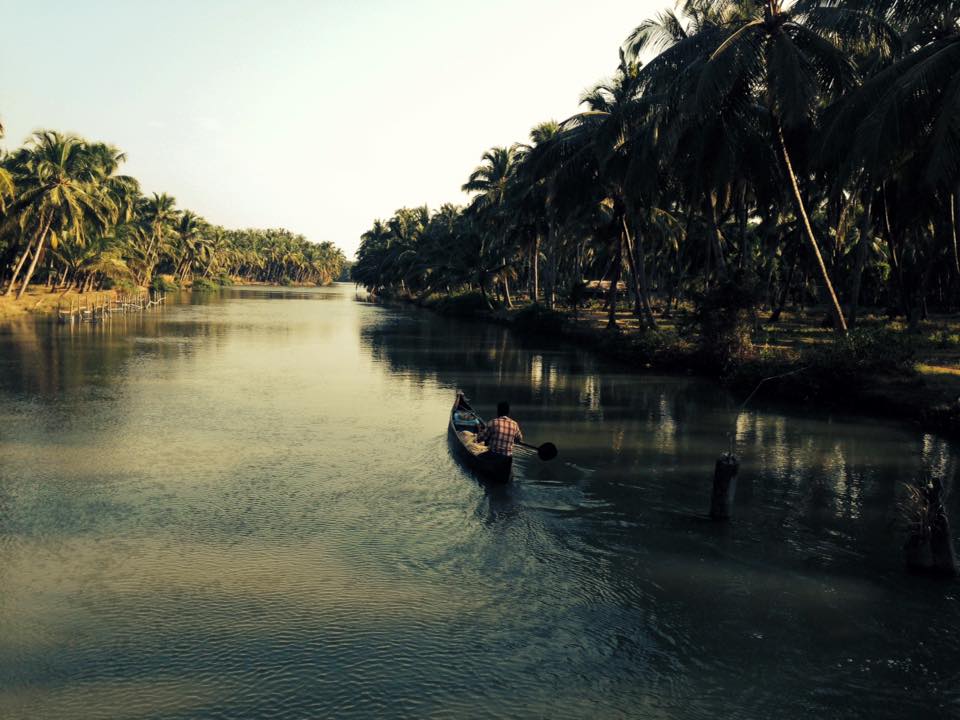
In the beginning, as far as I can remember, the lush green strip of land was ensconced by the Arabian Sea and a thin river line that was lost into an estuary. A billion species of life thrived in the tiny whirlpools. Sunshine fell on the flowing waters in every fissure. When it rained, the natives who lived in the shanty could see the silver lines of thunder afar and scampered to bring the cows and kids home from the field and the wantons of country roads. The wind wove a symphony across the countless coconut trees that arched over the white and golden sand dunes. Folks called the place – an island, with no name, perhaps to remind the sovereignty of the land that leant over the timeless ebb and flow of the ocean.
I used to visit my grandparents’ house during our summer vacations. We, the boys from the city found our space and deflated the overcrowded time from our senses on the island. The travel included trekking by bus and ferry boats, finally walking more than a mile passing paddy fields and country roads paved with soft red soil and sand until we reach the Riverbend and holler for the ferry as we soak in the wet breeze wiping away the last trace of fatigue.
The folks in the house had to paddle across the river for everything that they ever needed, and every household had its own boats. The nights were dense and we could see each other’s faces in sepia sitting across the kerosene lamps for dinner. Eight siblings and dozens of grandkids thronged the spacious and benevolent home during those unforgettable times. If I close my eyes, I can still see the shimmering torch lights of solitary pedestrians on those rugged paths by the river and fisher folks rowing by.
It must be right after the famine in the forties, my grandfather and his brothers left their misery to follow a dream of a piece of land to call their own. I never asked him to chronicle the events or timeline. They had nothing and everything to fight for. The island was waiting for them to build the Promised Land, and the earth was nubile and feisty. He had plowed his way and unleashed the raw power of farmers and fishermen to build the house, cultivate the land and build boats to fish with a lot of camaraderie with his brothers and natives.
As kids, we spent the summer vacations in exhilaration, playing on top of the piles of coconuts and grains; canoeing up and down streams; gathering around the table where everyone assembles for dinner and woke up with the roar of waves retreating from the back of the house every morning. My grandfather looked like Odysseus who just came home to Ithaca, having done his journey.
I spent a lot of time with him listening to his monologues on movies he watched from the country movie theatre or the quality of carpenters who worked on his boats. He also spoke about the murderous sea storms and fights among fisher folks who haunted the evening taverns with a kind of defiant nonchalance. He was Hemingway’s Santiago who came from the sea with the biggest fish I could ever imagine sculling the boat from the horizon, but he was not weary.
I never asked my grandfather about his journey, rather I was basking in his days of glory. But then things took a different course ever since he folded himself into retirement. My aunts were all married off and had more significant issues in life and kids to gather around, my uncles vanished into the crowds in different parts of India and outside in search of jobs.
Society itself was undergoing the customary changes as always has been. The deluge of foreign money and pomp of Gulf country residents rolled over the spirit of the land. The old house was abandoned and the grandparents were transplanted to the new home built near the highway and surrounded by walls. The rain, the wind, the undulating expanse of coconut trees, and the waves from the ocean were shut out for the rest of their lives.
Grandma died first and Grandfather followed her soon. Even the new house looks so old now, occupied now by one of my uncles. He might probably visit once in a while from Dubai where he found a job. The dilapidated and moth-ridden old house bid the last moments of its existence before it was smashed down, probably to build a concrete warehouse for fertilizers. Now that the island has been named and electrified.
Atlantis, the lost continent is considered to be the source of all Religion, all Science, and all races and civilizations. As we enter the third millennium, the Age of Aquarius its discovery is deemed to cause a major revolution in our view of the world and of both our future and past. I found my Atlantis on that island a while ago when I was a kid. The hearts and minds of the dwellers who built a brave new world over there, though lost, would still speak to you if you listen. That this world can still be mysterious and beautiful if you can spare a moment to grasp.
 Chronicles
Leave a comment