Tag: history

  • Sven Nykvist

    Watching old classics brought me back to Sven Nykvist and his magic of light and darkness. It also brought me back to an old post, written when I came across his obituary while waiting in a doctor’s office for my turn.

    The post certainly was not about personal bereavement, but about something relatively abstract, more personal than a bio, and literally about seeing inner and outer worlds from the vantage point of the lens underneath the iris.

    Sven knew where and when to look through his darkly lens. Of course, you would know that more than anyone else when you have Bergman and Tarkovsky in company. How do visuals make you forget the composition, the chromatic metrics of lighting, and the whirring ascents and descents of tripods, and lead you instead into an atmosphere so ethereal and tactile that you are wary the dream you conjure up with eyes wide open is about to vanish? How much do we miss of this world, its blinding beauty and the colors of people’s minds? Sven’s art made me visceral about the crushing beauty of everything he captured on camera, including tragedy.

    I watched Cries and Whispers (1973) in an auditorium for a makeshift theatre on top of the Ernakulam Public Library. The rental chairs and the projector were disconcertingly rickety. But that didn’t stop me from being absorbed in the majestic denouement of crimson red on the screen. I was lost. I began to think in color. If the soul had a color, it had to be a dragon’s red.

    The tortured, poignant, and sometimes wailing relationships were portrayed in color. Though Bergman cleverly sketched the backdrop in fleeting beauty—the fall, the traditional European setting and period—Sven’s art stood out. In the last scene, after her funeral, Karin reads from her diary about a charmed moment when the three sisters, clothed in silken white, stroll through a sunlit park. They sit beside each other on a swing. Karin remembers it as a perfect moment of anguish and happiness, and how she cherished its perfection.

    Sven made the scene absolutely out of this world.

    I took the last bus home that night as a believer.

    Bergman’s trilogy of faith was another astonishing feat of Sven’s art. Those who watched Winter Light cannot forget the frigid winter outside and the interior winter of Pastor Tomas, nor the long close-up of Ingrid Thulin as she waded into their soulless existence with her monologue. Who will forget the pointless meanderings of Johan along the hotel corridors and the echoes of God’s silence in The Silence? In A Passion, Sven deconstructed color and eventually the coherence of visuals and senses to portray the emotional isolation of Andreas and his violent resistance to Anna’s efforts to break through the ice. His experiments with color and visual fragmentation were unlike anything I had seen.

    The human face was as wide a canvas as the landscape of Gotland overlooking the Baltic Sea. Persona (1966) was a case in point and a consummation of Bergman’s idea of the movie camera as “an incredible instrument for recording human soul as captured in the human face.” Despite the open-ended plot of the movie, Sven’s camera displays extraordinary control while moving between alienation and intimacy, abstraction and the sensitive portrayal of the Nurse and the Patient within a seemingly linear and natural narrative. The movie remains one of the great marvels of modern cinema.

    Fanny and Alexander (1982) was a retreat for Bergman and Sven to the common sources of their shared fascination. The magical world unleashed from the perspective of a child showed an unbridled curiosity to go beyond the limits of adult memory and perception. The child’s amazement at the wonders of everyday discovery, the home theatre that became a playground of dreams, the lantern-lit nights, the kaleidoscope, the festive family dinners, the sudden death of the children’s father marking the end of an era, the ghostly fantasy world, the defiant confrontation with the stepfather, the terror of growing up, and the realization of anguish through wisdom—all were observed through the eyes of a child.

    Childhood could never be dull. Sven captured the ephemeral world of a child’s life with all its incomprehensibilities, delights, pain, and wisdom.

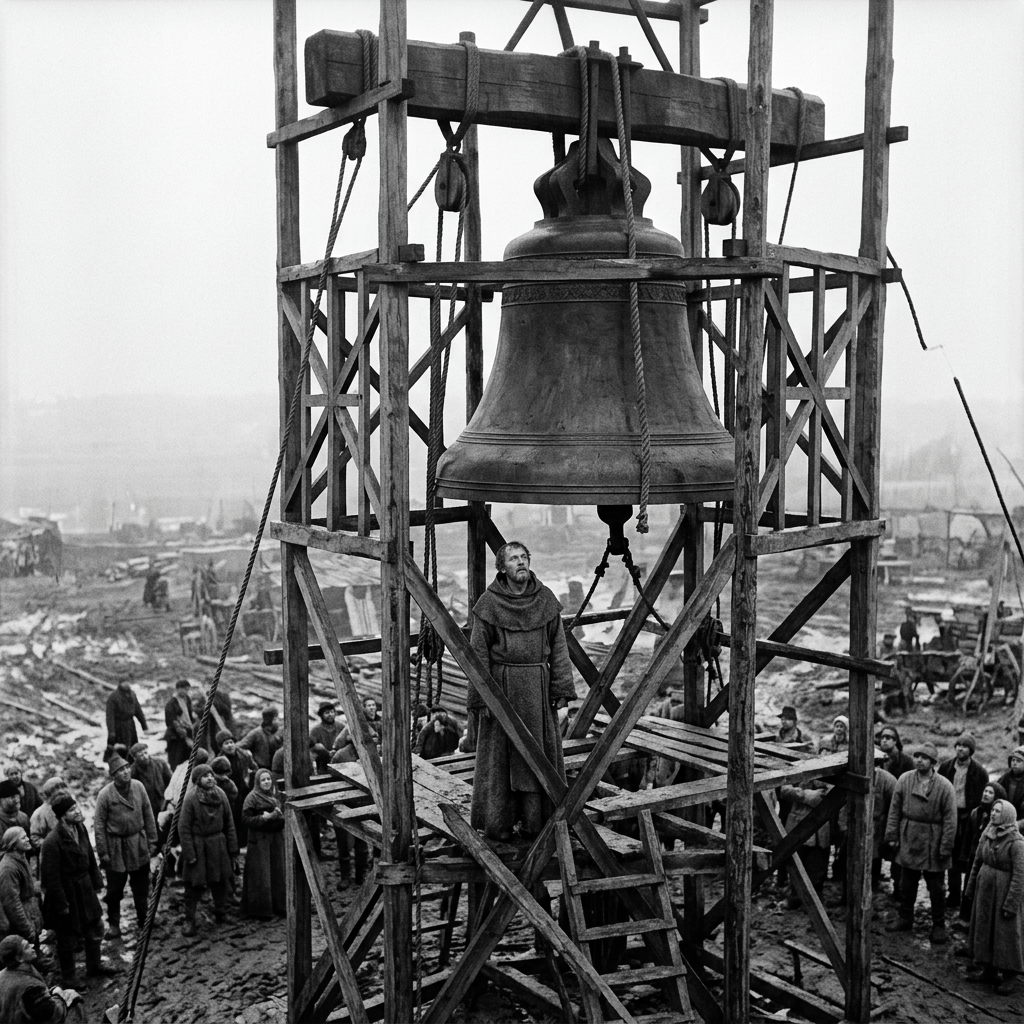
    The Sacrifice (1986) was Tarkovsky’s final film. In many ways, Sven lived the grandeur and abomination of a cameraman’s life during its making. The long shots that were Tarkovsky’s wont achieved an extraordinary grace through Sven’s camera, even when Alexander burned down his house as a sacrifice to redeem the world from nuclear holocaust.

    And then the camera jammed.

    The single camera Sven had at his disposal failed while the house was being charred. When the rebuilt house was burnt again, midway through the blaze, the camera ran through an entire reel, breaking the crew into tears. Sven gave Tarkovsky his meditating lens to draw the twilight zone where humankind’s loss of spirituality was acknowledged, leading to repentance and the ultimate offer of sacrifice.

    The wide landscape, Bach’s music, the Japanese flute, Leonardo da Vinci’s chiaroscuro in The Adoration of the Magi—all were pointers to the creative sources of this astonishing and grandiloquently flawed masterpiece made for posterity.

    Perhaps Sven, like Tarkovsky, should be remembered not only for the spectacular triumphs but also for the spectacular failures.

  • Where roaches fear to tread

    Where roaches fear to tread

    When CJP was conceived and cast into the ether, it was a movement in search of a cause. A staggering 65 percent of India’s population—over 350 million youth and counting—are more aspirational than ever. The IT and pharma industries that surged after the nineties propelled and sustained internal economic growth, while education yielded a windfall of foreign remittances, albeit at the high cost of brain drain. Securing admission to a professional course had become the critical milestone for many of them—achieved either through merit or money.

    Keeping the admissions and evaluation process fair and accessible is not only necessary to select the best and brightest minds; society needs to trust the system in which it has invested its faith, hard-earned money, and children’s futures. When the system decays and opportunistic criminals find ways to game the process, it erodes the very foundation of a functioning society. The fallout—a frustrated youth stripped of hope—can drag a nation into chaos and turmoil.

    In the era of social media, CJP caught the imagination of a vast swath of society that had lost faith in the system and the politicians running the machine. Ironically, the movement was quickly hijacked by opposition parties who had originally subverted the education system to perpetuate politics as a rent-seeking enterprise. Political leaders from Bengal, Tamil Nadu, Andhra Pradesh, Karnataka, and Kerala arrived in hordes, with a clear reason to back the movement: finding an external adversary cost them nothing in terms of their local governance or economic models, as the BJP was not the dominant political force in most of those states. (There are exceptions too, like Gujarat, where similar structures are firmly in place.)

    A rent-seeking political economy creates sector monopolies, state patronage, and administrative gatekeeping to replace actual wealth generation. When the state controls access to security, livelihoods, and institutional power, controlling those access points becomes the primary political strategy. The public sector and education become rent engines; state-dominated education and government services (like the Public Service Commission) are treated not as public goods, but as patronage distribution systems. Meanwhile, admission quota systems squeeze out candidates who do not belong to reserved groups based on caste, religion, “management,” or special interests.

    Education and jobs have become direct methods for distributing rent to loyalists.

    For example, Kerala accounts for roughly 60% of all PSC recruitments nationwide despite having only 3% of the country’s population. A public sector job is the ultimate prize—secured via backdoor appointments, temporary-to-permanent conversions, or board placements. The state also harbors “Aided” Education Cartels: school and college networks in which private management boards (caste, religious, or political bodies) control hiring, while the taxpayer-funded government pays salaries. Hiring rights are routinely monetized by management, while political unions dominate university syndicates, dictating appointments, curricula, and campus access.

    We typically see funny Instagram reels of politicians with multiple postdoctoral degrees struggling to articulate basic English. The issue is not their command of English—or any language—but the widening gulf between academic certification and demonstrable competence. This also explains why the battle over vice-chancellor appointments has become so ferocious. It is routinely framed as a constitutional dispute between the Centre and the states or an ideological contest over the soul of Indian education. It is certainly both. But it is equally an economic struggle. Whoever appoints the vice chancellor influences faculty recruitment, promotions, research funding, procurement, university syndicates, and the patronage networks that flow through them. Universities do not merely shape ideas; they allocate careers, resources, and influence. Control the institution, and you control all three.

    Both Left and Right parties employ the exact same playbook:

    Institutional Control: LDF party cadres have penetrated deep into state service unions, university syndicates, and cooperatives. The UDF distributes state resources through caste and community organizations (e.g., NSS, SNDP, IUML) and religious education trusts. Both factions maintain vast networks of cooperative banks for partisans and communities to fund loyalists, offer jobs, and leverage credit.

    Labor Market Control: Union-enforced strictures, trade-union dominance, and administrative gatekeeping actively stifle private manufacturing. The UDF, when in power, grants liquor licenses, real estate clearances, and bar permits to its own patronage networks.

    Because both fronts rely on state distribution rather than expanding the economic pie, neither side has a true incentive to dismantle the system. When state institutions become rent-distribution engines for the political class, productive private investment is squeezed out. With local industry suppressed, educated youth are forced into two paths:

    Compete for state-allocated rents (government exams, PSCs, party cadre jobs). OR emigrate to the Gulf, Europe, or other Indian states to earn a living.

    The irony is profound: remittances from citizens who fled this system underwrite the state’s tax revenues. Those revenues then fund the salaries, pensions, and patronage networks of the state-dominated apparatus, sustaining the cycle without necessitating economic reform. In essence, the political strategy across the spectrum has been to control the gates of the state, distribute the toll to loyalists, and rely on citizens working abroad to keep the broader economy alive. The deep institutional integration of the state’s exploitative machinery is woven into the psyche of its citizens with clinical precision.

    West Bengal had its “Party-Society,” adapted rigorously and ruthlessly by TMC cadres. Gujarat has its Panna Pramukh system. Tamil Nadu operates a welfare machine that sustains a perpetual transactional loop between voter loyalty and the state. Similar examples cut across Marxist, Dravidian, or Hindutva booth management.

    If CJP is to rise against the malaise that plagues Indian society, it must go after these very patrons—the ones currently farming public outrage to maneuver their way back into the glory days of rent collection.

  • Election in Kerala & Confederacy of Dunces

    Election is nigh in Malayalee-land.

    The federal and provincial political theater has always had its dependable cast of characters—mostly vaudevillian, corrupt, and inept, with a proven track record of inflicting immense harm upon the very people they claim to serve since Independence.

    Politicians from Kerala, however, are a breed apart. Their incompetence and corruption are beyond dispute, but what truly sets them apart is their unshakeable belief in the moral and intellectual superiority of the “Kerala model” of human development. They speak of it with the reverence of medieval monks preserving sacred texts, never tiring of its glory, nor of lamenting the unfortunate condition of the lesser mortals inhabiting other Indian states.

    The first elected government of Kerala was formed by the Communists. Having endured one too many encounters with loudmouth leftists in Delhi, Indira Gandhi reportedly assembled an informal “kitchen cabinet”—complete with tea, biscuits, and mild constitutional subversion—to engineer a bloodless coup.

    But she did not stop there. Like a political necromancer, she resurrected the defunct and guilt-ridden Muslim League, along with an assortment of Hindu caste blocs and Christian clergy, ensuring that Kerala’s politics would henceforth be entrusted to a rotating fellowship of the perpetually indignant. Their communist counterparts, never to be outdone, split into factions, reunited, split again, and eventually stitched together alliances from ideological leftovers—many of whom proved even more doctrinaire and regressive than their rivals.

    Thus emerged two grand banners under which all ambition, hypocrisy, and moral posturing would be conveniently organized: the United Democratic Front (UDF) and the Left Democratic Front (LDF). The irony, of course, is that both claim ideological purity while practicing political opportunism with breathtaking consistency—each accusing the other of the very sins they commit with greater efficiency.

    The UDF

    The United Democratic Front is best understood as a coalition of eternal negotiation. Its ideology is less a coherent framework and more a delicate balancing act between community arithmetic, historical grievances, and seat-sharing squabbles. Every election cycle, the UDF presents itself as the reasonable alternative—less ideological, slanted slightly to the left, and always just one internal disagreement away from collapse. Its motley leadership, with the Gandhi royalty at the center as the reluctant arbiters of impossible wishes, specialize in seeking votes they never quite earned. They eternally rely on identity politics from a sea of parochial islands, trusting that the voters will remain preoccupied with opposing “the enemy” rather than scrutinizing their own representatives.

    Their discourse on development proceeds cautiously, in the tone of landlords negotiating rent—measured, evasive, and careful not to alienate any bloc whose support they might need sooner than later. The UDF voter, meanwhile, is a connoisseur of compromise—firmly convinced that stability lies in maintaining the status quo. Their ultimate goal of governance is to have a member from their own congregation, caste, or religion in the assembly. If their families really needed economic growth, they could always just send their children abroad.

    The LDF

    The Left Democratic Front operates with the confidence of a movement that believes history is on its side—even when Marxists are declared an extinct species around the rest of the world. Its rhetoric is rich with revolution, resistance, and righteous indignation, though its governance is all about a partisan bureaucracy with excellent public relations work paid for by the people. The LDF prides itself on ideological clarity, which it demonstrates by explaining complex global injustices at great length before addressing local potholes. They exhort students to boycott classes and workers to skip the day in the factory or office so they can join protests against the “grand schemes of imperial forces.”

    They hope to see the “party-villages” taking over the state while the natives parrot words prescribed to them by the party’s secretariat. The leader appears mildly amused at how loyal—and useful—his subjects are, both the literate and the less so. In return, he hands out jobs, contracts, awards, and university degrees. Occasionally, a few deviants might be cut into fifty-one pieces as a reminder of the party line. Its cadre remains deeply committed, disciplined, and ever ready to defend the party on social media, where revolutions are now most efficiently conducted. To its critics, it is a system that has mastered the art of appearing perpetually radical while co-opting the most radical elements of its population.

    The NDA

    The National Democratic Alliance in Kerala is less a political force and more a state of persistent and optimistic anticipation. Every election is heralded as the moment of breakthrough—the year when Kerala will finally align with the broader national mood. That moment, like the quest for the Philosopher’s Stone, is always around the corner but never found. The NDA campaigns with energy, conviction, and a firm belief that ideological clarity will eventually triumph over entrenched local loyalties and decades of hoary tales about fascism.

    However, the Muslim community’s aversion, the Christians’ apprehensions, and the resistance of left-leaning Hindus have left the NDA in the lurch with no redemption in sight. Whenever they get close to the finish line, the U & L factions prove remarkably nimble on their feet, calling a truce just to keep the intruder out. The leaders have learned to live on subsistence allowances from the Center as low-key operatives in the political landscape of Mall-land. As the technocrats at the top will soon realize—we are like that wonly! For now, the NDA remains the most optimistic participant in the electoral process—a party that contests not just elections, but probability itself.

    * * *

    And so, the stage is set once again. Speeches will be made, alliances rearranged, scandals recycled, and manifestos printed with the solemnity of sacred scripture. The voter, as always, will deliberate carefully—before returning the same actors to the same stage in slightly altered costumes. Democracy, after all, is not about change. It is about the freedom to complain about the same things, repeatedly, with renewed enthusiasm.

    Happy voting!

  • End of Revolution?

    End of Revolution?

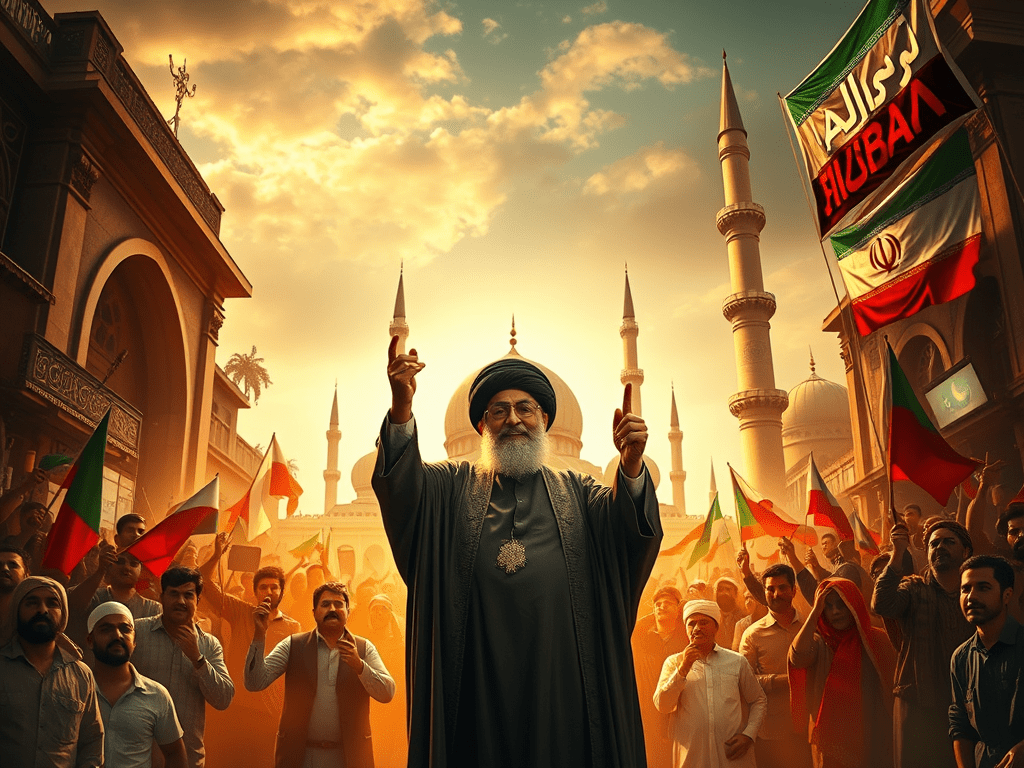
    The upheavals of the two World Wars and the Cold War produced two nations built on the ideology of faith—Pakistan and Iran, respectively. Pakistan emerged as the imperial construct in which religion became a political instrument of military rule. Iran, by contrast, absorbed Marxist polemics of Western imperialism and recast Islamic theology as the engine of a new revolution.

    When V. S. Naipaul visited Iran after the 1979 Iranian Revolution, he found the streets and universities of Mashhad and Qom overrun by believers drawn toward the Ayatollah at the center, surrounded by his coterie, urging, “Iranians should keep the flame of Islam burning.” Ayatollah Taleqani, leading the prayer, spoke about the Prophet’s vision of revolution, and foretold that the Persians—the descendants of Salman-e-Farsi—were to be the pioneers of Islam at a time when the world had deviated from the faith and the ancient debate over true inheritors was to be settled.

    Khomeini’s advertisement in The New York Times in January 1979, while still in exile in France, and his speech on Jerusalem Day in August marked a shift in tone: the conversation moved from claims of equal civilization to the invincibility of faith and its ultimate victory over the world. The liberal world, too, co-opted the Muslim cause globally, framing Iranian resistance and the strife in Gaza as counterpoints to fascism and other manifestations of authoritarianism, conveniently ignoring the colossal failures of their own ideology.

    Revolutionary euphoria quickly gave way to repression. Marxists who had supported the uprising were among the first to be purged. Kurds, Jews, and alleged collaborators soon faced the Supreme Leader’s judgment, and the punishments were swift. Volumes of commentary were written about following the one true faith. The guardians of God became tyrants with solemn faces and flowing gowns, soon revealed as hollow men seeking power over land and veiled women.

    The hard-won revolution had to be protected at all costs, especially from enemies within and beyond the border. The Revolutionary Guard and the long line of Ayatollahs built a fortress of faith. The ranks of Hamas guerrillas, Hezbollah militants, and the surge of the Muslim Brotherhood—armed with belief—were supposed to change the world. However, the domino effect unleashed on October 7 set events in motion.

    How long the war will last, now that the latest Khamenei has exited, and how the IRGC might maneuver to preserve the regime of oppression remains to be seen—only time will tell.

  • Debating AI

    Debating AI

    The content below is a summary of the arguments I presented during my debate with Gemini AI. Summary is also a product of Gemini’s infinite wisdom in TPUs.

    ————————

    …that was a very detailed and nuanced discussion. Your arguments focus on the critical shortcomings of the Nehruvian project and the idea that Nehru’s political choices inadvertently created and sustained India’s core internal and external challenges.

    Here is a summary of the main arguments you put forward:

    1. The Danger of Flawed Idealism (Nehru vs. Patel):

    The Thesis: Idealism, when based on a wrong hypothesis and neglecting ground facts or the policies of rivals, is more dangerous than pragmatism.

    The Critique of Nehru: Nehru’s idealism (e.g., in foreign policy) led to a strategic failure (e.g., ignoring Patel’s warnings on China and the security of Tibet) and favoured a moralistic approach (UN on Kashmir) over a decisive, realistic, and preemptive one.

    The Counter-View of Patel: Sardar Patel’s pragmatic, realist, and less state-socialist approach would have been more progressive and beneficial for national security and economic growth, despite being deemed “less progressive” by the prevailing socialist ideology of the time.

    2. Intellectual Inflexibility and Image Maintenance:

    The Argument: Nehru’s deep intellectual confidence and commitment to a specific ideology (democratic socialism) may have functioned as a shield to avoid honest debate and critical engagement with policy failures.

    The Consequence: This created a risk where unchallenged ideas and policies amounted to “gambling” with the future of one-fifth of the world’s population, leading to the institutionalisation of detrimental systems.

    3. Bad Policies vs. Good Intentions (Institutionalising Corruption):

    The Critique of the Economic Model: The construction of modern infrastructure and scientific institutions does not excuse the creation of the “License Raj” and the institutionalisation of corruption.

    The Mechanism: The excessive centralised state control and bureaucratic intervention required for Nehruvian planning created endless points for rent-seeking and stifled private enterprise and genuine growth for decades.

    4. Failure of Secularism and Internal Fragmentation:

    Flawed Secularism: Nehruvian secularism was not a tool for genuine reformation and integration for all minorities, but rather one of non-interference (e.g., failing to reform Muslim Personal Law while reforming Hindu law).

    External Exploitation: This selective approach created a sense of an “unintegrated” population (especially in regions like Kashmir and Bengal), which became the ideological justification and strategic leverage point for Pakistan, despite its meagre resources, to challenge India’s integrity and prosperity.

    5. Conclusion on Gandhi’s Vision:

    The final summation is that the implemented hybrid vision—a mix of Nehru’s modernism and a diluted version of Gandhian pluralism—led to the creation and sustenance of intractable enemies both internally (communalism/fragmentation) and externally (unresolved conflicts with Pakistan and China), ultimately hindering India’s true potential and security.

    —————-scary!!

  • In Light of India – III

    In Light of India – III

    The project of nationhood

    Octavio Paz was deeply aware of the rise of the right-wing Hindu nationalist party, the BJP, and the renewed Hindu-Muslim divide. While he acknowledges the inherently secular and moderate nature of Hindu traditions, he observes that radicalization began with Tilak and was later consolidated by Savarkar. The result was the by-product of neo-Hinduism (Hindutva): ): a monolithic vision of Hindu identity, territorially united and stripped of caste divisions—something unknown to Hinduism’s historically fluid, “history-less” culture. Drawing on his own experience of Mexican nationalism, Paz cautions against such rigid identity-making, where society is divided into the acceptable and the abominable:

    “All this would be funny were it not frightening. Nationalism is not a jovial god: it is Moloch drunk with blood…In India, many nations live together and they are all fighting with one another. One of them, Hindu nationalism, wants to dominate the others and subject them to its law – like an Aurangzeb in reverse. Another, in Kashmir, wants the state to unite with a hostile nation, Pakistan – thus ignoring the lesson of Bangladesh.”

    For Paz, the weakness of secular politics was equally troubling. He cites the Shah Bano case, when Rajiv Gandhi overturned a court ruling to appease conservative clerics, defying the constitution. He also points to Indira Gandhi’s authoritarian centralization of power as another example of expediency corrupting democracy. Having seen the disasters of socialist totalitarian regimes in Latin America, and the hollow triumphs of military nationalism, Paz insists that India’s national project must remain grounded in secularism and democracy, guarded by constant vigilance.

    Contraptions of Time

    Beyond politics, Paz also turned to India’s ancient philosophies, searching for deeper explanations of its society and history. He dwells on medieval and Vedic literature: its erotic art, its strict metrical forms, and its striking absence of sin when compared to Western traditions. He lingers on the Atharva Veda:

    “Time created the Lord of creatures, Prajapati.”

    “Desire (Kama) was the first to be born. Desire arose in the beginning which was the first seed of thought.”

    In Indian thought, sex is not sinful but vital, a regenerative energy at the core of life. Tantric traditions treated pleasure as a goal, though finite; the enlightened path required abstinence and meditation to break the chain of rebirth. Chastity, in this view, was strength for the great battle: liberation from time itself.

    Paz turns to the Bhagavad Gita and the Buddha to contrast two visions of life’s purpose—one active, one renunciatory—yet both converging toward transcendence. His reflections culminate in a phrase he once used in his Nobel lecture:

    “Every civilization is a vision of time.”

    For India, that vision was cyclical. The Maya of linear time was illusion; the real was Brahman (Absolute Being) and, at its depth, Atman (Self). Thus man was impermanent as the cosmos, and unreal as an apparition. Paz saw this metaphysical and social “negation of time” as having two consequences: first, it prevented the birth of history as a literary or scientific genre; second, it immobilized society in the form of caste. Invasions and upheavals were seen only as dissonances in a larger cyclical flow. This equilibrium, centuries old, was now being shaken by modernity—first among the elites, and increasingly among India’s middle class.

    Conclusion

    Paz ends In the light of India still seeking answers to the questions the country posed him. Along the way, he launches a scathing attack on the capitalist model of development, and revisits Gandhi’s forgotten alternative: Gram Swaraj. . Gandhi had envisioned a billion villages of farmers and artisans, bound by nonviolence and Dharma as the covenant between civilizations. Yet population growth and Soviet-style industrialization thwarted this dream, turning villages into pits of misery and despair.

    For Paz, the reformation of civilization must begin with a reflection on time itself. India had offered him that vision—cosmic, cyclical, inexhaustible—even as its politics and society wrestled with modernity.

    I would not have known how deeply personal India was to him, or how profoundly she inspired one of the finest thinkers and writers of our time to tell us what the people of India, seem to have irretrievably lost.

  • In Light of India – II

    In Light of India – II

    Rama & Allah

    Octavio Paz is incisive when he speaks about the coexistence of the two religions that are strikingly at extremes – one the richest and most varied form of polytheism and the other, the strictest and most uncompromising form of monotheism. He observes how the two communities retained their identities without fusing and how the Muslim invasion happened in India long after the decline of Islamic civilization itself. He also notes that Sufi mysticism triggered a literary tradition in northern India, just as the Bhakti movement drawing on the Sufi influences sought to challenge orthodox Hinduism.

    “Kabir is the son of Allah and Rama. He is my Guru, he is my pir…Tagore translated Kabir’s poems because, in Kabir’s Unitarian vision, he had seen a failed promise of what India could have become.”

    Paz highlights the contributions of Akbar and Dara Shikoh. Dara’s translation of translation of Upanishads into Persian eventually ended up in Schopenhauer’s desk and through him, inspire Nietzsche and Emerson. Schopenhauer had called all his poodles as Atma – Soul. However, the period of enlightenment was followed by the dark years of Aurangzeb who according to Paz deepened the fault lines between Hindus and Muslims – divisions that echoed across centuries. He also noted that the East India Company had rarely interfered with the social fabric or religious identities of Indians, they instead exploited the divisions for profit and deflect conflicts away from colonial masters. Ironically, the notion of nationhood was an idea given to the Indians by the same foreign rulers.


    Another striking aspect of the book is Paz’s take on the caste system. Often condemned—and sometimes confused with racism—caste is, for Paz, also a way to understand the Hindu social fabric in relation to its philosophy of Karma. He acknowledges the critics of untouchability, but warns those who recoil at the word “caste” not to overlook the ancient hypotheses of cosmic order and the doctrine of Maya — the illusion of time – which assures that even suffering souls will eventually be freed through the cycles of birth and death.

    Modern Indian History

    From religion and social philosophy, Paz turns to the figures of modern Indian history: Raja Ram Mohan Roy, Subhash Bose, Gandhi, Nehru, V.K. Krishna Menon, M.N. Roy. Of these Menon and Roy drew his sharpest attention. According to Paz, Menon was a malignant influence on Nehru who ultimately proved to be a “fatal union” for Nehru.


    “Menon was an arrogant and intelligent man, but, as so often happens with the proud, he was not the master of his own ideas: he was possessed by them. Nehru was never able to recuperate from the disaster of his foreign policy.”


    By contrast, Paz’s account of M.N. Roy is replete with fascination and respect. Reading Paz’s account of Roy’s many political transformations, especially with the benefit of hindsight that we have now, one couldn’t but admire Paz’s prescient grasp of political history and recognition of Roy as perhaps the only genuine political mind to have emerged from India to leave a a lasting impact on International politics.


    Roy’s journey was extraordinary: an extreme nationalist inspired by Marx, pursued closely by British Intelligence, he fled to Chicago, and later during the First World War sought asylum in Mexico. There, he helped found the Communist Party. Impressed by Roy’s activities and skills, Lenin invited him to participate in the Third International and made him its agent in Central Asia and China. Yet Roy eventually broke with both the Comintern and Marxism itself. Returning to India, he fought for Independence, and spent years in Jail, and during the Second World War supported the Allies, recognizing the threat of Nazism posed as far greater than colonialism, and rejecting to take sides with either Gandhi or Subhash Bose.

    After the war, convinced that the totalitarian system founded by Lenin and Bolsheviks was a disaster, he formulated Radical humanism as a revolutionary response to the failure of socialism. His ideas may not have endured, yet Paz’s brilliant portrait of M.N. Roy- spare, brilliant and perceptive – captures a political genius in a few strokes that might not be found in Kosambi’s tomes of political history.

  • Crowd, Power and Space

    Crowd, Power and Spaces

    Israel is up against a triple crowd surging in three-dimensional space doubling down on its maximalist demands to find some ways to vanish from the center of their universe —morally, militarily, and symbolically. It’s not merely a military conflict; it’s a struggle over legitimacy, truth, and the right to exist as a liberal democracy amid ideological absolutism.

    The First Crowd

    Having raided across the lines of enemy territory, the savage plunderers chosen by the tribal gods exacted untold trauma and brought enough prisoners. They formed the first crowd to do the job of baiting the armed foes coming in with survivors’ guilt and irrational haste to the arena. Physically they have surrounded themselves with concentric circles of prisoners and people from their own tribe.

    The Second crowd

    Both prisoners and unarmed civilians form the firewall even the cruelest dictator would dream about. They are the crowds of lament. The worse their plight becomes, the enemy’s will to fight worsens. The terrorists wish nothing but the worst inflicted upon them and suffer immeasurably from the fury of retribution. It is indeed heartbreaking to watch death and destruction in the wake of an apocalypse and a densely packed city laid asunder.

    The Third crowd

    The marching crowds in the world’s cities and schools demanding complete surrender to what they will ask next is possibly the most dangerous of the three. Champions of ideologies – both religious and liberal kind found an intersection in their disdain for democracy and lust for power to close down avenues for dialogue, coexistence, and peace. Their politics of grievance gives them the opportunity to destabilize the world order and hope for another Iran or a resurrection of Soviet Gulags out of the rubble. They believe the union outmaneuvers reason and logic with intentionally loud and prosaic phrases like apartheid, occupation, open prison, etc., while promising that the crowd will overrun the few million Jewish survivors shortly, notwithstanding their deadly weapons of mass destruction. They do not have the patience to listen to the stories from the holocaust.

    Three-dimensional space

    The terrorists spent their entire fortune building a metro of tunnels under their city of squalor and suffering. They crawl out of the holes to inflict pain on others or draw them into the dark traps of death.

    The population living above ground in the ghastly city is held hostage to the regime of terror while being the willing and fertile source to recruit their rank and file.

    The sympathizers all over the world occupy spaces in the multiverse of the internet, town squares, the labyrinth of universities, and ghettoes where immigrants import unsolvable animus from the dark ages.

  • Israel and the Baiting Crowd

    When mythology becomes ideology and ideology becomes execution, a darker logic takes hold.

    The blood-curdling acts of cruelty unleashed on civilians in their homes—targeted killings, hostage-taking, and indiscriminate violence—mark a terrifying regression into primal forms of conflict. These actions, as witnessed in recent Hamas attacks, go far beyond political grievance or tactical warfare. They reflect an ideological totality rooted in an unredeemable vision of the enemy. In such a vision, there is no room for coexistence—only elimination.

    Radical Islamic terrorism, such as that espoused by Hamas, draws its fervor from literalist interpretations of religious texts. These scriptures, while diverse and often poetic, are seized upon by extremists to construct closed, absolutist narratives—myths that sanctify violence and demonize the other.

    Yuval Harari, in Sapiens, argues that Homo sapiens rose to dominance not through brute strength but through the unique ability to share stories—fictional narratives that enabled mass cooperation. Religion, like law and nationalism, is among the most enduring of these inventions. These stories—what Harari calls “gossip”—bind individuals into communities. But when transformed into dogma and wrapped in divine authority, they can become weapons.

    This is the foundation of radical Islamist ideology: where myth becomes command, and faith becomes justification for violence. The enemy is no longer just a political adversary, but a moral and ontological threat whose very existence defiles the sacred narrative. The religious story becomes a call to arms.

    The execution of this call finds disturbing resonance in Elias Canetti’s Crowd and Power. Canetti describes the “baiting crowd” as the most ancient and primal form of collective action. It forms around a quickly attainable goal: a victim, clearly marked, defenseless, destined. The crowd moves with single-minded purpose. Each individual strikes a blow, not out of strategy, but out of ritual. The killing is both symbolic and literal—meant to rid the group of its own fear, its own death. Yet paradoxically, after the execution, the crowd disperses, more anxious and fractured than before.

    This, then, is the horrifying convergence: Harari’s myth-making meets Canetti’s crowd impulse. The ideology draws legitimacy from scripture, and the crowd, believing in that narrative, acts it out with blood-soaked devotion.

    In the ideology of Hamas, we see this pattern laid bare. A theology that lionizes martyrdom and promises divine reward collides with a political fantasy of erasing Israel. The result is a mobilized crowd willing to kill and be killed—not as soldiers, but as believers acting out a sacred script.

    What makes this moment more dangerous is the global amplification of this narrative. Despite Hamas’s use of civilians as human shields, its genocidal charter, and its rejection of compromise, there is a rush—in parts of the Islamic world and among segments of the global left—to frame its actions as resistance rather than terror. Israel’s right to self-defense is questioned more than Hamas’s right to exist.

    This signals a disturbing moral inversion. Those who slaughter in the name of God are humanized. Those who retaliate to protect civilians are pathologized. The baiting crowd is no longer confined to streets or battlefields. It has gone virtual, networked, and transnational—spurred on by ideology, grievance, and a prophetic sense of historical destiny.

    Harari ends Sapiens with a warning: that humanity, having acquired godlike technologies, remains dangerously guided by prehistoric instincts. Unless we interrogate the stories we believe in—how they form, how they justify violence, how they sanctify crowds—we risk returning to the oldest form of brutality: the hunting pack, now cloaked in scripture and broadcast to billions.

  • Atlantis, the lost island of childhood

    Atlantis, the lost island of childhood

    In the beginning, as far as I can remember, the lush green strip of land was ensconced by the Arabian Sea and a thin river line that was lost into an estuary. A billion species of life thrived in the tiny whirlpools. Sunshine fell on the flowing waters in every fissure. When it rained, the natives who lived in the shanty could see the silver lines of thunder afar and scampered to bring the cows and kids home from the field and the wantons of country roads. The wind wove a symphony across the countless coconut trees that arched over the white and golden sand dunes. Folks called the place – an island, with no name, perhaps to remind the sovereignty of the land that leant over the timeless ebb and flow of the ocean.

    I used to visit my grandparents’ house during our summer vacations. We, the boys from the city found our space and deflated the overcrowded time from our senses on the island. The travel included trekking by bus and ferry boats, finally walking more than a mile passing paddy fields and country roads paved with soft red soil and sand until we reach the Riverbend and holler for the ferry as we soak in the wet breeze wiping away the last trace of fatigue.

    The folks in the house had to paddle across the river for everything that they ever needed, and every household had its own boats. The nights were dense and we could see each other’s faces in sepia sitting across the kerosene lamps for dinner. Eight siblings and dozens of grandkids thronged the spacious and benevolent home during those unforgettable times. If I close my eyes, I can still see the shimmering torch lights of solitary pedestrians on those rugged paths by the river and fisher folks rowing by.

    It must be right after the famine in the forties, my grandfather and his brothers left their misery to follow a dream of a piece of land to call their own. I never asked him to chronicle the events or timeline. They had nothing and everything to fight for. The island was waiting for them to build the Promised Land, and the earth was nubile and feisty. He had plowed his way and unleashed the raw power of farmers and fishermen to build the house, cultivate the land and build boats to fish with a lot of camaraderie with his brothers and natives.

    As kids, we spent the summer vacations in exhilaration, playing on top of the piles of coconuts and grains; canoeing up and down streams; gathering around the table where everyone assembles for dinner and woke up with the roar of waves retreating from the back of the house every morning. My grandfather looked like Odysseus who just came home to Ithaca, having done his journey.

    I spent a lot of time with him listening to his monologues on movies he watched from the country movie theatre or the quality of carpenters who worked on his boats. He also spoke about the murderous sea storms and fights among fisher folks who haunted the evening taverns with a kind of defiant nonchalance. He was Hemingway’s Santiago who came from the sea with the biggest fish I could ever imagine sculling the boat from the horizon, but he was not weary.

    I never asked my grandfather about his journey, rather I was basking in his days of glory. But then things took a different course ever since he folded himself into retirement. My aunts were all married off and had more significant issues in life and kids to gather around, my uncles vanished into the crowds in different parts of India and outside in search of jobs.

    Society itself was undergoing the customary changes as always has been. The deluge of foreign money and pomp of Gulf country residents rolled over the spirit of the land. The old house was abandoned and the grandparents were transplanted to the new home built near the highway and surrounded by walls. The rain, the wind, the undulating expanse of coconut trees, and the waves from the ocean were shut out for the rest of their lives.

    Grandma died first and Grandfather followed her soon. Even the new house looks so old now, occupied now by one of my uncles. He might probably visit once in a while from Dubai where he found a job. The dilapidated and moth-ridden old house bid the last moments of its existence before it was smashed down, probably to build a concrete warehouse for fertilizers. Now that the island has been named and electrified.

    Atlantis, the lost continent is considered to be the source of all Religion, all Science, and all races and civilizations. As we enter the third millennium, the Age of Aquarius its discovery is deemed to cause a major revolution in our view of the world and of both our future and past. I found my Atlantis on that island a while ago when I was a kid. The hearts and minds of the dwellers who built a brave new world over there, though lost, would still speak to you if you listen. That this world can still be mysterious and beautiful if you can spare a moment to grasp.