Tag: travel

  • Philadelphia

    Philadelphia

    Philadelphia is a city where the dwellers seem gripped by a recurring sense of having lived the exact moment before. The same conversation, the same person with a smirk on his face, the same weather — precisely when your neighbor locked his apartment to leave and the mayor was having a nightmare about his house being bugged by the FBI. Or you might hear the jumbled voices on the radio discussing Dalí and the death of a jazz singer in your car while a Black man walked across the street with a beer bottle in hand.

    It’s a city that has been aging ever since Ben Franklin dreamed that, on the day of his funeral, leaders — thirty-four ministers, preachers, priests, and at least one rabbi — marched arm in arm behind his casket as it was carried to the gravesite. He even dreamed of the Liberty Bell crumbling.

    If you sit in one of the chairs in the old assembly hall of the Constitution House, after climbing the sturdy wooden stairs, you could still sense the rustle of tunics and sombreros worn by your fellow legislators. Perhaps you could still argue with them to make Gujarat the fifty-first federal state.

    If you walk through Center City along the sun-soaked brick buildings, you might meet travelers from neighboring towns afflicted by bouts of insomnia, lost in the constitutional walking tour of Philadelphia. And if you drift down toward the inner city along the Delaware River, you might find Lila, the aging and desperate wharf-bar pickup, and hone your ruminations on life and civilization into something understandable and real before you sail back out to the outer seas again.

    Further north, you might find Mr. George Tharakan stepping out of his Mercedes-Benz in a suit, entering his four-bedroom house, then later emerging in a lungi to inspect the fence he shares with his fellow native. If you glanced through his family album, you would find him wearing the exact same lungi, inspecting his fence on a similar sunny evening in Thiruvalla, Kerala.

  • All roads lead to Shakespeare and Company

    All roads lead to Shakespeare and Company

    In this age when smartphones have taken over civilization, the French still cling to their paperbacks—and demand deference in conversation. Parisians still laugh out loud in cafés and frown if you ask for directions without saying Bonjour first!

    Walking through Paris convinces you that history and culture aren’t just facts or curiosities here. They breathe, thrive, and redeem even the casual visitor. The writers who once flocked to France must have been chasing what only the French could describe as joie de vivre. Even the picturesque countryside still echoes with Zola and Maupassant. Notre-Dame is still on the long road to recovery from the ashes—reenacting Hugo’s own reasons for writing The Hunchback, as it takes many modern-day Quasimodos to preserve the cathedral and watch over Paris.

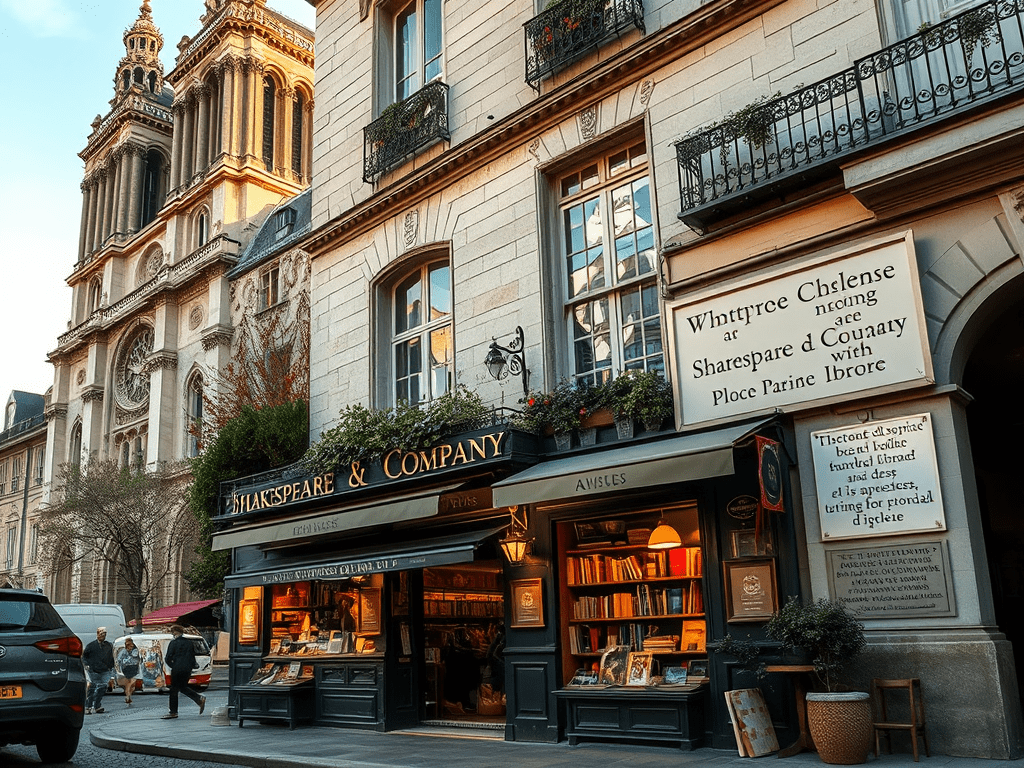
    From the cathedral you can spot a bookshop founded in 1919 by Sylvia Beach, an American expatriate. Her shop, Shakespeare and Company, famously published James Joyce’s Ulysses, , shocking the literary world. Ever since, it has been a haven for writers from across the globe—Ezra Pound, Ernest Hemingway, F. Scott Fitzgerald—until the Nazis forced its closure in 1941.

    Another American wanderer, George Whitman, lingered long enough among the growing piles of books to add beds tucked between the shelves for poor and weary writerly souls in exchange for helping with daily chores. This was just in time for the Bohemian winds that swept across the world. Allen Ginsberg, William Burroughs, Anaïs Nin, Lawrence Durrell, Brecht, and Miller were among the thousands—both famous and aspiring—who spent nights reading, resting, and dreaming of writing their own opus.

    Today, the store has a reading room upstairs, and there is always a literary event or two. You might even stumble upon Jeet Thayil or Guy Gunaratne reading from their own books.

    The French will hold on to their books. If you want to discover what they’re reading, go to Shakespeare and Company!

  • Atlantis, the lost island of childhood

    Atlantis, the lost island of childhood

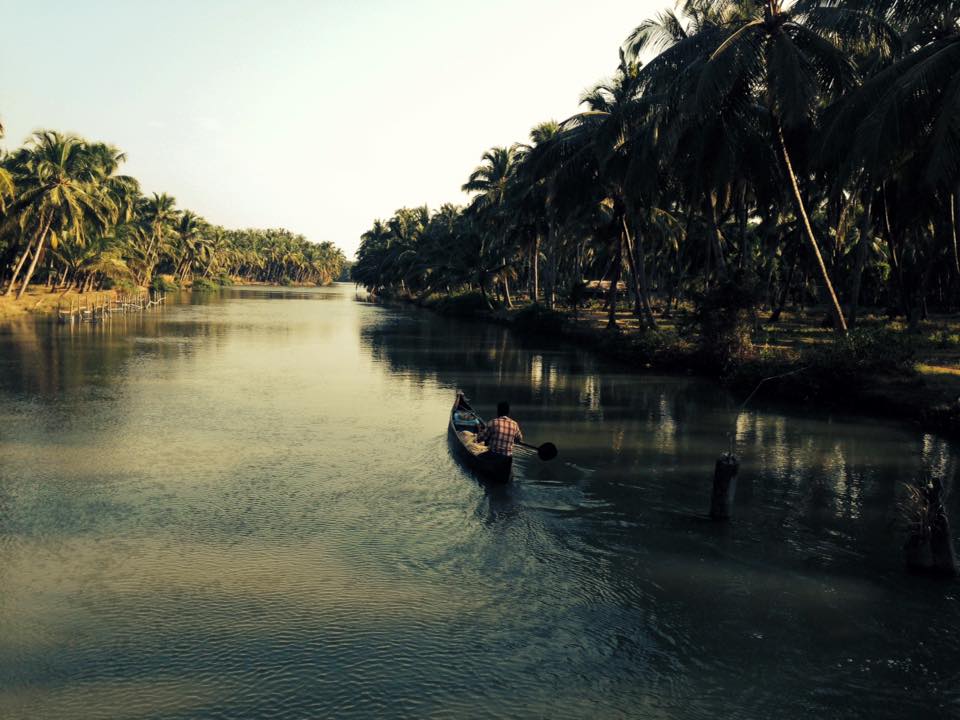
    In the beginning, as far as I can remember, the lush green strip of land was ensconced by the Arabian Sea and a thin river line that was lost into an estuary. A billion species of life thrived in the tiny whirlpools. Sunshine fell on the flowing waters in every fissure. When it rained, the natives who lived in the shanty could see the silver lines of thunder afar and scampered to bring the cows and kids home from the field and the wantons of country roads. The wind wove a symphony across the countless coconut trees that arched over the white and golden sand dunes. Folks called the place – an island, with no name, perhaps to remind the sovereignty of the land that leant over the timeless ebb and flow of the ocean.

    I used to visit my grandparents’ house during our summer vacations. We, the boys from the city found our space and deflated the overcrowded time from our senses on the island. The travel included trekking by bus and ferry boats, finally walking more than a mile passing paddy fields and country roads paved with soft red soil and sand until we reach the Riverbend and holler for the ferry as we soak in the wet breeze wiping away the last trace of fatigue.

    The folks in the house had to paddle across the river for everything that they ever needed, and every household had its own boats. The nights were dense and we could see each other’s faces in sepia sitting across the kerosene lamps for dinner. Eight siblings and dozens of grandkids thronged the spacious and benevolent home during those unforgettable times. If I close my eyes, I can still see the shimmering torch lights of solitary pedestrians on those rugged paths by the river and fisher folks rowing by.

    It must be right after the famine in the forties, my grandfather and his brothers left their misery to follow a dream of a piece of land to call their own. I never asked him to chronicle the events or timeline. They had nothing and everything to fight for. The island was waiting for them to build the Promised Land, and the earth was nubile and feisty. He had plowed his way and unleashed the raw power of farmers and fishermen to build the house, cultivate the land and build boats to fish with a lot of camaraderie with his brothers and natives.

    As kids, we spent the summer vacations in exhilaration, playing on top of the piles of coconuts and grains; canoeing up and down streams; gathering around the table where everyone assembles for dinner and woke up with the roar of waves retreating from the back of the house every morning. My grandfather looked like Odysseus who just came home to Ithaca, having done his journey.

    I spent a lot of time with him listening to his monologues on movies he watched from the country movie theatre or the quality of carpenters who worked on his boats. He also spoke about the murderous sea storms and fights among fisher folks who haunted the evening taverns with a kind of defiant nonchalance. He was Hemingway’s Santiago who came from the sea with the biggest fish I could ever imagine sculling the boat from the horizon, but he was not weary.

    I never asked my grandfather about his journey, rather I was basking in his days of glory. But then things took a different course ever since he folded himself into retirement. My aunts were all married off and had more significant issues in life and kids to gather around, my uncles vanished into the crowds in different parts of India and outside in search of jobs.

    Society itself was undergoing the customary changes as always has been. The deluge of foreign money and pomp of Gulf country residents rolled over the spirit of the land. The old house was abandoned and the grandparents were transplanted to the new home built near the highway and surrounded by walls. The rain, the wind, the undulating expanse of coconut trees, and the waves from the ocean were shut out for the rest of their lives.

    Grandma died first and Grandfather followed her soon. Even the new house looks so old now, occupied now by one of my uncles. He might probably visit once in a while from Dubai where he found a job. The dilapidated and moth-ridden old house bid the last moments of its existence before it was smashed down, probably to build a concrete warehouse for fertilizers. Now that the island has been named and electrified.

    Atlantis, the lost continent is considered to be the source of all Religion, all Science, and all races and civilizations. As we enter the third millennium, the Age of Aquarius its discovery is deemed to cause a major revolution in our view of the world and of both our future and past. I found my Atlantis on that island a while ago when I was a kid. The hearts and minds of the dwellers who built a brave new world over there, though lost, would still speak to you if you listen. That this world can still be mysterious and beautiful if you can spare a moment to grasp.

  • Summer in Barcelona

    Carthaginians found Barcelona along the coast of Catalonia. Romans, Visigoths, Umayyads, and even Plague laid siege on the city cutting down the population in regular intervals. The port city was overrun by people living in filth and squalor with disease outbreaks in the industrial age during the mid-1850s. Constricted by the medieval wall surrounding the city, the citizens began to demolish centuries-old gridlocks and unite the old town and surrounding villages.

    City of Memory and Dreams

    Civil engineers and architects began to dream of wider sunlit streets, free-flowing traffic, tall gothic structures, and narrow walking streets forming perfect geometric shapes crisscrossing the city at the foot of the Serra de Collserola mountain range. Ildefonse Cerda, the civil engineer conjured grid patterns, long straight streets, wide avenues, and superillos with chamfered corners to design his masterpiece, the district of Eixample. Modernista architects led by Antoni Gaudi began to fill the dreams of Engineers.

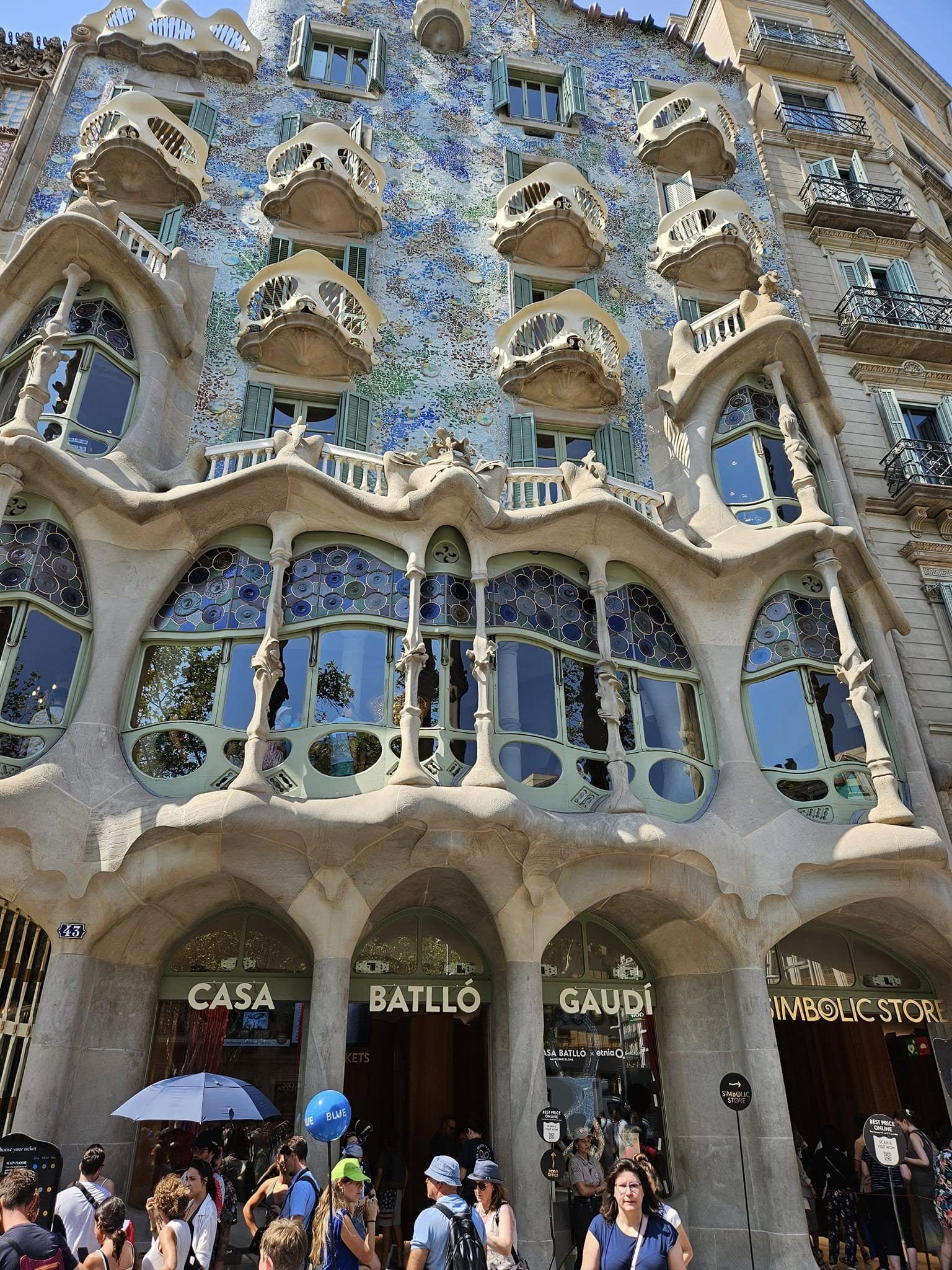
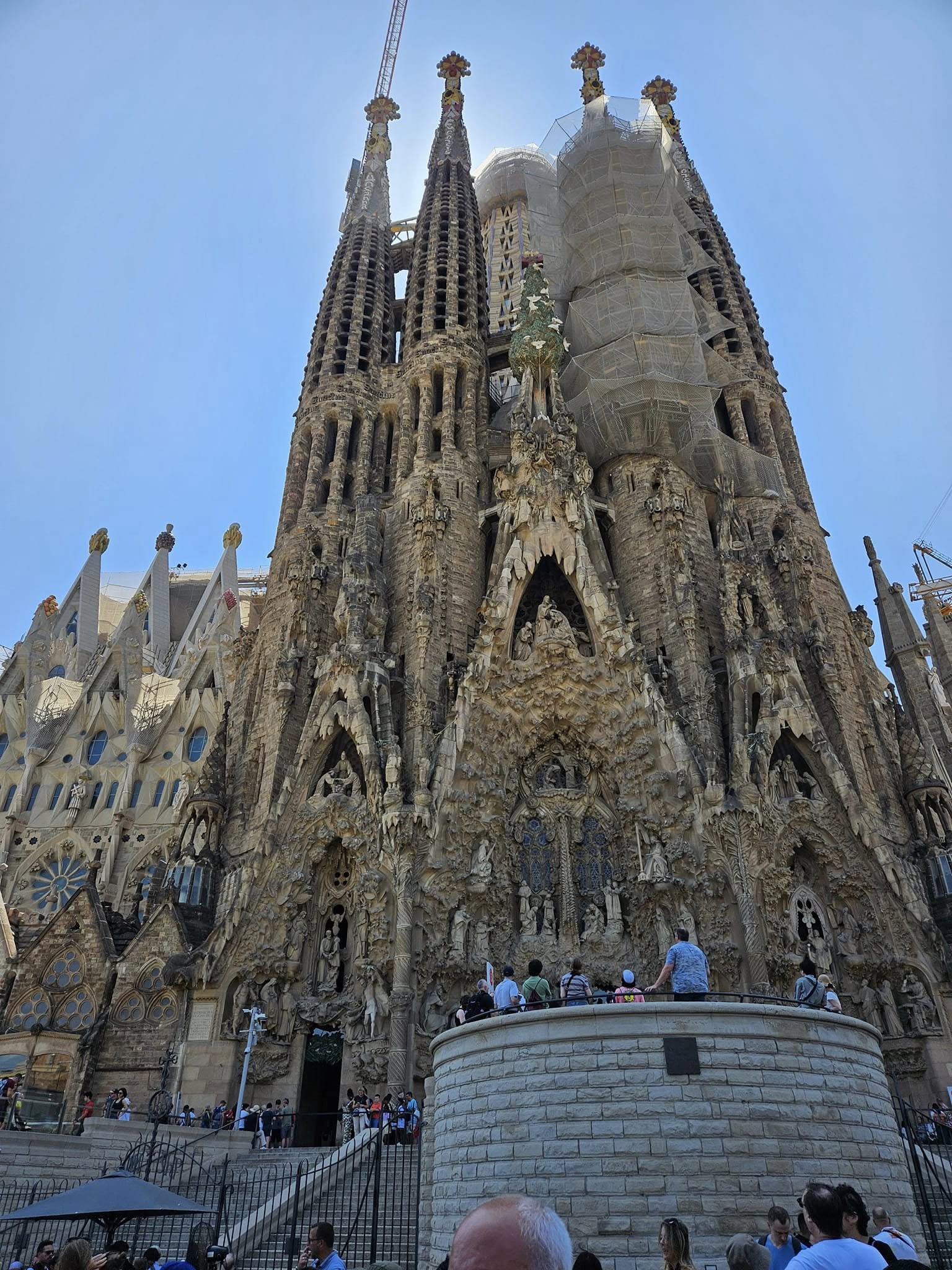
    Barcelona, invoking Italo Calvino’s invisible city Zora, has the quality of remaining in your memory point by point, in its succession of streets, of houses along the streets, and of doors and windows in the houses replete with a medieval touch of Nordic, Gothic and Spanish plateresque flourish along with Catalan motifs. You stand in front of Sagrada Familia leaning towards you, striking awe with its façade and vaults reminding you of the glory of the Christian vision of hell and heaven. The vision follows as you make your way through the fantastic spiraling corridors of Casa Battlo, watch Gaudi’s Salamander at the slanted trails in Park Guell, alleyways paved in cobblestones, and town squares branching off of the divine Barcelona cathedral.

    City and Streets

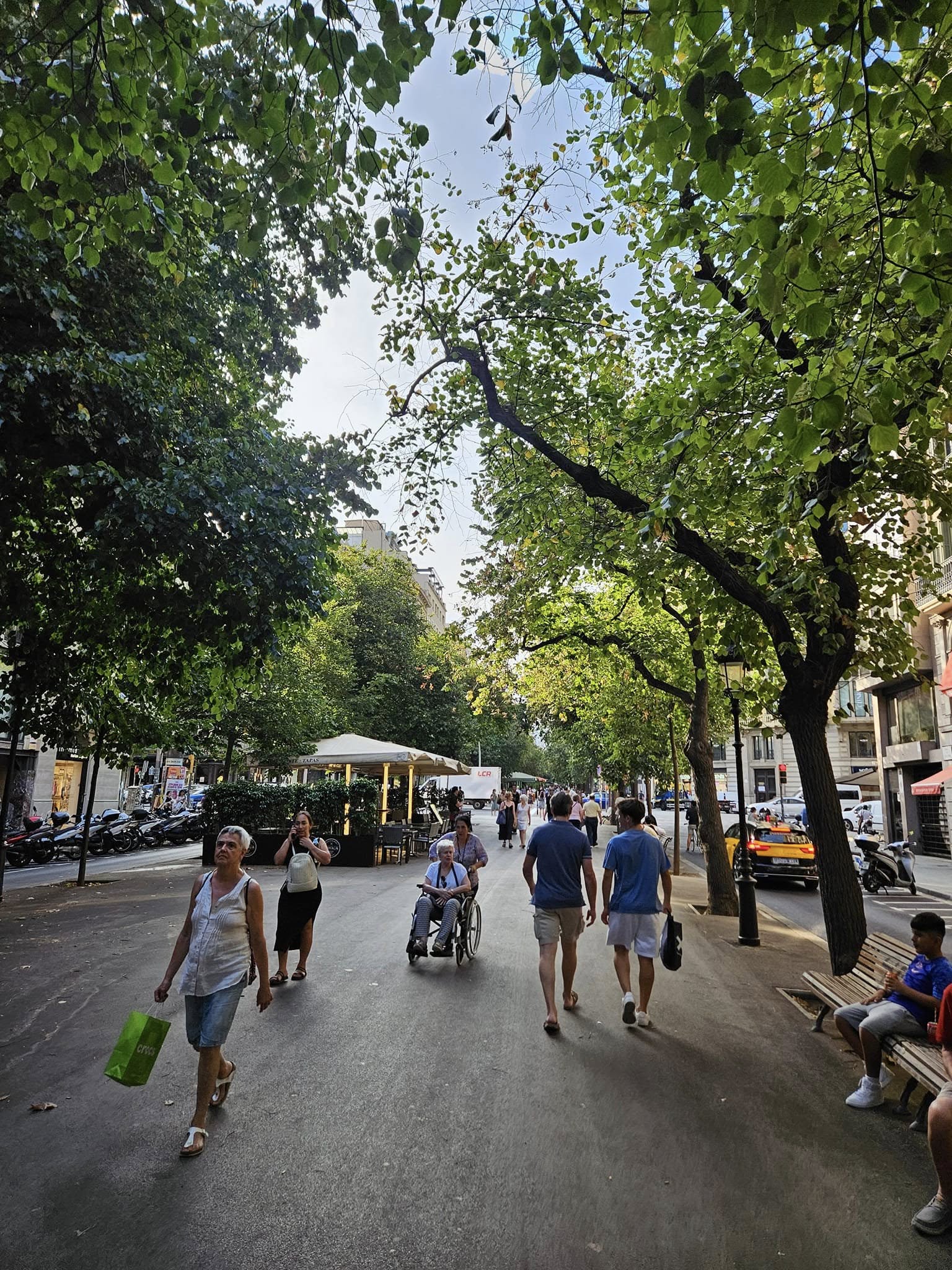
    Rambla De Catalunya is the street where you find the happy trail lined by lime trees on either side where the buskers are serenading restaurant patrons sipping on cool Sangria, with Spanish guitars. The servers are busy working their magic twirling trays of tapas and paella, yet finding time to insist on how to savor the food as Spaniards do. You walk along the stony pavements among the smartly dressed people, wander into the marketplace where exotic merchandise is on sale, and walk out into a corner store with music memorabilia from hundreds of years ago. In the evening you go out to the beach where a hundred busybodies set themselves on canoes to the warm Mediterranean Sea leaving the rest lazing in sand under the sun!

    Protests against tourists may be flaring elsewhere, but the city of Barcelona is busy opening its arms to those stepping out to the sunny streets to marvel at the vision of Gaudi and Cerda.

  • Invisible Cities

    Invisible Cities

    Italo Calvino’s Invisible Cities is a skinny book that condenses the experience and idea of living and feeling cities in abstract and manifest ways. It has been a prized possession since I was a student even though I read it a long time ago and still read random chapters. I got hooked by the matter-of-fact, almost parable-like but incisive visions set ablaze in each chapter of the book, which unveils a different city as narrated in an imaginary conversation between Kublai Khan, the Tatar emperor, and Marco Polo, the traveler. Marco talks about the cities with such great tangents and flourish, leaving you gasping at the delightful insights.

    The lyrical narrative of cities is replete with symbolisms and metaphors. These serve as the readers’ devices to begin their treatises on reality and fiction, memory and desire, and past and present. Calvino masterfully writes about the limitation of communication and power, ephemeral but universal cycles of urban living among the ruins and glory of concrete columns, cities as projections of human psyche, and the possibility of whims and greed as cogent sources of creativity. You could try and ponder over Calvino’s dispatches from the book on some of the real cities and their architects – the tunnel cities in China, Berlin, Turkey and those under Gaza and South Lebanon, Ghost city of Pripyat, Ukraine, and Fake cities in North Korea.

    Calvino belongs to the OULIPO(Ouvroir de Littérature Potentielle – Workshop of Potential Literature), a group of writers, logicians, and mathematicians whose primary objective is the systematic and formal innovation of constraints in the production and adaptation of literature (they also define themselves as rats who themselves build the labyrinth from which they will try to escape). The Oulipo believe that all literature is governed by constraints, be it a sonnet, a detective novel, or anything else. By formulating new constraints, the Oulipo is thus contributing to creating new forms of literature.

    Calvino’s fictional cities delve into the mind of each city that you and I have known or could have known from our personal view of the immediate outside world. The personal account of your life could exactly sound like someone else’. Or the kind of experience and people that you met at the first job that you had done in the city would sound agonizingly similar to someone else if you shift the time a little bit. There must always be someone who fought your fights, cried your cries, dreamt your dreams, and lived your life in some city that you think you lived and known for a lifetime.

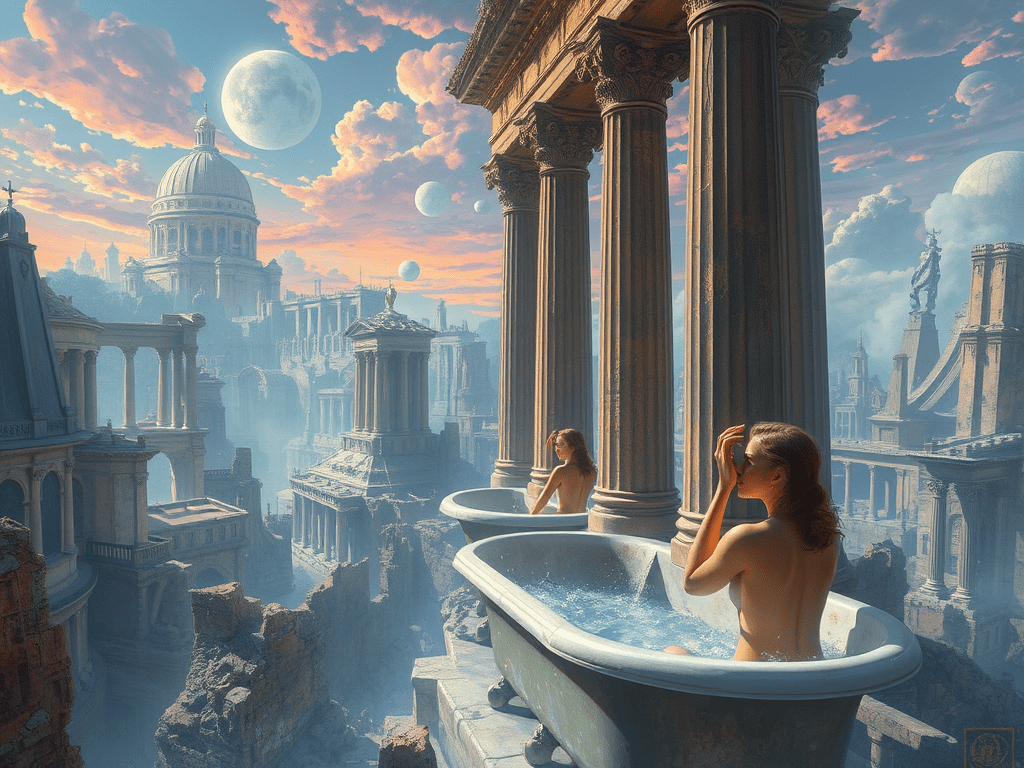
    For example, the invisible City of “Armilla has weathered earthquakes, catastrophes, corroded by termites, once deserted and re-inhabited. It cannot be called deserted since you are likely to glimpse a young woman, or many young women, slender, not tall of stature, luxuriating in the bathtubs or arching their backs under the showers suspended in the void, washing or drying or perfuming themselves, or combing their long hair at a mirror.”

    —If on arriving at Trude I had not read the city’s name written in big letters, I would have thought I was landing at the same airport from which I had taken off. . . . “You can resume your flight whenever you like,” they said to me, “but you will arrive at another Trude, absolutely the same, detail by detail. The world is covered by a sole Trude which does not begin and does not end. Only the name of the airport changes.”

    “Eutropia (a “trading city”) is made up of many cities, all but one of them empty, and its inhabitants periodically tire of their lives, their spouses, their work, and then move en masse to the next city, where they will have new mates, new houses, new jobs, new views from their windows, new friends, pastimes, and subjects of gossip. We learn further that, in spite of all this moving, nothing changes since, although different people are doing them, the same jobs are being done and, though new people are talking, the same things are being gossiped about.”

    From their conversations which began with signs and sounds unintelligible to both, to perfecting each other’s language, to the numbness of understanding through silence, Marco Polo the traveler and Kublai Khan the Emperor have sailed through a lot of cities. Kublai asked Marco: “You, who go about exploring and who see signs, can tell me toward which of these futures the favoring winds are driving us.” Already the Great Khan was leafing through his atlas, over the maps of the cities that menace in nightmares and maledictions: Enoch, Babylong, Yahooland, Butua, Brave New World.

    He continued: “It is all useless, if the last landing place can only be the infernal city, and it is there that, in ever-narrowing circles, the current is drawing us. “And Polo said: “The inferno of the living is not something that will be; if there is one, it is what is already here, the inferno where we live every day, that we form by being together. There are two ways to escape suffering it. The first is easy for many: accept the inferno and become so part of it that you can no longer see it. The second is risky and demands constant vigilance and apprehension: seek and learn to recognize who and what, amid the inferno, are not inferno, then make them endure, give them space.”

    I have had my fair share of cities. You leave a part of you every time you move on to a new destination, hoping you will find what you think you need! eventually, you might visit these cities at some point, hoping again to relive the life and time for a moment with a sense of detachment. Looking back I can see the trail I trod from the walkways in Cochin to Bangalore where the job hunters’ hopes, despair, and celebrations with friends were drenched in rum, to the long and sweltering bus trips to work in Chennai, to Chicago where everyone read something in the commuter trains and Fridays were an onslaught of adrenaline, to New York where you find countless people and cars travel all around you and yet you can listen to the tireless voice of a subway singer with his violin, to the laid back life in small town Pennsylvania and now in this aged, withering city of Philadelphia.