We celebrated every moment
Of our meetings as epiphanies,
Just we two in all the world.
Bolder, lighter than a bird’s wing,
You hurtled like vertigo
Down the stairs, leading
Through moist lilac to your realm
Beyond the mirror.
Andrei Tarkovsky placed Mirror (1975) onto his life. A life he knew through sepia-tainted memories, winter-green deaths and rainswept conflagrations. It reflected the contours of imperfect lives and their spiritual corridors within them, unrelenting and unflinching. The montage of art, history and spirituality went right through the soul, as if a million rays converged to immortalize a human being.
When the movie begins to unreel, we find an adolescent overcoming his stutter under a spell of hypnosis. That is where Andrei wanted us to let the magical hold of Mirror unwind us. You let go of your fears and the handicaps of inert words, and your soul begins a journey of self-expression. When you do, you become kind and empathize; you sense the flow of time, feel the pangs of waiting and despair, and then you just be.
Word is the last to die.
When the drill of water pushes up
Through the subsoil’s tough integument,
Sky will stir.
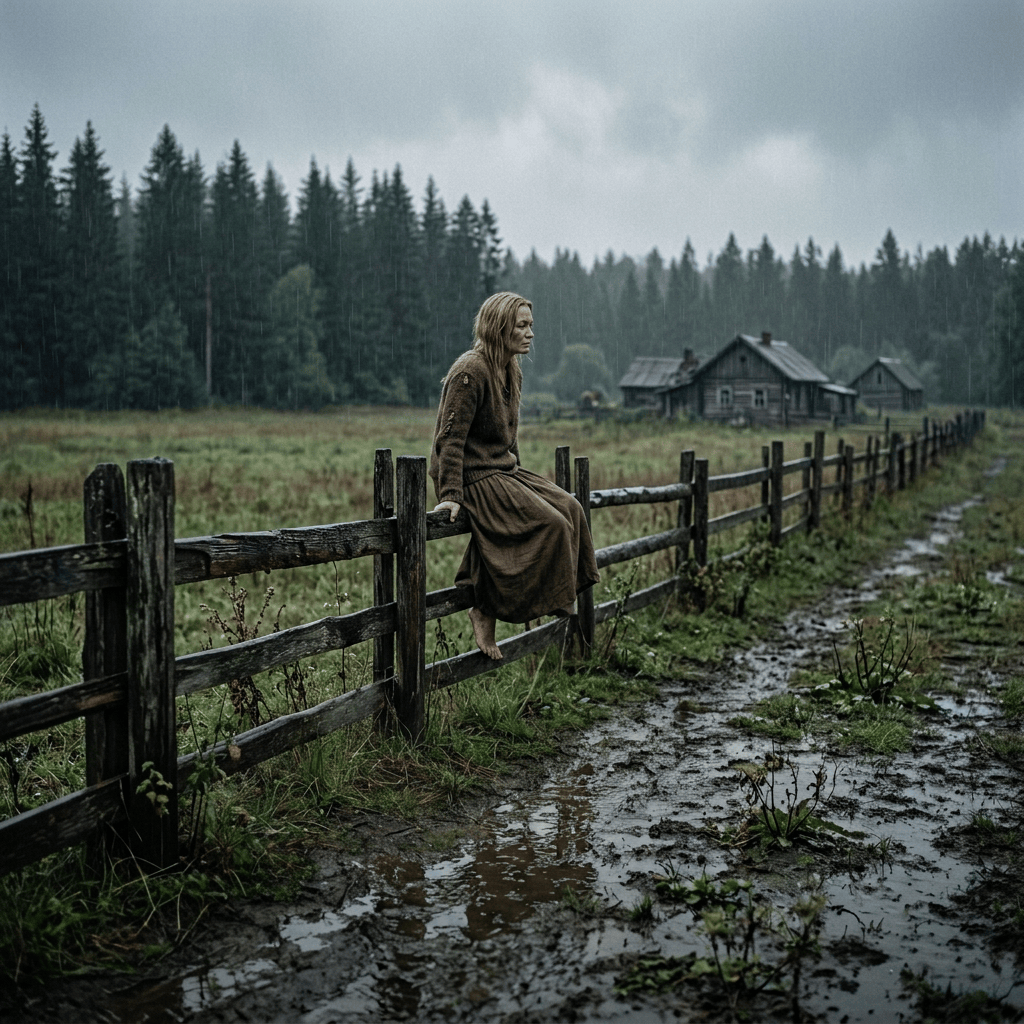
There are references to two Russians in the movie: Pushkin and Chekhov. At the beginning, we see a doctor passing by who strikes up a conversation with Andrei’s mother, Maria, waiting by the fence of their house. When the doctor contrasts plants and trees with humans, who rush about and speak in platitudes, Maria mentions Ward No. 6, Chekhov’s short story dealing with conformity and the perilous boundary between sanity and insanity, implying that the doctor is insane. He says, don’t worry, he is immune to all that—”Chekhov invented it all.”
Another reference is to Pushkin, who, in a letter to a friend, wrote about Russia’s cultural and spiritual contexts being distinctly different and alienated from those of Europe after the invasions of the Mongols and Tatars. Andrei is prodding us to look at the Russian landscape with another eye.
The narrative of the movie is cyclic. You keep coming back to the same windswept green fields around Andrei’s childhood home. You find Maria sitting by the fence, waiting for her husband, and then years later, death. The walls made of logs. Sudden cuts to fire burning at middle distance in a field and the dark green woods behind.
We were led to who knows where.
Before us opened up, in mirage,
Towns constructed out of wonder,
Mint leaves spread themselves beneath our feet,
Birds came on the journey with us,
Fish leapt in greeting from the river,
And the sky unfurled above…
While behind us all the time went fate,
A madman brandishing a razor.
Andrei’s memory of his childhood and troubled marriage is a blend of impressionistic painting and profound photographic interpretation of dreams.
Night. Interior of the dacha. Maria walks by the door and towards the window. An almost unnoticeable freeze of the frame, the color turning into sepia. The child in bed sits up. Maria washes her hair with the help of her husband. She goes towards a mirror and sees herself as an old woman. The house crumbles down in slow motion. Later, Maria lies suspended over the bed, in black and white.
Dreams are given expression. You are awe-struck by the sheer contemplative detachment of the narrator from events. Music and poetry evoke such depth that nature—with its elements of fire, rain and wind—brings about the organic evolution of this miracle of a movie.
The usual autobiographical ingredients are there as well: scenes of childhood memory intercut with newsreel footage; contemporary scenes examining the narrator’s relationships with his mother, his ex-wife and his son; child-custody arguments; and fragments from the history of the period—Prague Spring, Mao, border disputes with China, the Holocaust, the Leningrad blockade. The imperfect lives of Andrei, his parents and the people around them are given an ethereal expression.
The last scene shows Maria leaning on her husband’s chest. She sits up. He asks, “Do you want a boy or a girl?” She looks down and smiles, then tears cross her face. She looks away.
The camera cuts to the woods and pans left across the garden, where the mother—Maria as an old woman—is seen. It continues along the riverbank under trees, past insects, fallen trees and rotting trunks. The mother walks to the right, meets the child, takes his hand and walks on. Cut back to Maria, still carrying that mingled joy and sadness on her face. Then back to the mother, still walking across the field with two children. The camera pans back as mother and children walk away, accompanied by the sound of the bird the boy was imitating.
Through the trees, the image fades to dark.
And that beauty I witnessed in Mirror shattered me.
A man has just one body a solitary shell
The soul thinks it quite shoddy
as many know so well
With ears and eyes outfitted
to cover bones and loins
So fly out through the cornea
into the vaulted sky
Up to those ice cold wheel spokes
where bird like chariots fly
And listen from the shackles
of your living prison room
Note: All the poems are by Arseny Tarkovsky, Andrei’s father.

