Tag: news

  • Election in Kerala & Confederacy of Dunces

    Election is nigh in Malayalee-land.

    The federal and provincial political theater has always had its dependable cast of characters—mostly vaudevillian, corrupt, and inept, with a proven track record of inflicting immense harm upon the very people they claim to serve since Independence.

    Politicians from Kerala, however, are a breed apart. Their incompetence and corruption are beyond dispute, but what truly sets them apart is their unshakeable belief in the moral and intellectual superiority of the “Kerala model” of human development. They speak of it with the reverence of medieval monks preserving sacred texts, never tiring of its glory, nor of lamenting the unfortunate condition of the lesser mortals inhabiting other Indian states.

    The first elected government of Kerala was formed by the Communists. Having endured one too many encounters with loudmouth leftists in Delhi, Indira Gandhi reportedly assembled an informal “kitchen cabinet”—complete with tea, biscuits, and mild constitutional subversion—to engineer a bloodless coup.

    But she did not stop there. Like a political necromancer, she resurrected the defunct and guilt-ridden Muslim League, along with an assortment of Hindu caste blocs and Christian clergy, ensuring that Kerala’s politics would henceforth be entrusted to a rotating fellowship of the perpetually indignant. Their communist counterparts, never to be outdone, split into factions, reunited, split again, and eventually stitched together alliances from ideological leftovers—many of whom proved even more doctrinaire and regressive than their rivals.

    Thus emerged two grand banners under which all ambition, hypocrisy, and moral posturing would be conveniently organized: the United Democratic Front (UDF) and the Left Democratic Front (LDF). The irony, of course, is that both claim ideological purity while practicing political opportunism with breathtaking consistency—each accusing the other of the very sins they commit with greater efficiency.

    The UDF

    The United Democratic Front is best understood as a coalition of eternal negotiation. Its ideology is less a coherent framework and more a delicate balancing act between community arithmetic, historical grievances, and seat-sharing squabbles. Every election cycle, the UDF presents itself as the reasonable alternative—less ideological, slanted slightly to the left, and always just one internal disagreement away from collapse. Its motley leadership, with the Gandhi royalty at the center as the reluctant arbiters of impossible wishes, specialize in seeking votes they never quite earned. They eternally rely on identity politics from a sea of parochial islands, trusting that the voters will remain preoccupied with opposing “the enemy” rather than scrutinizing their own representatives.

    Their discourse on development proceeds cautiously, in the tone of landlords negotiating rent—measured, evasive, and careful not to alienate any bloc whose support they might need sooner than later. The UDF voter, meanwhile, is a connoisseur of compromise—firmly convinced that stability lies in maintaining the status quo. Their ultimate goal of governance is to have a member from their own congregation, caste, or religion in the assembly. If their families really needed economic growth, they could always just send their children abroad.

    The LDF

    The Left Democratic Front operates with the confidence of a movement that believes history is on its side—even when Marxists are declared an extinct species around the rest of the world. Its rhetoric is rich with revolution, resistance, and righteous indignation, though its governance is all about a partisan bureaucracy with excellent public relations work paid for by the people. The LDF prides itself on ideological clarity, which it demonstrates by explaining complex global injustices at great length before addressing local potholes. They exhort students to boycott classes and workers to skip the day in the factory or office so they can join protests against the “grand schemes of imperial forces.”

    They hope to see the “party-villages” taking over the state while the natives parrot words prescribed to them by the party’s secretariat. The leader appears mildly amused at how loyal—and useful—his subjects are, both the literate and the less so. In return, he hands out jobs, contracts, awards, and university degrees. Occasionally, a few deviants might be cut into fifty-one pieces as a reminder of the party line. Its cadre remains deeply committed, disciplined, and ever ready to defend the party on social media, where revolutions are now most efficiently conducted. To its critics, it is a system that has mastered the art of appearing perpetually radical while co-opting the most radical elements of its population.

    The NDA

    The National Democratic Alliance in Kerala is less a political force and more a state of persistent and optimistic anticipation. Every election is heralded as the moment of breakthrough—the year when Kerala will finally align with the broader national mood. That moment, like the quest for the Philosopher’s Stone, is always around the corner but never found. The NDA campaigns with energy, conviction, and a firm belief that ideological clarity will eventually triumph over entrenched local loyalties and decades of hoary tales about fascism.

    However, the Muslim community’s aversion, the Christians’ apprehensions, and the resistance of left-leaning Hindus have left the NDA in the lurch with no redemption in sight. Whenever they get close to the finish line, the U & L factions prove remarkably nimble on their feet, calling a truce just to keep the intruder out. The leaders have learned to live on subsistence allowances from the Center as low-key operatives in the political landscape of Mall-land. As the technocrats at the top will soon realize—we are like that wonly! For now, the NDA remains the most optimistic participant in the electoral process—a party that contests not just elections, but probability itself.

    * * *

    And so, the stage is set once again. Speeches will be made, alliances rearranged, scandals recycled, and manifestos printed with the solemnity of sacred scripture. The voter, as always, will deliberate carefully—before returning the same actors to the same stage in slightly altered costumes. Democracy, after all, is not about change. It is about the freedom to complain about the same things, repeatedly, with renewed enthusiasm.

    Happy voting!

  • The Champions

    The Champions

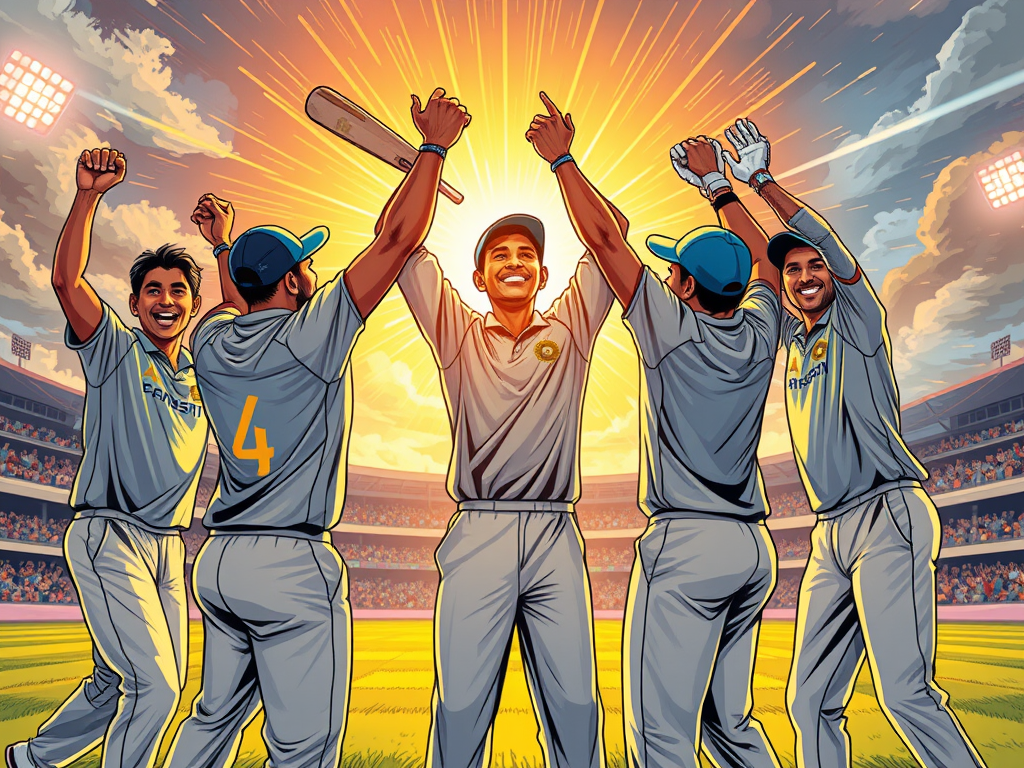
    Winning the championship this time felt almost inevitable. The juggernaut took time to gather pace and even stumbled briefly during the Super Eight stage. But once it hit its straps, it mowed down everything in its path. From the outside, the wheels seemed to roll forward with ruthless efficiency. Yet the parts were human—an ensemble of frailty and triumph.

    Sanju Samson

    When he knelt down, letting the helmet and bat tumble away as he raised his hands, it felt as though the cricketing gods had finally anointed him. Not long ago, he had been down and out, resigned to a fate shaped by a string of low scores and a place out of favour. But fate had other plans. The loss to South Africa, Rinku Singh’s family emergency, and the virtual knockout matches that followed revealed a Sanju-shaped void in the batting lineup.

    No one had ever crossed 80+ scores in three consecutive knockout matches on the way to a championship. Riding the vagaries of T20 batting, he unfurled a series of sublime shots, his face carrying an almost spiritual calm. The believers finally exhaled when the prophecy was fulfilled.

    Hardik Pandya

    Hardik is a champion who has tasted glory many times. Like a trapeze artist, he searches constantly for that perfect arc where time and space align—leaving the audience gasping as he pulls off feats reserved for supreme athletes. It could be a blazing drive through the V, a hard-length ball that traps a marauding batter, or a lightning throw from the boundary to end a charge.
    Yet the final reminded everyone that glory is also a conspiracy of time and space. Without that divine alignment, Hardik too is mortal. No matter how fiercely he chased it, the arc would not appear. But Hardik will never stop chasing.

    Ishan Kishan

    When Ishan first burst onto the scene, he startled everyone with audacious shots and manic hitting, trying to score as much as mathematically possible. Pessimists dismissed it as desperate thrashing that would not last—and it did not.
    What followed defined him. He accepted exile gracefully and returned to the wilderness of domestic cricket. There he flailed, but with purpose, carrying his provincial team all the way to the championship. His swivel-pulls, launched from the remotest corners of the country, sent the non-believers out of the cricketing orbit – seeing is believing, and we saw it match after match.

    Jasprit Bumrah

    Bumrah carries a three-dimensional pitch-map in his mind. His run-up is short and unconventional, but by the time he releases the ball, he has processed a million mental models—like a data scientist narrowing probabilities—to arrive at the most likely mode of dismissal. Bowling becomes an art born of applied artificial intelligence, whenever the fragile body allows him. Against such precision, a batter’s power and instinct rarely stand a chance.

    Axar Patel

    Axar is the one who quietly picks up everyone’s slack—the wise, self-effacing elder brother who appears whenever the family needs help. When things settle, he slips back into the background, ensuring everything stays in order.
    The impossible catches, the teased-out wickets, the runs conjured when others had failed—each act was simply about the team’s wellbeing. No rancour. He has your back.

    The Captain

    SKY made his reputation in the most fickle format of the game. For some time now, the 360-degree strokeplay has not flowed as freely as it once did. Yet he adjusted, moving himself around so others could flourish.

    He seized the important moments and guided the team with quiet assurance. In the end, his legacy may not lie in the shots he played, but in a general’s belief and unwavering loyalty to his troops, even for the beleaguered Abhishek and Varun caught in the cauldron.

    It may have looked like the machine that rolled forward with ruthless efficiency. But the wheels moved only because of the frailties, faith and stubborn will of the men who turned them.

    If you doubt it, ask Sanju. Ask Abhishek.