Tag: Literature

  • All roads lead to Shakespeare and Company

    All roads lead to Shakespeare and Company

    In this age when smartphones have taken over civilization, the French still cling to their paperbacks—and demand deference in conversation. Parisians still laugh out loud in cafés and frown if you ask for directions without saying Bonjour first!

    Walking through Paris convinces you that history and culture aren’t just facts or curiosities here. They breathe, thrive, and redeem even the casual visitor. The writers who once flocked to France must have been chasing what only the French could describe as joie de vivre. Even the picturesque countryside still echoes with Zola and Maupassant. Notre-Dame is still on the long road to recovery from the ashes—reenacting Hugo’s own reasons for writing The Hunchback, as it takes many modern-day Quasimodos to preserve the cathedral and watch over Paris.

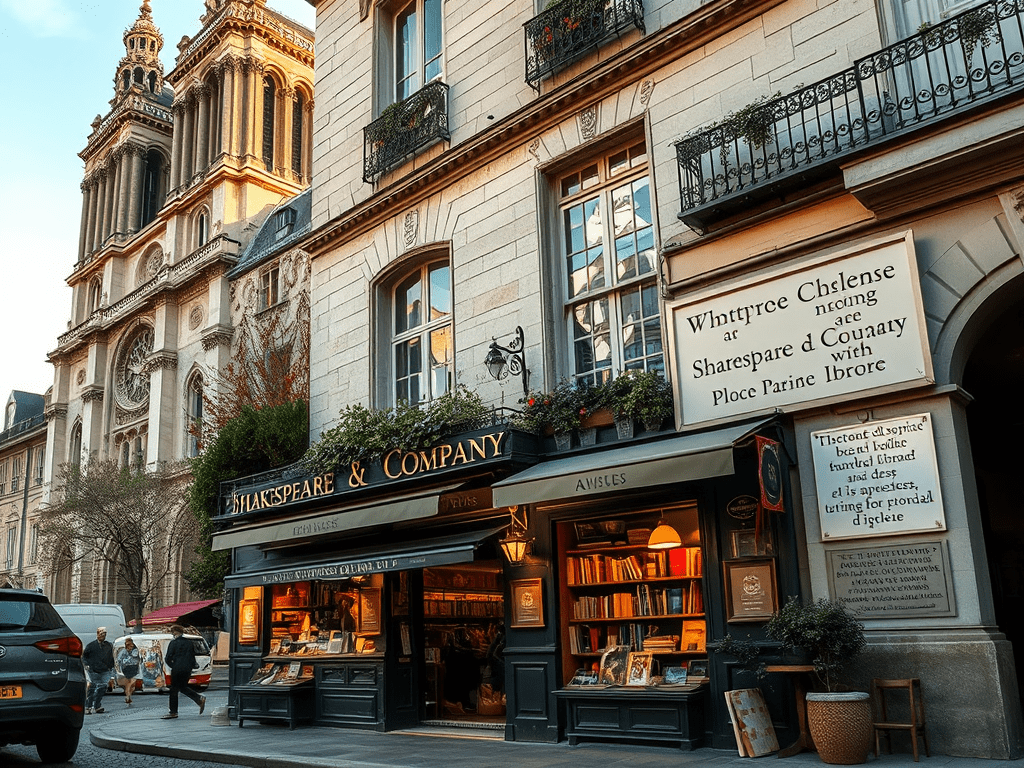
    From the cathedral you can spot a bookshop founded in 1919 by Sylvia Beach, an American expatriate. Her shop, Shakespeare and Company, famously published James Joyce’s Ulysses, , shocking the literary world. Ever since, it has been a haven for writers from across the globe—Ezra Pound, Ernest Hemingway, F. Scott Fitzgerald—until the Nazis forced its closure in 1941.

    Another American wanderer, George Whitman, lingered long enough among the growing piles of books to add beds tucked between the shelves for poor and weary writerly souls in exchange for helping with daily chores. This was just in time for the Bohemian winds that swept across the world. Allen Ginsberg, William Burroughs, Anaïs Nin, Lawrence Durrell, Brecht, and Miller were among the thousands—both famous and aspiring—who spent nights reading, resting, and dreaming of writing their own opus.

    Today, the store has a reading room upstairs, and there is always a literary event or two. You might even stumble upon Jeet Thayil or Guy Gunaratne reading from their own books.

    The French will hold on to their books. If you want to discover what they’re reading, go to Shakespeare and Company!

  • In Light of India – Part I

    In Light of India – Part I

    It rained.

    The hour is an enormous eye.

    Inside it, we come and go like reflections.

    The river of music

    Enters my blood.

    If I say body, it answers wind.

    If I say earth, it answers where?

    The world, a double blossom, opens:
    Sadness of having come,
    Joy of being here.

    I walk lost in my own center
    .

    The essence of Octavio Paz is captured in the short poem: existence as a reflection, time as mystery and the world as duality. As a reader, I couldn’t help but notice Paz’s polemics on existential and reflective differences between civilizations and how oriental was time as a concept in his poems and other writings. His inimical vision of history as an imagination of time had parallels in ancient Indian philosophies. Today, he is being rediscovered not only as a poet of great vision, but also for his scathing criticism of modern democracies for their development model and establishments of greed.

    In Labyrinth of Solitude, Paz has argued that the Mexican civilization had come to a stasis, abandoning its glorious past to withdraw inwardly and self-deprecatingly looked up to its neighbor in the north. It was fairly easy to recognize Octavio Paz’s affinities and insights in the book, In Light of India.

    As anyone who visited India would vouch, India gets through your senses much before your brain begins to register all your preconceived notions of her. You will realize that the teeming reality around you will soon blur its contour to leave you in a daze. Paz spoke about the India he encountered in the bustling streets of Bombay of yore:

    “I put my things in the closet (at Hotel Taj Mahal), bathed quickly, and put on a white shirt. I ran down the stairs and plunged into the streets. There, awaiting me, was an unimagined reality:

    Waves of heat; huge grey and red buildings, a Victorian London growing among palm trees and banyans like a recurrent nightmare, leprous walls, wide and beautiful avenues, huge unfamiliar trees, stinking alleyways,

    Torrents of cars, people coming and going, rivers of bicycles,

    in the doorway of a shack, watching everyone with indifference an old man with a noble face,

    Another beggar, four half-naked would-be saints daubed with paint, red betel stains on the sidewalk,

    Turning the corner, the apparition of a girl like a half-opened flower,

    Stalls selling coconuts and slices of pineapple, ragged vagrants with no job and no luck, a gang of adolescents like an escaping herd of deer,

    A magnificent eucalyptus in the desolation of a garbage dump, an enormous billboard in an empty lot with a picture of a movie star,

    More decrepit walls, whitewashed walls covered with political slogans written in red and black letters I couldn’t read,

    As night fell I returned to my hotel, exhausted…but my curiosity was greater than my fatigue. I went out again into the city. I found many white bundles on the sidewalks: men and women with no home…I saw monsters and was blinded by the flashes of beauty. I strolled through infamous alleyways and stared at the bordellos and little shops: painted prostitutes and transvestites with glass beads and loud skirts. I wandered toward Malabar Hill and its serene gardens.”

    Paz goes back to his hotel but decides to take another walk toward the coast and there he tries to take inventory of all that he has seen, heard, smelled, and felt. He thought of dizziness, horror, stupor, astonishment, joy, enthusiasm, nausea, and an inescapable attraction to explain his state of mind as a “young barbarian poet”.

    If we chop and change some images here and there, contemporary India despite the double-digit economic growth would not be too far away. Paz gets down parsing his newly found exhilaration in the rest of the book which took decades to complete. One doesn’t read Octavio Paz as an academic exercise. One reads him for his insights, provocations and his attempts to engage civilizations in a constant dialogue.

    Even in the opening chapter, Paz reveals his sense of history and uncanny gift for archetypes. According to him, wandering in New Delhi is like passing through the pages of Victor Hugo, Walter Scott, or Alexander Dumas. For him, it was the most ancient of cities – Indraprastha of the epic Mahabharatha where legendary battles of power and ethics played out; and also the city of serene Muslim mausoleums. He writes about the unforgettable moment when he wandered into a tiny empty mosque whose walls were made of marble and inscribed with passages from the Qur’an. Above, the blue of an impassive and benevolent sky was only interrupted, from time to time, by a flock of green parakeets. He stayed there for hours. According to him, it was a vision of the infinite in the blue rectangle of an unbroken sky.

    Years later, Paz would return as the ambassador to India, travelling across the country, collaborating with poets Agyey and Shrikant Verma, and writing East Slope, a collection of poems on Indian themes. He would also talk about his experiments in collaborative poetry with Agyey and Shrikant Verma on Friendship. At Rajiv Gandhi’s behest, he gave a Lecture on India, which he revisited later to write In Light of India. The book makes no sweeping claim of anything in particular, yet it remains a treasure for its insights and tenacity to seek answers in an unfinished quest to make sense of civilizations in conversation.
  • Life A User’s Manual

    Life A User’s Manual

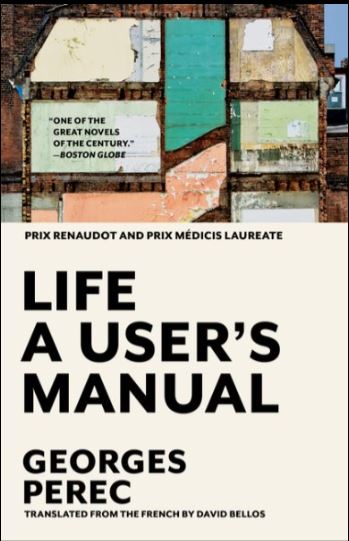
    I read Georges Perec’s Life: A User’s Manual when I was a master’s student in physics. At the time, I was toiling through books and lectures on classical and quantum mechanics—essentially, working for a degree. The Lagrangian and Hamiltonian equations, particle theories, their graduation to quantum physics, and further into Schrödinger and Heisenberg’s formulations, all passed by in a haze.

    I was grappling with the concept of constraints in Lagrangian mechanics when I opened Perec’s preface. In it, he forewarned the reader about the games and devices he had woven into his novel. Although he wrote the book to be eminently readable, he made no bones about the underlying rigor of its construction: the sequence of chapters follows the algorithm of a chess game; jigsaw puzzles, crosswords, and probabilistic formulas organize the literary elements—objects, characters, situations, allusions, and quotations—into a deliberate order; even the indexing of its ninety-nine chapters is modeled after Dewey. It was the mind of an architect at work—focused, meticulous, and simultaneously non-committal about the grandeur of the project, stoic about its futility, and dispassionately observant of life’s intricate goings-on.

    Lagrange essentially said that imposing constraints on a system is another way of stating that forces are present in the problem which cannot be specified directly, but whose effects on motion are known. Perec took this principle into literature—adopting constraints as an empirical approach to writing and, by extension, to reading.

    Perec was part of the Ouvroir de Littérature Potentielle (Oulipo) group, devoted to the study and invention of literary forms. Under the leadership of Raymond Queneau and François Le Lionnais, the Oulipo worked—and still works—to identify and revive neglected forms, while also devising new ones based on rigorous formal constraints. One member famously defined the group, tongue firmly in cheek: “Oulipians: Rats who must build the labyrinth from which they propose to escape.” Perec found a home here, among writers like Jacques Roubaud, Harry Mathews, Italo Calvino, and Marcel Bénabou.

    Life: A User’s Manual tells the story of a ten-story building at the fictional 11, rue Simon-Crubellier in Paris, meticulously describing its interior and the lives of its residents—179 stories in all. Their order is determined by a famous chess problem: visiting every square on a board using only the knight’s move. Once the constraints are set, Perec emerges as anything but a cold formalist—his affection for the characters and their idiosyncrasies is unmistakable. The stories stir wonder, laughter, and reflection, as they reinvent genres—romance, drama, detective tale, adventure, murder mystery—through restaurateurs, mediums, cyclists, antique dealers, and pious widows.

    Some examples:
    – A trapeze artist’s swansong at the circus—an impossible feat that ends in his death.
    – An archaeologist on the Nile trying to rescue a German girl from a harem.
    – A judge’s wife whose thrilling thefts lead to hard labor, ending as a bag lady on a park bench.
    – A murder mystery in which the protagonist adopts the Monte Carlo theory of probability to find his wife’s and daughter’s killer—only to narrowly miss encountering him.
    – A prophecy that shadows generations of a tragedy-stricken family, glimpsed only in a brief visit to an empty apartment.

    These stories leave little doubt about Perec’s storytelling gift. Beneath them all runs a subtle negotiation between writer and reader, with the big picture always in the backdrop. That is where Perec introduces his central figures: Bartlebooth, the millionaire maverick painter; Gaspard Winckler, his assistant; and Valène, the concierge who narrates this intricate web of stories.

    Bartlebooth’s project is monumental: over twenty years, he will travel the world painting 500 watercolors of different harbors. Every other week, a painting is sent to Winckler, who mounts it on wood and cuts it into a 750-piece jigsaw puzzle. Once Bartlebooth returns, he will spend another twenty years reassembling the puzzles, then return each to its original harbor, where it will be washed clean, leaving a blank sheet—the beginning and end coinciding. But things do not go as planned.

    To avenge twenty years of “pointless” work, Winckler begins making the puzzles increasingly difficult. Almost blind, Bartlebooth dies while attempting the 439th puzzle. Perec’s final paragraph captures the irony:

    “It is the twenty-third of June nineteen seventy-five, and it is eight o’clock in the evening. Seated at his jigsaw puzzle, Bartlebooth has just died. On the tablecloth, somewhere in the crepuscular sky of the four hundred and thirty-ninth puzzle, the black hole of the sole piece not yet filled in has the almost perfect shape of an X. But the ironic thing, which could have been foreseen long ago, is that the piece the dead man holds between his fingers is shaped like a W.”

    Winckler, dead two years earlier, has triumphed—but it is a meaningless triumph.

    In a single paragraph, Perec captures the grand project of life, the inherent meaninglessness of human effort, and the role of chance in undoing even the most carefully designed schemes. Our lives are shaped by innumerable constraints—social, ethical, moral, physical, biological—some accepted, some resisted—while the interplay of chaos and order goes mostly unnoticed.

    For someone who once wrote a novel entirely without the letter e, and as a leading figure of the Oulipo movement, this feels like a summit. In it, you sense the shadow of Joyce, Borges, Calvino, Flaubert, and Kafka—but also something uniquely Perec’s own.

    For now, I have nothing more to say. Go read it—the book belongs to you, my dear reader.

  • The Great Gatsby

    F, Scott Fitzgerald’s The Great Gatsby is a short, dense novel. He is not one of my usual choices of writers to pick up and read. But the flair and taut writing had me hooked. His exquisite craft in narrating the Long Island soirees from the Jazz Age where midwesterners came to claim the American dream amid their insecurities about displacement by inferior races, nouveau-riche threatening class barriers and traditional social order, women becoming the co-conspirators to relegate themselves to “beautiful little fools” of their possessors’ social standing – weaving layers of socio-political commentary.

    Nick Carraway, the narrator of the story – a mid-westerner presents an empathetic portrayal of Gatsby, who, in turn, was ingratiating himself into Nick’s life to get close to Daisy Buchanan, Gatsby’s long-lost love. He takes time to shed light on the main characters – Tom Buchanan, the rich and imperious former polo player and Yale alumnus, whom Daisy reluctantly married when Gatsby, son of a poor Lutheran farmer, left town to war with the world and earn enough to marry her. Daisy Buchanan is Nick’s cousin, who grew up in a wealthy family, is a victim and sustainer of the class system of old money as she tolerated Tom’s adultery, condoned racist rants, and finally abandoned Gatsby to his fate, notwithstanding her unabashed love and attraction for him.

    Gatsby conquered the world with the best of American traditions – bootlegging during the prohibition era, insider trading, and other illegal activities, only to settle down near Nick’s house. He ran parties all night without taking part in them, and used them only as a ruse to get close to Daisy. Having Daisy invited over to Nick’s house, Gatsby asked her to play the piano despite her protests about being out of practice. He was reliving the enchantment he lost five years ago, which Nick observed through the bewilderment on Gatsby’s face when Daisy “tumbled short of his dreams-not through her fault, but because of the colossal vitality of his illusion”. Nick went out of the room, leaving them to be “possessed by intense life”.

    Tom punctured Gatsby’s illusion with the help of a private detective and warned Daisy of the source of his wealth. Their confrontation led to tragedy when Daisy, while driving back home, hit Tom’s lover accidentally and ran away. Gatsby tried to protect her as he hid the car in his garage and later kept a night vigil in the garden to see if Daisy was safe in her room with the lights off.  Tom, after a while, reveals that he told the heartbroken widower of his lover, Wilson, that the car that killed her belonged to Gatsby. Wilson committed suicide after shooting Gatsby. Nick finally meets Mr. Gatz, Gatsby’s dog-tired father, as they attend the loneliest funeral sans the sounds of Jazz and the flock of humans.

    Nick, too, leaves New York, brooding over the old, unknown world, and he thought how Gatsby “picked out the green light from Daisy’s dock”. He didn’t realize that the dream he thought so real in his grasp was already behind him. Fitzgerald finishes with a flourish on our collective American dream etched on the Statue of Liberty:

    “Gatsby believed in the green light, the orgastic future that year by year recedes before us. It eluded us then, but that’s no matter – tomorrow we will run faster, stretch out our arms farther…. And one fine morning……

      So we beat on, boats against the current, borne back ceaselessly into the past.”