Tag: family

  • A house in dreams

    A house in dreams

    Every member of the family carried a house within them—a dream shaped by their longings, fears, and memories. Though they spoke of walls, windows, and rooms, each vision revealed not bricks and wood but the architecture of their own hearts.

    The father, who had already traveled a million miles, thought about the house he was going to build:

    The house is where I would find my moorings at the end of a hard day. At night, it takes the form of a ship anchored at the wharf, leaning into the widening shimmer of the ocean. The balmy breeze across the yard would unfurl the sails and carry us a few more knots.

    I want the entrance to rise into a cathedral ceiling, with glass windows all around and a den in front where I can watch storms and lightning pass by. The dwellers of my Ark would hold onto one another until morning breaks—and then I can let them fly into the bluest sky. Perhaps I need a longer glass to see far enough.

    Shrugging off the captain’s apprehensions, the daughter dreamed instead:

    My house begins in the attic, where I have a bird’s-eye view of the landscape beyond the fence, where I can listen to rain rattling on the roof and feel the moist nights tick away as water drips from the drain. Then the sunshine flutters its mosaic across the slanted windows. I want to walk down the stairs into the living room where the family gathers. This house of my dreams is grand and old, and I sense a déjà vu—of being transported to a timeless time.

    The son, impatient with his sister’s hopeful reverie, thought to himself:

    The idea of a basement comes from human fear of death and an expectation that bad things will happen. A dingy crawl space would be preferable. To me, the house feels like a mausoleum built upon such a basement. I know the trusses and walls will crumble someday, and there will be an onslaught of dust until everyone inside turns ghostly. The laughter, sobs, and voices trapped in the air will die a natural death, and I will want to go far away. I would erase every trace of my footprints, too.

    The mother, who packed their belongings from rented apartments time and again, always returned to her own dream:

    This house is a refuge, a boundary drawn against the melancholy of the world. A shelter for the displaced and broken human spirit to restore body, mind, and soul. There should be a dining area beside the living room, ready to welcome and nourish those who come home battered and bruised. And in the bedrooms, soft light will heal them.

    post script:

    Together, their dreams did not form a single blueprint but a constellation of desires—an ark, an attic, a mausoleum, a refuge. The house in their dreams was never just a dwelling; it was the story of who they were, and who they hoped to be.
  • Hope Springs Eternal

    Hope Springs Eternal

    My aunt’s husband left the city of Kochi (Kerala, India) after retiring as a Deputy Revenue Officer. He relocated his wife, and children, except for the oldest daughter finishing college, to Chelakkara in the early seventies, a sparsely populated boondock northwest of Thrissur. After a day-long journey by bus, I had to walk for miles on a rough, winding road flanked by undulating paddy fields on either side until it became an unpaved but equally wide rugged rural pathway, leading to the gate bearing their family name inscribed.

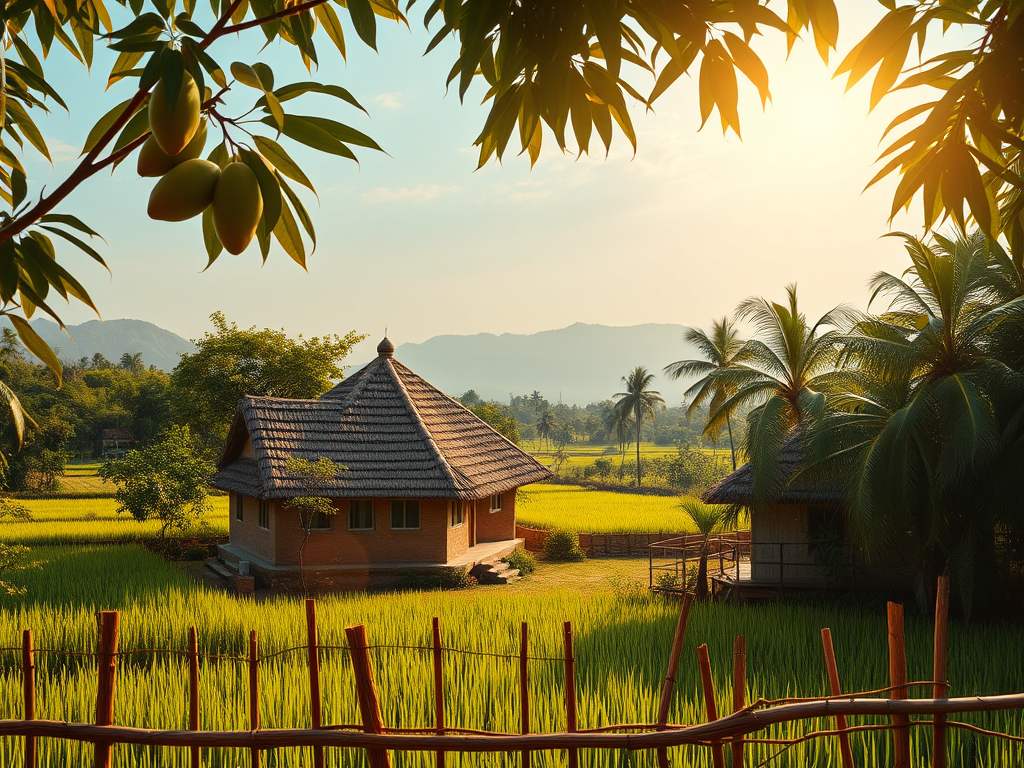
    The house stood in the middle of several acres of land with a bamboo fence. The yard was filled with various fruit trees – many mangoes, jackfruit, guava, gooseberry, cashew apples, and Sapodillas. I was told my uncle even attempted farming paddy once. The original owner of the land was his neighbor. The house also had a cavernous well with nothing but rock at the bottom which my cousin wistfully described as a money pit where his father threw away a fortune over several years hoping for a spring. Now it was just a reservoir for rainwater that dries up in the summer for snakes to snuggle in the damp and shade.

    The house was spacious with a room full of antique cupboards where I found a treasure of his collection of books and audio cassettes. In a chest, I found an official invitation to the first show in Shenoy’s theater in Kochi for its grand opening which someone kept as a souvenir. Uncle had diaries with quotations from and annotations on Malayalam poets, mostly by G. Shankara Kuruppu and Vallathol. It also had notes and tips on farming. I realized the books on Physics and World literature belonged to his brother who died young when he was a lecturer at Brennen College. The complete collection of Yesudas’s Hindi Songs too was his legacy. I never met him. I saw my uncle only twice, of which the second meeting was when I traveled for almost all day in several buses with my parents for his funeral. He visited us a few months earlier to seek my parent’s help to dissuade his younger son from marrying a young girl he met near the dorm, having decided to drop out of college.

    I observed none of my cousins were interested in the books or farming. No one else studied beyond High school or basic trade school while their cousins in Kochi were known for academic excellence including post-doctoral degrees. The older daughter got a job in Government, married, and continued to live in Kochi. They sold the property by the end of 1999 back to the neighbor for a price. Until her last, my Aunt, who retired as a teacher ages ago, lived with the younger son who became a primary school teacher in a small town closer to Kochi. He divorced his first love and is separated from second wife. The other children too found their place now closer to Kochi even though they are still a few hours away.

    I remember watching a French film starring Gerard Depardieu – Jean De Florette (1986). Depardieu played the character of Jean, the Tax Collector and son of Florette who returns with his wife and daughter to the village to claim the land he inherited from his mother to begin the life of a farmer. Ugolin, his neighbor and local farmer who fought with Jean’s uncle earlier for not selling the land, realized that Jean too did not intend to sell. Despite all the efforts to make Jean’s life hell, Ugolin couldn’t make Jean sell his house. He along with an accomplice blocked the spring that was the only source of water forcing Jean to begin digging a well to collect rainwater at least as long as that lasts. Unfortunately while trying to blast open the well, Jean gets hit by a rock and dies. Jean’s distraught and orphaned family sells the house to Ugolin and leaves the village. Soon after, Ugolin unblocks the spring and begins to make a good profit.

  • Atlantis, the lost island of childhood

    Atlantis, the lost island of childhood

    In the beginning, as far as I can remember, the lush green strip of land was ensconced by the Arabian Sea and a thin river line that was lost into an estuary. A billion species of life thrived in the tiny whirlpools. Sunshine fell on the flowing waters in every fissure. When it rained, the natives who lived in the shanty could see the silver lines of thunder afar and scampered to bring the cows and kids home from the field and the wantons of country roads. The wind wove a symphony across the countless coconut trees that arched over the white and golden sand dunes. Folks called the place – an island, with no name, perhaps to remind the sovereignty of the land that leant over the timeless ebb and flow of the ocean.

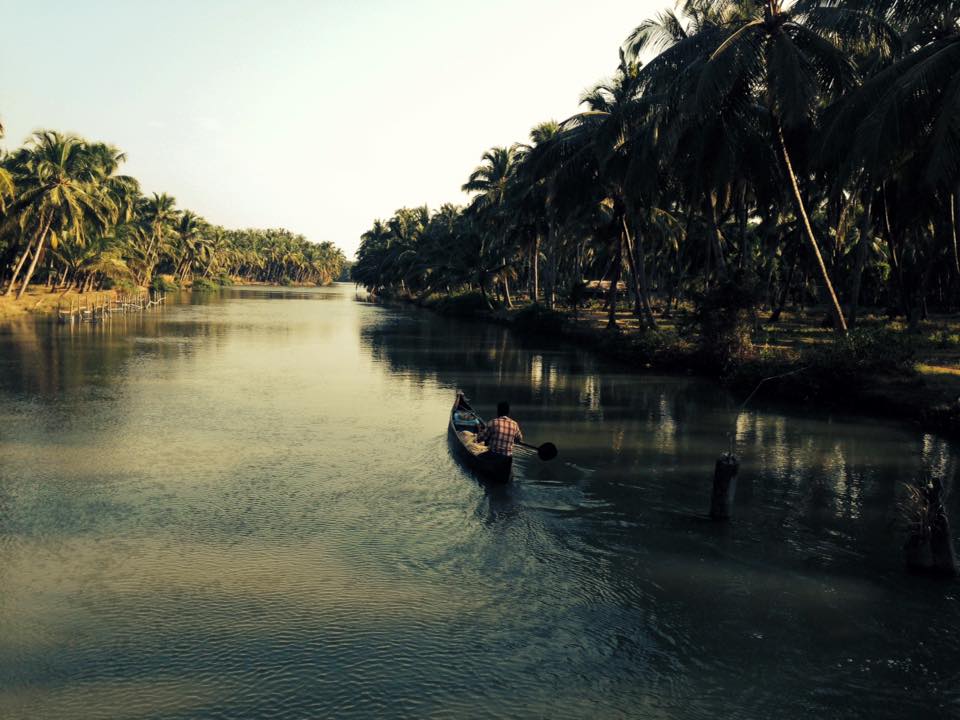
    I used to visit my grandparents’ house during our summer vacations. We, the boys from the city found our space and deflated the overcrowded time from our senses on the island. The travel included trekking by bus and ferry boats, finally walking more than a mile passing paddy fields and country roads paved with soft red soil and sand until we reach the Riverbend and holler for the ferry as we soak in the wet breeze wiping away the last trace of fatigue.

    The folks in the house had to paddle across the river for everything that they ever needed, and every household had its own boats. The nights were dense and we could see each other’s faces in sepia sitting across the kerosene lamps for dinner. Eight siblings and dozens of grandkids thronged the spacious and benevolent home during those unforgettable times. If I close my eyes, I can still see the shimmering torch lights of solitary pedestrians on those rugged paths by the river and fisher folks rowing by.

    It must be right after the famine in the forties, my grandfather and his brothers left their misery to follow a dream of a piece of land to call their own. I never asked him to chronicle the events or timeline. They had nothing and everything to fight for. The island was waiting for them to build the Promised Land, and the earth was nubile and feisty. He had plowed his way and unleashed the raw power of farmers and fishermen to build the house, cultivate the land and build boats to fish with a lot of camaraderie with his brothers and natives.

    As kids, we spent the summer vacations in exhilaration, playing on top of the piles of coconuts and grains; canoeing up and down streams; gathering around the table where everyone assembles for dinner and woke up with the roar of waves retreating from the back of the house every morning. My grandfather looked like Odysseus who just came home to Ithaca, having done his journey.

    I spent a lot of time with him listening to his monologues on movies he watched from the country movie theatre or the quality of carpenters who worked on his boats. He also spoke about the murderous sea storms and fights among fisher folks who haunted the evening taverns with a kind of defiant nonchalance. He was Hemingway’s Santiago who came from the sea with the biggest fish I could ever imagine sculling the boat from the horizon, but he was not weary.

    I never asked my grandfather about his journey, rather I was basking in his days of glory. But then things took a different course ever since he folded himself into retirement. My aunts were all married off and had more significant issues in life and kids to gather around, my uncles vanished into the crowds in different parts of India and outside in search of jobs.

    Society itself was undergoing the customary changes as always has been. The deluge of foreign money and pomp of Gulf country residents rolled over the spirit of the land. The old house was abandoned and the grandparents were transplanted to the new home built near the highway and surrounded by walls. The rain, the wind, the undulating expanse of coconut trees, and the waves from the ocean were shut out for the rest of their lives.

    Grandma died first and Grandfather followed her soon. Even the new house looks so old now, occupied now by one of my uncles. He might probably visit once in a while from Dubai where he found a job. The dilapidated and moth-ridden old house bid the last moments of its existence before it was smashed down, probably to build a concrete warehouse for fertilizers. Now that the island has been named and electrified.

    Atlantis, the lost continent is considered to be the source of all Religion, all Science, and all races and civilizations. As we enter the third millennium, the Age of Aquarius its discovery is deemed to cause a major revolution in our view of the world and of both our future and past. I found my Atlantis on that island a while ago when I was a kid. The hearts and minds of the dwellers who built a brave new world over there, though lost, would still speak to you if you listen. That this world can still be mysterious and beautiful if you can spare a moment to grasp.

  • Backyard Brawls

    Backyard Brawls

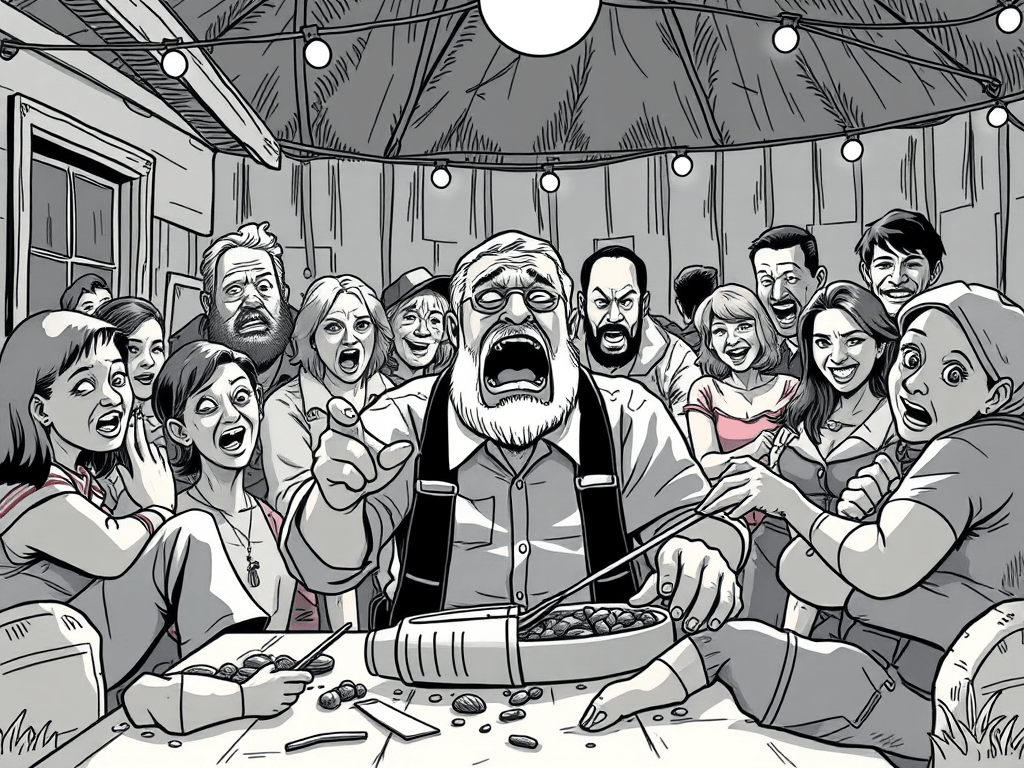
    Imagine a backyard in a small town lost in Appalachia, where uncles, cousins, and friends from the neighborhood gather for Thanksgiving—or some other inopportune occasion. One of them—an uncle, tipsy and loud—starts ranting about a long-forgotten feud. A certain family member, he insists, isn’t grateful enough for his life or the family. He must be taught a lesson—now, and how! Thus, the customary brawl breaks out, ending as always: with one or two shotguns fired in random directions, a volley of aimless verbal violence, and a mess of broken furniture.

    The ever-present mix of helplessness, poverty, and alcoholism—practically a permanent disability in town—seeps into people’s minds, corroding whatever remains of reason. Violence lurks in every corner, waiting for the slightest spark. Even those lucky enough to escape the gravitational pull of that world are never entirely free. J.D. Vance, against all odds, defied gravity—and found himself in the house of unlimited power.

    Zelensky had spent years fighting an existential battle against a hard, dour, and ruthless dictator with limitless resources. But none of that prepared him for dinner at the Oval House, hosted by JD. As soon as the guest in army uniform took his seat, JD saw the setting morph into the familiar gray backyard from Appalachia where Uncle Trump needed a nudge and a reminder of how things ought to be done. It shouldn’t matter that JD and Rubio voted against the help for which Zelensky wasn’t “thankful enough”. The ungrateful visitor must be verbally put in his place. He should thank his stars that the brawl ended with just the denial of dinner and a summary send-off, not a sentence or broken bones.

    Unfortunately, the Ukrainians could have done little to avoid invasion and outlast the medieval brute. Cowering before a dictator, ruing his misfortune ever since his tanks began exploding on the road to Kyiv—doesn’t inspire awe or respect. Enemies of democracy couldn’t believe their luck, while the rest stood paralyzed—too worried and confused to predict an uncertain future.

    In their misguided zeal to cling to power, Democrats, liberals, and traditional Republicans ignored the crumbling foundation of freedom and decency. By allowing illiberal and aberrant elements to take center stage, they paved the way for dysfunctional folks from the backyard to seize the house of power.