Category: travel

  • Philadelphia

    Philadelphia

    Philadelphia is a city where the dwellers seem gripped by a recurring sense of having lived the exact moment before. The same conversation, the same person with a smirk on his face, the same weather — precisely when your neighbor locked his apartment to leave and the mayor was having a nightmare about his house being bugged by the FBI. Or you might hear the jumbled voices on the radio discussing Dalí and the death of a jazz singer in your car while a Black man walked across the street with a beer bottle in hand.

    It’s a city that has been aging ever since Ben Franklin dreamed that, on the day of his funeral, leaders — thirty-four ministers, preachers, priests, and at least one rabbi — marched arm in arm behind his casket as it was carried to the gravesite. He even dreamed of the Liberty Bell crumbling.

    If you sit in one of the chairs in the old assembly hall of the Constitution House, after climbing the sturdy wooden stairs, you could still sense the rustle of tunics and sombreros worn by your fellow legislators. Perhaps you could still argue with them to make Gujarat the fifty-first federal state.

    If you walk through Center City along the sun-soaked brick buildings, you might meet travelers from neighboring towns afflicted by bouts of insomnia, lost in the constitutional walking tour of Philadelphia. And if you drift down toward the inner city along the Delaware River, you might find Lila, the aging and desperate wharf-bar pickup, and hone your ruminations on life and civilization into something understandable and real before you sail back out to the outer seas again.

    Further north, you might find Mr. George Tharakan stepping out of his Mercedes-Benz in a suit, entering his four-bedroom house, then later emerging in a lungi to inspect the fence he shares with his fellow native. If you glanced through his family album, you would find him wearing the exact same lungi, inspecting his fence on a similar sunny evening in Thiruvalla, Kerala.

  • All roads lead to Shakespeare and Company

    All roads lead to Shakespeare and Company

    In this age when smartphones have taken over civilization, the French still cling to their paperbacks—and demand deference in conversation. Parisians still laugh out loud in cafés and frown if you ask for directions without saying Bonjour first!

    Walking through Paris convinces you that history and culture aren’t just facts or curiosities here. They breathe, thrive, and redeem even the casual visitor. The writers who once flocked to France must have been chasing what only the French could describe as joie de vivre. Even the picturesque countryside still echoes with Zola and Maupassant. Notre-Dame is still on the long road to recovery from the ashes—reenacting Hugo’s own reasons for writing The Hunchback, as it takes many modern-day Quasimodos to preserve the cathedral and watch over Paris.

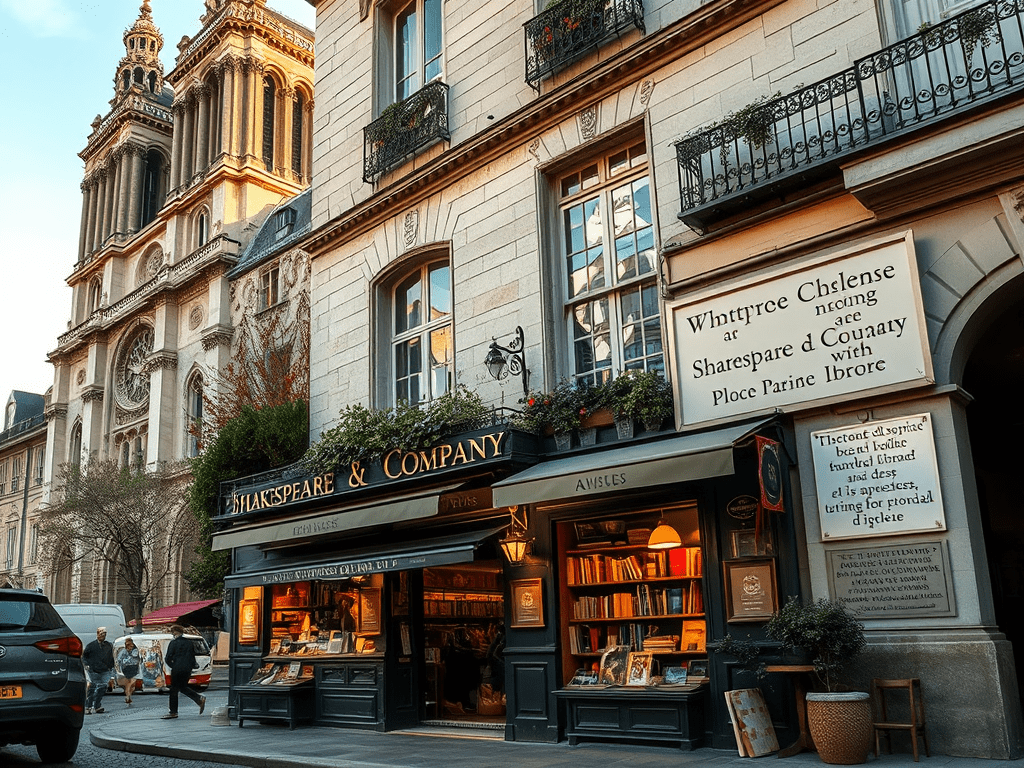
    From the cathedral you can spot a bookshop founded in 1919 by Sylvia Beach, an American expatriate. Her shop, Shakespeare and Company, famously published James Joyce’s Ulysses, , shocking the literary world. Ever since, it has been a haven for writers from across the globe—Ezra Pound, Ernest Hemingway, F. Scott Fitzgerald—until the Nazis forced its closure in 1941.

    Another American wanderer, George Whitman, lingered long enough among the growing piles of books to add beds tucked between the shelves for poor and weary writerly souls in exchange for helping with daily chores. This was just in time for the Bohemian winds that swept across the world. Allen Ginsberg, William Burroughs, Anaïs Nin, Lawrence Durrell, Brecht, and Miller were among the thousands—both famous and aspiring—who spent nights reading, resting, and dreaming of writing their own opus.

    Today, the store has a reading room upstairs, and there is always a literary event or two. You might even stumble upon Jeet Thayil or Guy Gunaratne reading from their own books.

    The French will hold on to their books. If you want to discover what they’re reading, go to Shakespeare and Company!

  • In Light of India – Part I

    In Light of India – Part I

    It rained.

    The hour is an enormous eye.

    Inside it, we come and go like reflections.

    The river of music

    Enters my blood.

    If I say body, it answers wind.

    If I say earth, it answers where?

    The world, a double blossom, opens:
    Sadness of having come,
    Joy of being here.

    I walk lost in my own center
    .

    The essence of Octavio Paz is captured in the short poem: existence as a reflection, time as mystery and the world as duality. As a reader, I couldn’t help but notice Paz’s polemics on existential and reflective differences between civilizations and how oriental was time as a concept in his poems and other writings. His inimical vision of history as an imagination of time had parallels in ancient Indian philosophies. Today, he is being rediscovered not only as a poet of great vision, but also for his scathing criticism of modern democracies for their development model and establishments of greed.

    In Labyrinth of Solitude, Paz has argued that the Mexican civilization had come to a stasis, abandoning its glorious past to withdraw inwardly and self-deprecatingly looked up to its neighbor in the north. It was fairly easy to recognize Octavio Paz’s affinities and insights in the book, In Light of India.

    As anyone who visited India would vouch, India gets through your senses much before your brain begins to register all your preconceived notions of her. You will realize that the teeming reality around you will soon blur its contour to leave you in a daze. Paz spoke about the India he encountered in the bustling streets of Bombay of yore:

    “I put my things in the closet (at Hotel Taj Mahal), bathed quickly, and put on a white shirt. I ran down the stairs and plunged into the streets. There, awaiting me, was an unimagined reality:

    Waves of heat; huge grey and red buildings, a Victorian London growing among palm trees and banyans like a recurrent nightmare, leprous walls, wide and beautiful avenues, huge unfamiliar trees, stinking alleyways,

    Torrents of cars, people coming and going, rivers of bicycles,

    in the doorway of a shack, watching everyone with indifference an old man with a noble face,

    Another beggar, four half-naked would-be saints daubed with paint, red betel stains on the sidewalk,

    Turning the corner, the apparition of a girl like a half-opened flower,

    Stalls selling coconuts and slices of pineapple, ragged vagrants with no job and no luck, a gang of adolescents like an escaping herd of deer,

    A magnificent eucalyptus in the desolation of a garbage dump, an enormous billboard in an empty lot with a picture of a movie star,

    More decrepit walls, whitewashed walls covered with political slogans written in red and black letters I couldn’t read,

    As night fell I returned to my hotel, exhausted…but my curiosity was greater than my fatigue. I went out again into the city. I found many white bundles on the sidewalks: men and women with no home…I saw monsters and was blinded by the flashes of beauty. I strolled through infamous alleyways and stared at the bordellos and little shops: painted prostitutes and transvestites with glass beads and loud skirts. I wandered toward Malabar Hill and its serene gardens.”

    Paz goes back to his hotel but decides to take another walk toward the coast and there he tries to take inventory of all that he has seen, heard, smelled, and felt. He thought of dizziness, horror, stupor, astonishment, joy, enthusiasm, nausea, and an inescapable attraction to explain his state of mind as a “young barbarian poet”.

    If we chop and change some images here and there, contemporary India despite the double-digit economic growth would not be too far away. Paz gets down parsing his newly found exhilaration in the rest of the book which took decades to complete. One doesn’t read Octavio Paz as an academic exercise. One reads him for his insights, provocations and his attempts to engage civilizations in a constant dialogue.

    Even in the opening chapter, Paz reveals his sense of history and uncanny gift for archetypes. According to him, wandering in New Delhi is like passing through the pages of Victor Hugo, Walter Scott, or Alexander Dumas. For him, it was the most ancient of cities – Indraprastha of the epic Mahabharatha where legendary battles of power and ethics played out; and also the city of serene Muslim mausoleums. He writes about the unforgettable moment when he wandered into a tiny empty mosque whose walls were made of marble and inscribed with passages from the Qur’an. Above, the blue of an impassive and benevolent sky was only interrupted, from time to time, by a flock of green parakeets. He stayed there for hours. According to him, it was a vision of the infinite in the blue rectangle of an unbroken sky.

    Years later, Paz would return as the ambassador to India, travelling across the country, collaborating with poets Agyey and Shrikant Verma, and writing East Slope, a collection of poems on Indian themes. He would also talk about his experiments in collaborative poetry with Agyey and Shrikant Verma on Friendship. At Rajiv Gandhi’s behest, he gave a Lecture on India, which he revisited later to write In Light of India. The book makes no sweeping claim of anything in particular, yet it remains a treasure for its insights and tenacity to seek answers in an unfinished quest to make sense of civilizations in conversation.

  • Summer in Barcelona

    Carthaginians found Barcelona along the coast of Catalonia. Romans, Visigoths, Umayyads, and even Plague laid siege on the city cutting down the population in regular intervals. The port city was overrun by people living in filth and squalor with disease outbreaks in the industrial age during the mid-1850s. Constricted by the medieval wall surrounding the city, the citizens began to demolish centuries-old gridlocks and unite the old town and surrounding villages.

    City of Memory and Dreams

    Civil engineers and architects began to dream of wider sunlit streets, free-flowing traffic, tall gothic structures, and narrow walking streets forming perfect geometric shapes crisscrossing the city at the foot of the Serra de Collserola mountain range. Ildefonse Cerda, the civil engineer conjured grid patterns, long straight streets, wide avenues, and superillos with chamfered corners to design his masterpiece, the district of Eixample. Modernista architects led by Antoni Gaudi began to fill the dreams of Engineers.

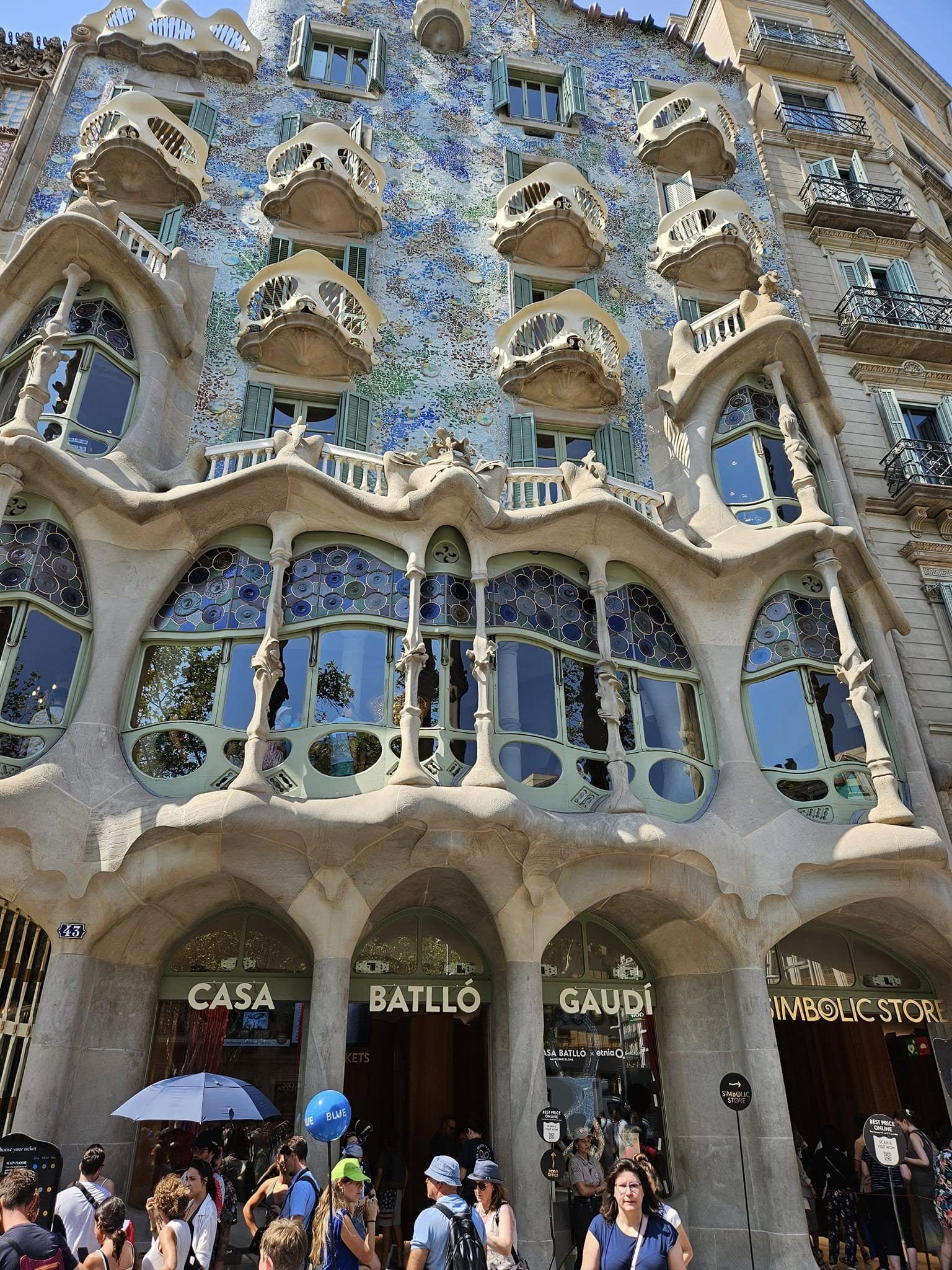
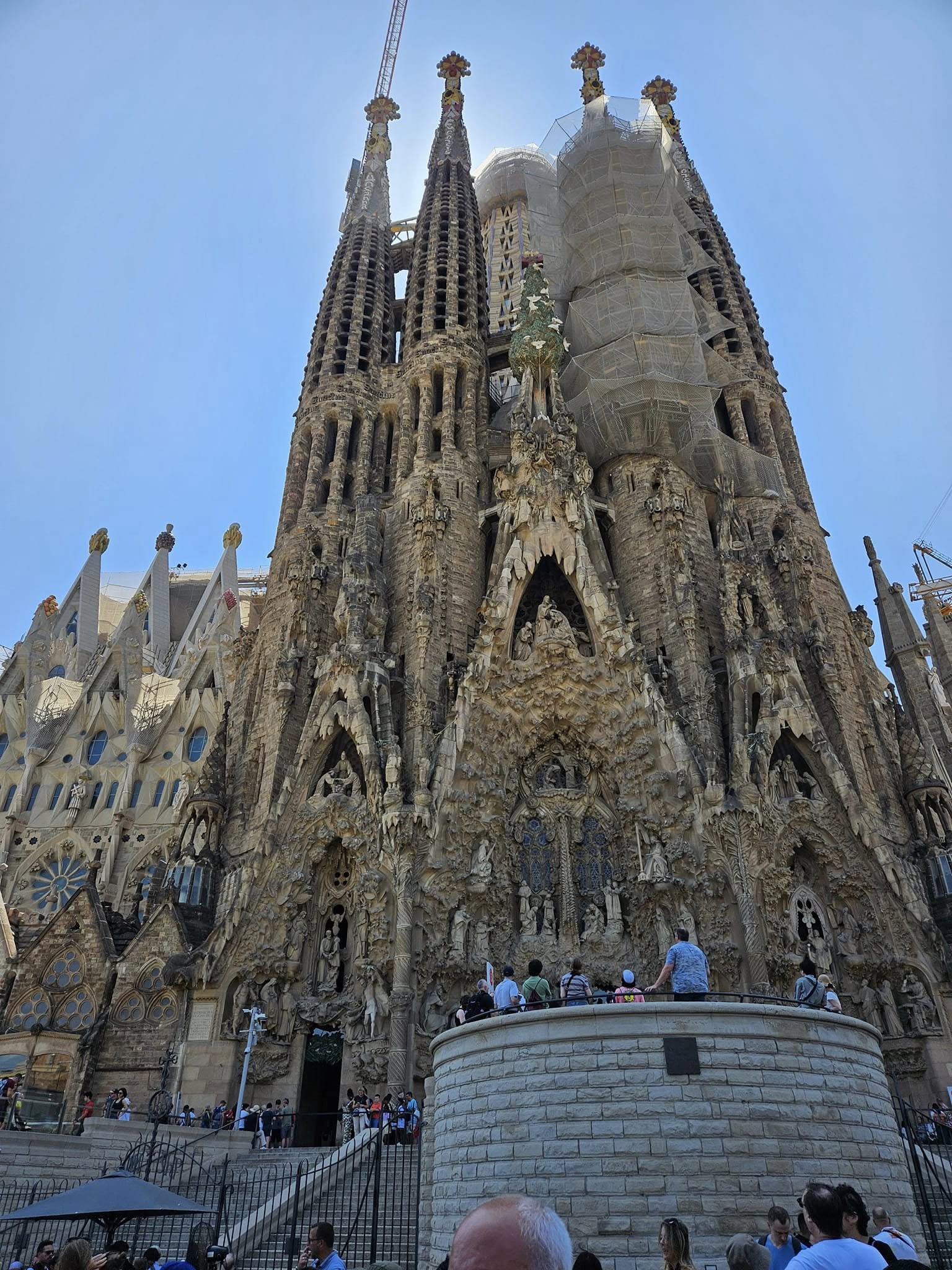
    Barcelona, invoking Italo Calvino’s invisible city Zora, has the quality of remaining in your memory point by point, in its succession of streets, of houses along the streets, and of doors and windows in the houses replete with a medieval touch of Nordic, Gothic and Spanish plateresque flourish along with Catalan motifs. You stand in front of Sagrada Familia leaning towards you, striking awe with its façade and vaults reminding you of the glory of the Christian vision of hell and heaven. The vision follows as you make your way through the fantastic spiraling corridors of Casa Battlo, watch Gaudi’s Salamander at the slanted trails in Park Guell, alleyways paved in cobblestones, and town squares branching off of the divine Barcelona cathedral.

    City and Streets

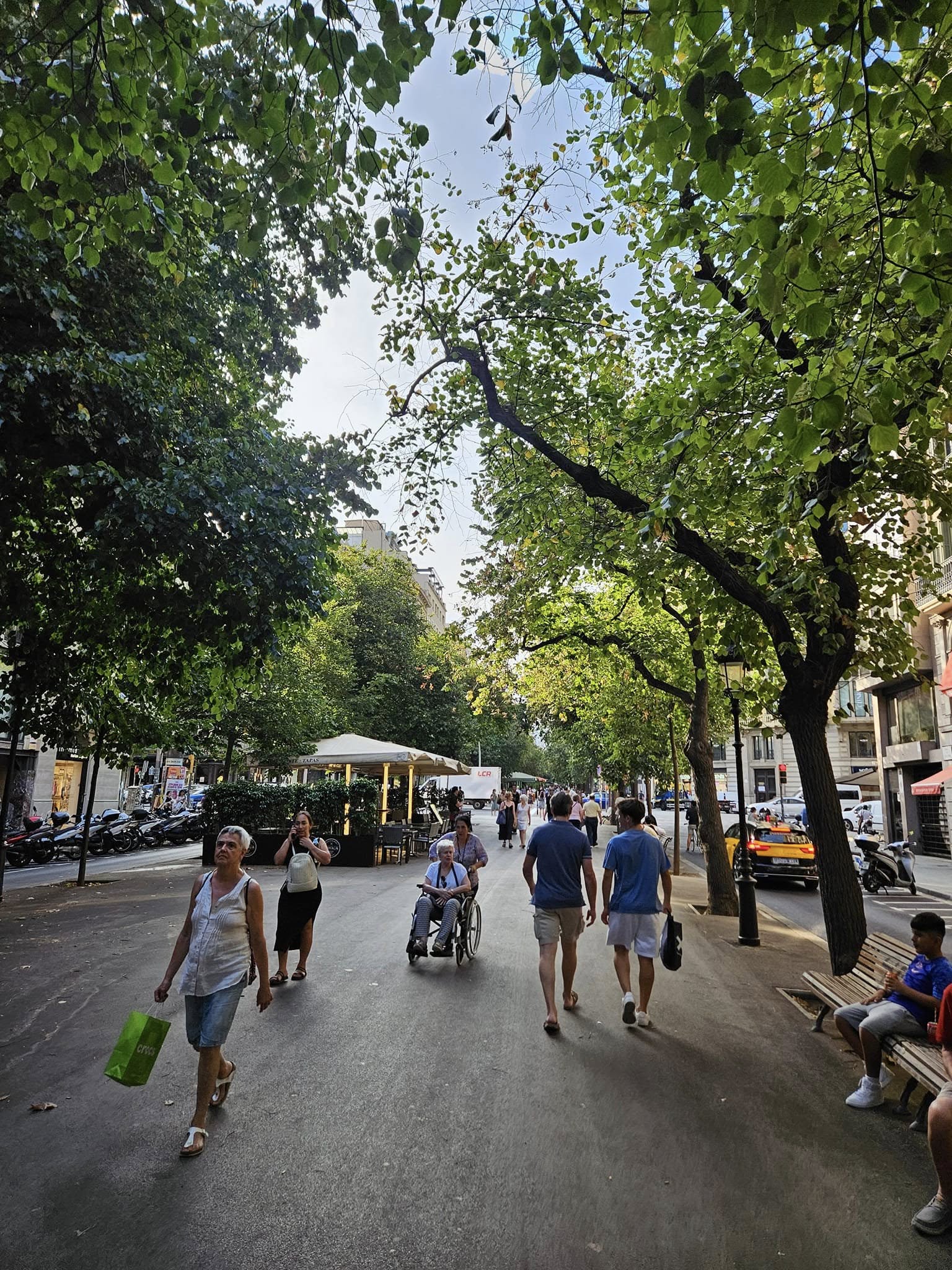
    Rambla De Catalunya is the street where you find the happy trail lined by lime trees on either side where the buskers are serenading restaurant patrons sipping on cool Sangria, with Spanish guitars. The servers are busy working their magic twirling trays of tapas and paella, yet finding time to insist on how to savor the food as Spaniards do. You walk along the stony pavements among the smartly dressed people, wander into the marketplace where exotic merchandise is on sale, and walk out into a corner store with music memorabilia from hundreds of years ago. In the evening you go out to the beach where a hundred busybodies set themselves on canoes to the warm Mediterranean Sea leaving the rest lazing in sand under the sun!

    Protests against tourists may be flaring elsewhere, but the city of Barcelona is busy opening its arms to those stepping out to the sunny streets to marvel at the vision of Gaudi and Cerda.