Category: Literature

  • All roads lead to Shakespeare and Company

    All roads lead to Shakespeare and Company

    In this age when smartphones have taken over civilization, the French still cling to their paperbacks—and demand deference in conversation. Parisians still laugh out loud in cafés and frown if you ask for directions without saying Bonjour first!

    Walking through Paris convinces you that history and culture aren’t just facts or curiosities here. They breathe, thrive, and redeem even the casual visitor. The writers who once flocked to France must have been chasing what only the French could describe as joie de vivre. Even the picturesque countryside still echoes with Zola and Maupassant. Notre-Dame is still on the long road to recovery from the ashes—reenacting Hugo’s own reasons for writing The Hunchback, as it takes many modern-day Quasimodos to preserve the cathedral and watch over Paris.

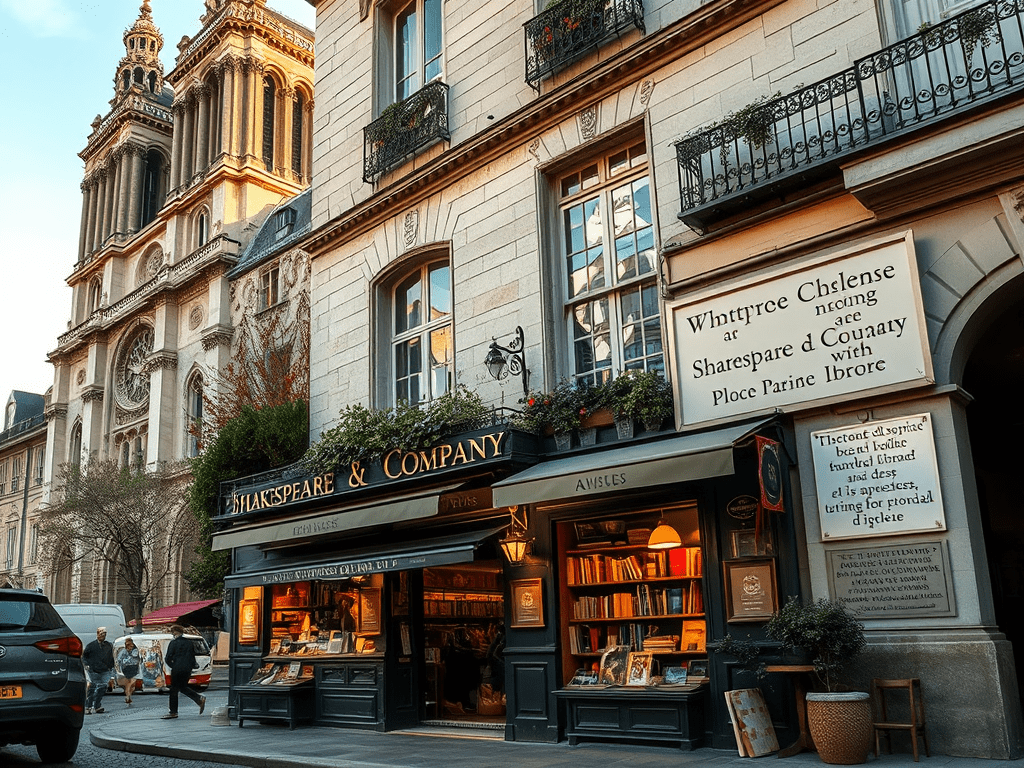
    From the cathedral you can spot a bookshop founded in 1919 by Sylvia Beach, an American expatriate. Her shop, Shakespeare and Company, famously published James Joyce’s Ulysses, , shocking the literary world. Ever since, it has been a haven for writers from across the globe—Ezra Pound, Ernest Hemingway, F. Scott Fitzgerald—until the Nazis forced its closure in 1941.

    Another American wanderer, George Whitman, lingered long enough among the growing piles of books to add beds tucked between the shelves for poor and weary writerly souls in exchange for helping with daily chores. This was just in time for the Bohemian winds that swept across the world. Allen Ginsberg, William Burroughs, Anaïs Nin, Lawrence Durrell, Brecht, and Miller were among the thousands—both famous and aspiring—who spent nights reading, resting, and dreaming of writing their own opus.

    Today, the store has a reading room upstairs, and there is always a literary event or two. You might even stumble upon Jeet Thayil or Guy Gunaratne reading from their own books.

    The French will hold on to their books. If you want to discover what they’re reading, go to Shakespeare and Company!

  • A house in dreams

    A house in dreams

    Every member of the family carried a house within them—a dream shaped by their longings, fears, and memories. Though they spoke of walls, windows, and rooms, each vision revealed not bricks and wood but the architecture of their own hearts.

    The father, who had already traveled a million miles, thought about the house he was going to build:

    The house is where I would find my moorings at the end of a hard day. At night, it takes the form of a ship anchored at the wharf, leaning into the widening shimmer of the ocean. The balmy breeze across the yard would unfurl the sails and carry us a few more knots.

    I want the entrance to rise into a cathedral ceiling, with glass windows all around and a den in front where I can watch storms and lightning pass by. The dwellers of my Ark would hold onto one another until morning breaks—and then I can let them fly into the bluest sky. Perhaps I need a longer glass to see far enough.

    Shrugging off the captain’s apprehensions, the daughter dreamed instead:

    My house begins in the attic, where I have a bird’s-eye view of the landscape beyond the fence, where I can listen to rain rattling on the roof and feel the moist nights tick away as water drips from the drain. Then the sunshine flutters its mosaic across the slanted windows. I want to walk down the stairs into the living room where the family gathers. This house of my dreams is grand and old, and I sense a déjà vu—of being transported to a timeless time.

    The son, impatient with his sister’s hopeful reverie, thought to himself:

    The idea of a basement comes from human fear of death and an expectation that bad things will happen. A dingy crawl space would be preferable. To me, the house feels like a mausoleum built upon such a basement. I know the trusses and walls will crumble someday, and there will be an onslaught of dust until everyone inside turns ghostly. The laughter, sobs, and voices trapped in the air will die a natural death, and I will want to go far away. I would erase every trace of my footprints, too.

    The mother, who packed their belongings from rented apartments time and again, always returned to her own dream:

    This house is a refuge, a boundary drawn against the melancholy of the world. A shelter for the displaced and broken human spirit to restore body, mind, and soul. There should be a dining area beside the living room, ready to welcome and nourish those who come home battered and bruised. And in the bedrooms, soft light will heal them.

    post script:

    Together, their dreams did not form a single blueprint but a constellation of desires—an ark, an attic, a mausoleum, a refuge. The house in their dreams was never just a dwelling; it was the story of who they were, and who they hoped to be.

  • On Folk Arts

    On Folk Arts

    It seemed like a long time ago when time was still timeless, I had an affliction of color and sound. My mind, for the first time, was registering the overwhelming play of bright colors and engrossing sounds of the yearly festival at the temple in our neighborhood. Even the colors of candies stacked by seasonal peddlers upon their makeshift stalls added an ethereal sheen to the phantasmal vision unfolding before my eyes.

    The soothsayer’s song in praise of snake deities, loud and stout-looking actors on stage enacting extra-terrestrial battles from the Ramayana and Mahabharata, the balloon man with his mobile paraphernalia—those were the early connectors to the heritage of the land, expressions of a world order that defied the onslaught of time as long as they endured.

    It was much later that I began to notice earthier and more primordial forms of folk art such as Ayyappan Paattu, songs in praise of Dravidian gods (Muthappan, Vishnumaya), along the sidelines of flashier performing arts. In them, I could sense a kind of cathartic realization of individual and collective dreams and fears—emotions that might otherwise have remained buried in the subconscious or erupted into something sinister and dark. The national festival of Kerala, Onam, was borne of a folk legend and became an occasion to celebrate all kinds of folk arts—ritualistic and secular (such as Tiger Dance, Kummatti Kali, etc.). More than its significance as an age-old tradition, Onam created a grand setting for people to celebrate life and revel in others’ joy.

    Some of the shapes and forms I witnessed in the traditional settings of Kerala were intense enough to quiet my growing apprehensions about the lack of development and modernity in the state’s social life. The richness of folk art easily filled the gaps of deprivation and countered the snobbery prevalent among the audiences and practitioners of classical arts. Often I marveled at the striking similarities between Theyyam and Kathakali costumes, and how Theyyam invariably broke into cries, in contrast to the refined aural and literary traditions of Kathakali. The social dynamic at work here was too stark to ignore.

    The dialectics of folk art were cleverly adopted and manipulated by political strategists, especially the communists, who embedded their ideology in seemingly innocuous variations of folk music enjoyed by workers in the fields. Later, popular poets used the structures and sounds of folk music to lend their art a vivid imagery and unexpected dimension. Listening to such poems in native languages like Malayalam, Marathi, Bengali, etc., became a unique experience. Translating them would never have made sense.

    Yet, the most impressive of all folk arts has always been music. The rhythms and sounds of folk music have a rare ability to cut through the carefully manicured fences of culture and language. The aspirations of common people rising in unison resonate naturally with their counterparts across the world and touch hearts in a singular way—whether it is a group of Moravian gypsies assembled in a tavern, a Texan singing Americana, a Baul singer walking down the beaten fields, or farmers on a nondescript islet in Kuttanad rhapsodizing about the harvest season and the pleasures of a simple, unhurried life of yore.

    Living in a time when hypermodernity and globalization are often confused and utterly inadequate to describe the human condition—and, to a great extent, the condition of the earth—folk art may offer the much-needed healing for our electrocuted humanity. Although we will never return to the refuge of a rural and agrarian setting, the only lasting answers to our complicated problems may be simple ones.

    I remember reading Milan Kundera, who devoted an entire chapter to folk music and modern society. He spoke about men weary under the weight of their own egos and mistrust of their identities:

    ...and I felt happy within these songs, in which sorrow is not reckless, laughter is not crooked, love is not ridiculous and hate is not apprehensive, where people love with their bodies and souls, where they draw knives or sabres in hatred, dance in joy, throw themselves into the Danube in despair, where, for that matter, love is still love and pain is still pain, where the original emotion is not yet devoid of itself and where values are still unravaged; and it seemed to me that within these songs I was at home, that I had my roots in there. That their world was my primal point of reference… (The Joke).

    Notes:
    Some of the most evocative uses of audio and visual expositions of folk arts have appeared in popular and offbeat Indian cinema. Aravindan’s Kummatty comes to mind—the entire film based on a folk tale and roused by folk music. Nokkukuthi (Scarecrow) was another experimental effort, based on M. Govindan’s poem depicting a ballad. Other folk arts such as Theyyam and Kalam Paattu have long had their place in popular films. Mani Kaul also made a documentary on Rajasthani puppetry and a film, Duvidha, based on a folk tale.

  • Life A User’s Manual

    Life A User’s Manual

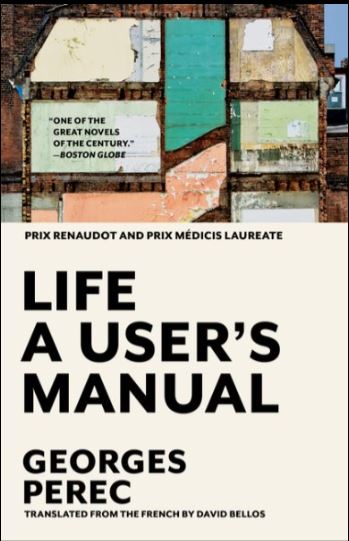
    I read Georges Perec’s Life: A User’s Manual when I was a master’s student in physics. At the time, I was toiling through books and lectures on classical and quantum mechanics—essentially, working for a degree. The Lagrangian and Hamiltonian equations, particle theories, their graduation to quantum physics, and further into Schrödinger and Heisenberg’s formulations, all passed by in a haze.

    I was grappling with the concept of constraints in Lagrangian mechanics when I opened Perec’s preface. In it, he forewarned the reader about the games and devices he had woven into his novel. Although he wrote the book to be eminently readable, he made no bones about the underlying rigor of its construction: the sequence of chapters follows the algorithm of a chess game; jigsaw puzzles, crosswords, and probabilistic formulas organize the literary elements—objects, characters, situations, allusions, and quotations—into a deliberate order; even the indexing of its ninety-nine chapters is modeled after Dewey. It was the mind of an architect at work—focused, meticulous, and simultaneously non-committal about the grandeur of the project, stoic about its futility, and dispassionately observant of life’s intricate goings-on.

    Lagrange essentially said that imposing constraints on a system is another way of stating that forces are present in the problem which cannot be specified directly, but whose effects on motion are known. Perec took this principle into literature—adopting constraints as an empirical approach to writing and, by extension, to reading.

    Perec was part of the Ouvroir de Littérature Potentielle (Oulipo) group, devoted to the study and invention of literary forms. Under the leadership of Raymond Queneau and François Le Lionnais, the Oulipo worked—and still works—to identify and revive neglected forms, while also devising new ones based on rigorous formal constraints. One member famously defined the group, tongue firmly in cheek: “Oulipians: Rats who must build the labyrinth from which they propose to escape.” Perec found a home here, among writers like Jacques Roubaud, Harry Mathews, Italo Calvino, and Marcel Bénabou.

    Life: A User’s Manual tells the story of a ten-story building at the fictional 11, rue Simon-Crubellier in Paris, meticulously describing its interior and the lives of its residents—179 stories in all. Their order is determined by a famous chess problem: visiting every square on a board using only the knight’s move. Once the constraints are set, Perec emerges as anything but a cold formalist—his affection for the characters and their idiosyncrasies is unmistakable. The stories stir wonder, laughter, and reflection, as they reinvent genres—romance, drama, detective tale, adventure, murder mystery—through restaurateurs, mediums, cyclists, antique dealers, and pious widows.

    Some examples:
    – A trapeze artist’s swansong at the circus—an impossible feat that ends in his death.
    – An archaeologist on the Nile trying to rescue a German girl from a harem.
    – A judge’s wife whose thrilling thefts lead to hard labor, ending as a bag lady on a park bench.
    – A murder mystery in which the protagonist adopts the Monte Carlo theory of probability to find his wife’s and daughter’s killer—only to narrowly miss encountering him.
    – A prophecy that shadows generations of a tragedy-stricken family, glimpsed only in a brief visit to an empty apartment.

    These stories leave little doubt about Perec’s storytelling gift. Beneath them all runs a subtle negotiation between writer and reader, with the big picture always in the backdrop. That is where Perec introduces his central figures: Bartlebooth, the millionaire maverick painter; Gaspard Winckler, his assistant; and Valène, the concierge who narrates this intricate web of stories.

    Bartlebooth’s project is monumental: over twenty years, he will travel the world painting 500 watercolors of different harbors. Every other week, a painting is sent to Winckler, who mounts it on wood and cuts it into a 750-piece jigsaw puzzle. Once Bartlebooth returns, he will spend another twenty years reassembling the puzzles, then return each to its original harbor, where it will be washed clean, leaving a blank sheet—the beginning and end coinciding. But things do not go as planned.

    To avenge twenty years of “pointless” work, Winckler begins making the puzzles increasingly difficult. Almost blind, Bartlebooth dies while attempting the 439th puzzle. Perec’s final paragraph captures the irony:

    “It is the twenty-third of June nineteen seventy-five, and it is eight o’clock in the evening. Seated at his jigsaw puzzle, Bartlebooth has just died. On the tablecloth, somewhere in the crepuscular sky of the four hundred and thirty-ninth puzzle, the black hole of the sole piece not yet filled in has the almost perfect shape of an X. But the ironic thing, which could have been foreseen long ago, is that the piece the dead man holds between his fingers is shaped like a W.”

    Winckler, dead two years earlier, has triumphed—but it is a meaningless triumph.

    In a single paragraph, Perec captures the grand project of life, the inherent meaninglessness of human effort, and the role of chance in undoing even the most carefully designed schemes. Our lives are shaped by innumerable constraints—social, ethical, moral, physical, biological—some accepted, some resisted—while the interplay of chaos and order goes mostly unnoticed.

    For someone who once wrote a novel entirely without the letter e, and as a leading figure of the Oulipo movement, this feels like a summit. In it, you sense the shadow of Joyce, Borges, Calvino, Flaubert, and Kafka—but also something uniquely Perec’s own.

    For now, I have nothing more to say. Go read it—the book belongs to you, my dear reader.

  • Song of seasons

    Song of seasons

    The songs of seasons

    May:

    The Country road lay like a tamed snake, brown and parched, heaving and teary-eyed. Sunshine raced to distant fields like wildfire and bounced off broken heaps of images. The wasteland subsisted on dried tuber and the wisdom of defiant dry bones of the river bed. The fire sermon was delivered in May.

    The ceiling fan in your room is a bit of schizophrenic, besides being old and cranky, and you lie in your bed, etherized; while the vagaries of Summer and memories melted in crimson flames. 1

    June:

    Monsoon arrived when the dark clouds with lightning streaks broke the skies’ boundary. The air grew dense. It wafted the scent of impregnated soil. Trade winds came and then came meghmalhar. An alaap began in vilambit interval swelled on to madhyam and culminated in an endless dhrut khayaal. A million drops of rain fell on the remains of life on Earth. The puddles, rivulets, streams, rivers, lagoons, and whirlpools flowed, swollen by a mass of turbid waters rushed with impetuous haste towards the seas, felling trees and deluge-struck mortals all around on their banks and washed them to a timeless shore.2

    September:

    A sudden light shower in the morning, left the yard exhilarated and let it regain composure. The laughter and mirth from the living room grew with sunshine. Today is Onam. There is weightlessness in reunion and barricading time to slip any further. Spring is now and hope is in the moment.

    November:

    Autumn is too short to pause and ruminate over the blinding beauty of orange evenings and golden yellow leaves. And yet one ruminates, invariably. In one of these autumns, Lorca3 moved to New York while it ushered in the great depression. The autumnal marvels of his Granada, its solitary rose breath and its leaves, reflections of pillars and arabesques in the pools, the splashing fountains and the profusion of myrtle and pomegranate – were all estranged, now. The loss of November!

    January:

    Winter can wreck your senses, nudge them into frigidity, and remind you that you live in a world of morbid nerves, clear and cold as ice. The cold winds blowing across the snowy landscape can bring in the visage of death and a possibility of enlightenment. You may even gain the courage to glance at the white emptiness that lay beyond the limits of your eyes and the moonbeam’s icy glitter. The winter in your sense organs would tell you that you have always been in a snowy country, alone and unable to speak.4

    Note: The color and sound of the seasons have been inspired by the following writers.

    1. Thomas Stearns Eliot (The Wasteland) 2. Mahakavi Kalidasan (Ritusamharam) 3. Federico Garcia Lorca (Poems in Newyork) 4. Yasunari Kawabata (Snow Country)

  • The Great Gatsby

    F, Scott Fitzgerald’s The Great Gatsby is a short, dense novel. He is not one of my usual choices of writers to pick up and read. But the flair and taut writing had me hooked. His exquisite craft in narrating the Long Island soirees from the Jazz Age where midwesterners came to claim the American dream amid their insecurities about displacement by inferior races, nouveau-riche threatening class barriers and traditional social order, women becoming the co-conspirators to relegate themselves to “beautiful little fools” of their possessors’ social standing – weaving layers of socio-political commentary.

    Nick Carraway, the narrator of the story – a mid-westerner presents an empathetic portrayal of Gatsby, who, in turn, was ingratiating himself into Nick’s life to get close to Daisy Buchanan, Gatsby’s long-lost love. He takes time to shed light on the main characters – Tom Buchanan, the rich and imperious former polo player and Yale alumnus, whom Daisy reluctantly married when Gatsby, son of a poor Lutheran farmer, left town to war with the world and earn enough to marry her. Daisy Buchanan is Nick’s cousin, who grew up in a wealthy family, is a victim and sustainer of the class system of old money as she tolerated Tom’s adultery, condoned racist rants, and finally abandoned Gatsby to his fate, notwithstanding her unabashed love and attraction for him.

    Gatsby conquered the world with the best of American traditions – bootlegging during the prohibition era, insider trading, and other illegal activities, only to settle down near Nick’s house. He ran parties all night without taking part in them, and used them only as a ruse to get close to Daisy. Having Daisy invited over to Nick’s house, Gatsby asked her to play the piano despite her protests about being out of practice. He was reliving the enchantment he lost five years ago, which Nick observed through the bewilderment on Gatsby’s face when Daisy “tumbled short of his dreams-not through her fault, but because of the colossal vitality of his illusion”. Nick went out of the room, leaving them to be “possessed by intense life”.

    Tom punctured Gatsby’s illusion with the help of a private detective and warned Daisy of the source of his wealth. Their confrontation led to tragedy when Daisy, while driving back home, hit Tom’s lover accidentally and ran away. Gatsby tried to protect her as he hid the car in his garage and later kept a night vigil in the garden to see if Daisy was safe in her room with the lights off.  Tom, after a while, reveals that he told the heartbroken widower of his lover, Wilson, that the car that killed her belonged to Gatsby. Wilson committed suicide after shooting Gatsby. Nick finally meets Mr. Gatz, Gatsby’s dog-tired father, as they attend the loneliest funeral sans the sounds of Jazz and the flock of humans.

    Nick, too, leaves New York, brooding over the old, unknown world, and he thought how Gatsby “picked out the green light from Daisy’s dock”. He didn’t realize that the dream he thought so real in his grasp was already behind him. Fitzgerald finishes with a flourish on our collective American dream etched on the Statue of Liberty:

    “Gatsby believed in the green light, the orgastic future that year by year recedes before us. It eluded us then, but that’s no matter – tomorrow we will run faster, stretch out our arms farther…. And one fine morning……

      So we beat on, boats against the current, borne back ceaselessly into the past.”

  • Invisible Cities

    Invisible Cities

    Italo Calvino’s Invisible Cities is a skinny book that condenses the experience and idea of living and feeling cities in abstract and manifest ways. It has been a prized possession since I was a student even though I read it a long time ago and still read random chapters. I got hooked by the matter-of-fact, almost parable-like but incisive visions set ablaze in each chapter of the book, which unveils a different city as narrated in an imaginary conversation between Kublai Khan, the Tatar emperor, and Marco Polo, the traveler. Marco talks about the cities with such great tangents and flourish, leaving you gasping at the delightful insights.

    The lyrical narrative of cities is replete with symbolisms and metaphors. These serve as the readers’ devices to begin their treatises on reality and fiction, memory and desire, and past and present. Calvino masterfully writes about the limitation of communication and power, ephemeral but universal cycles of urban living among the ruins and glory of concrete columns, cities as projections of human psyche, and the possibility of whims and greed as cogent sources of creativity. You could try and ponder over Calvino’s dispatches from the book on some of the real cities and their architects – the tunnel cities in China, Berlin, Turkey and those under Gaza and South Lebanon, Ghost city of Pripyat, Ukraine, and Fake cities in North Korea.

    Calvino belongs to the OULIPO(Ouvroir de Littérature Potentielle – Workshop of Potential Literature), a group of writers, logicians, and mathematicians whose primary objective is the systematic and formal innovation of constraints in the production and adaptation of literature (they also define themselves as rats who themselves build the labyrinth from which they will try to escape). The Oulipo believe that all literature is governed by constraints, be it a sonnet, a detective novel, or anything else. By formulating new constraints, the Oulipo is thus contributing to creating new forms of literature.

    Calvino’s fictional cities delve into the mind of each city that you and I have known or could have known from our personal view of the immediate outside world. The personal account of your life could exactly sound like someone else’. Or the kind of experience and people that you met at the first job that you had done in the city would sound agonizingly similar to someone else if you shift the time a little bit. There must always be someone who fought your fights, cried your cries, dreamt your dreams, and lived your life in some city that you think you lived and known for a lifetime.

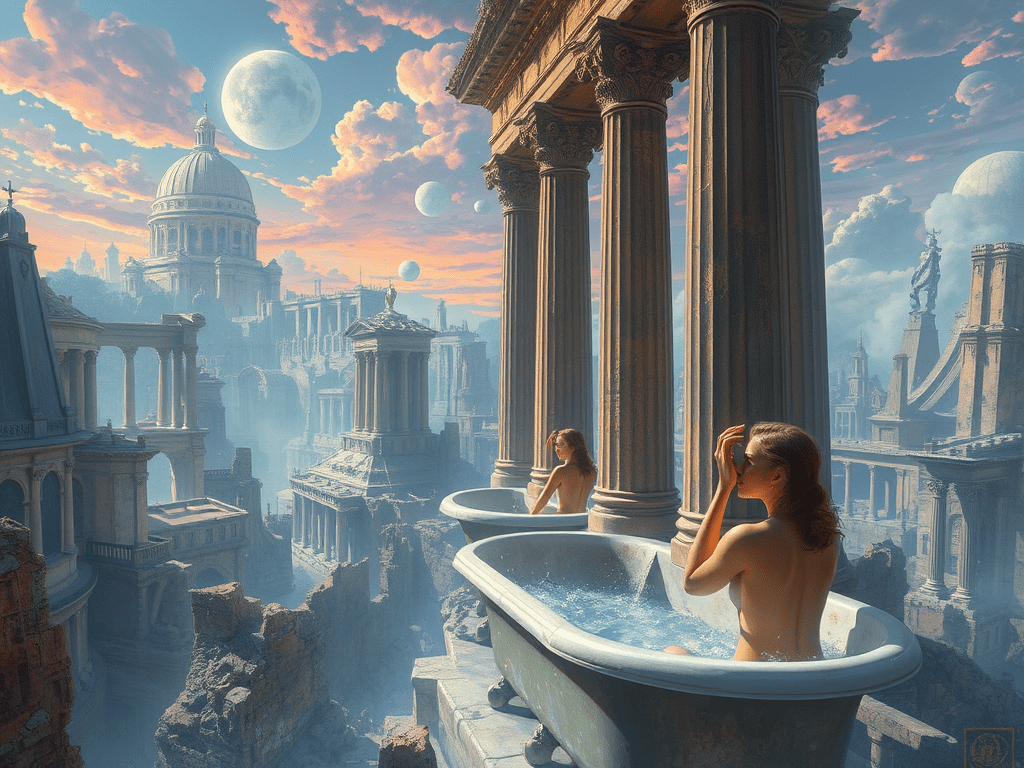
    For example, the invisible City of “Armilla has weathered earthquakes, catastrophes, corroded by termites, once deserted and re-inhabited. It cannot be called deserted since you are likely to glimpse a young woman, or many young women, slender, not tall of stature, luxuriating in the bathtubs or arching their backs under the showers suspended in the void, washing or drying or perfuming themselves, or combing their long hair at a mirror.”

    —If on arriving at Trude I had not read the city’s name written in big letters, I would have thought I was landing at the same airport from which I had taken off. . . . “You can resume your flight whenever you like,” they said to me, “but you will arrive at another Trude, absolutely the same, detail by detail. The world is covered by a sole Trude which does not begin and does not end. Only the name of the airport changes.”

    “Eutropia (a “trading city”) is made up of many cities, all but one of them empty, and its inhabitants periodically tire of their lives, their spouses, their work, and then move en masse to the next city, where they will have new mates, new houses, new jobs, new views from their windows, new friends, pastimes, and subjects of gossip. We learn further that, in spite of all this moving, nothing changes since, although different people are doing them, the same jobs are being done and, though new people are talking, the same things are being gossiped about.”

    From their conversations which began with signs and sounds unintelligible to both, to perfecting each other’s language, to the numbness of understanding through silence, Marco Polo the traveler and Kublai Khan the Emperor have sailed through a lot of cities. Kublai asked Marco: “You, who go about exploring and who see signs, can tell me toward which of these futures the favoring winds are driving us.” Already the Great Khan was leafing through his atlas, over the maps of the cities that menace in nightmares and maledictions: Enoch, Babylong, Yahooland, Butua, Brave New World.

    He continued: “It is all useless, if the last landing place can only be the infernal city, and it is there that, in ever-narrowing circles, the current is drawing us. “And Polo said: “The inferno of the living is not something that will be; if there is one, it is what is already here, the inferno where we live every day, that we form by being together. There are two ways to escape suffering it. The first is easy for many: accept the inferno and become so part of it that you can no longer see it. The second is risky and demands constant vigilance and apprehension: seek and learn to recognize who and what, amid the inferno, are not inferno, then make them endure, give them space.”

    I have had my fair share of cities. You leave a part of you every time you move on to a new destination, hoping you will find what you think you need! eventually, you might visit these cities at some point, hoping again to relive the life and time for a moment with a sense of detachment. Looking back I can see the trail I trod from the walkways in Cochin to Bangalore where the job hunters’ hopes, despair, and celebrations with friends were drenched in rum, to the long and sweltering bus trips to work in Chennai, to Chicago where everyone read something in the commuter trains and Fridays were an onslaught of adrenaline, to New York where you find countless people and cars travel all around you and yet you can listen to the tireless voice of a subway singer with his violin, to the laid back life in small town Pennsylvania and now in this aged, withering city of Philadelphia.