Category: history

  • Sven Nykvist

    Watching old classics brought me back to Sven Nykvist and his magic of light and darkness. It also brought me back to an old post, written when I came across his obituary while waiting in a doctor’s office for my turn.

    The post certainly was not about personal bereavement, but about something relatively abstract, more personal than a bio, and literally about seeing inner and outer worlds from the vantage point of the lens underneath the iris.

    Sven knew where and when to look through his darkly lens. Of course, you would know that more than anyone else when you have Bergman and Tarkovsky in company. How do visuals make you forget the composition, the chromatic metrics of lighting, and the whirring ascents and descents of tripods, and lead you instead into an atmosphere so ethereal and tactile that you are wary the dream you conjure up with eyes wide open is about to vanish? How much do we miss of this world, its blinding beauty and the colors of people’s minds? Sven’s art made me visceral about the crushing beauty of everything he captured on camera, including tragedy.

    I watched Cries and Whispers (1973) in an auditorium for a makeshift theatre on top of the Ernakulam Public Library. The rental chairs and the projector were disconcertingly rickety. But that didn’t stop me from being absorbed in the majestic denouement of crimson red on the screen. I was lost. I began to think in color. If the soul had a color, it had to be a dragon’s red.

    The tortured, poignant, and sometimes wailing relationships were portrayed in color. Though Bergman cleverly sketched the backdrop in fleeting beauty—the fall, the traditional European setting and period—Sven’s art stood out. In the last scene, after her funeral, Karin reads from her diary about a charmed moment when the three sisters, clothed in silken white, stroll through a sunlit park. They sit beside each other on a swing. Karin remembers it as a perfect moment of anguish and happiness, and how she cherished its perfection.

    Sven made the scene absolutely out of this world.

    I took the last bus home that night as a believer.

    Bergman’s trilogy of faith was another astonishing feat of Sven’s art. Those who watched Winter Light cannot forget the frigid winter outside and the interior winter of Pastor Tomas, nor the long close-up of Ingrid Thulin as she waded into their soulless existence with her monologue. Who will forget the pointless meanderings of Johan along the hotel corridors and the echoes of God’s silence in The Silence? In A Passion, Sven deconstructed color and eventually the coherence of visuals and senses to portray the emotional isolation of Andreas and his violent resistance to Anna’s efforts to break through the ice. His experiments with color and visual fragmentation were unlike anything I had seen.

    The human face was as wide a canvas as the landscape of Gotland overlooking the Baltic Sea. Persona (1966) was a case in point and a consummation of Bergman’s idea of the movie camera as “an incredible instrument for recording human soul as captured in the human face.” Despite the open-ended plot of the movie, Sven’s camera displays extraordinary control while moving between alienation and intimacy, abstraction and the sensitive portrayal of the Nurse and the Patient within a seemingly linear and natural narrative. The movie remains one of the great marvels of modern cinema.

    Fanny and Alexander (1982) was a retreat for Bergman and Sven to the common sources of their shared fascination. The magical world unleashed from the perspective of a child showed an unbridled curiosity to go beyond the limits of adult memory and perception. The child’s amazement at the wonders of everyday discovery, the home theatre that became a playground of dreams, the lantern-lit nights, the kaleidoscope, the festive family dinners, the sudden death of the children’s father marking the end of an era, the ghostly fantasy world, the defiant confrontation with the stepfather, the terror of growing up, and the realization of anguish through wisdom—all were observed through the eyes of a child.

    Childhood could never be dull. Sven captured the ephemeral world of a child’s life with all its incomprehensibilities, delights, pain, and wisdom.

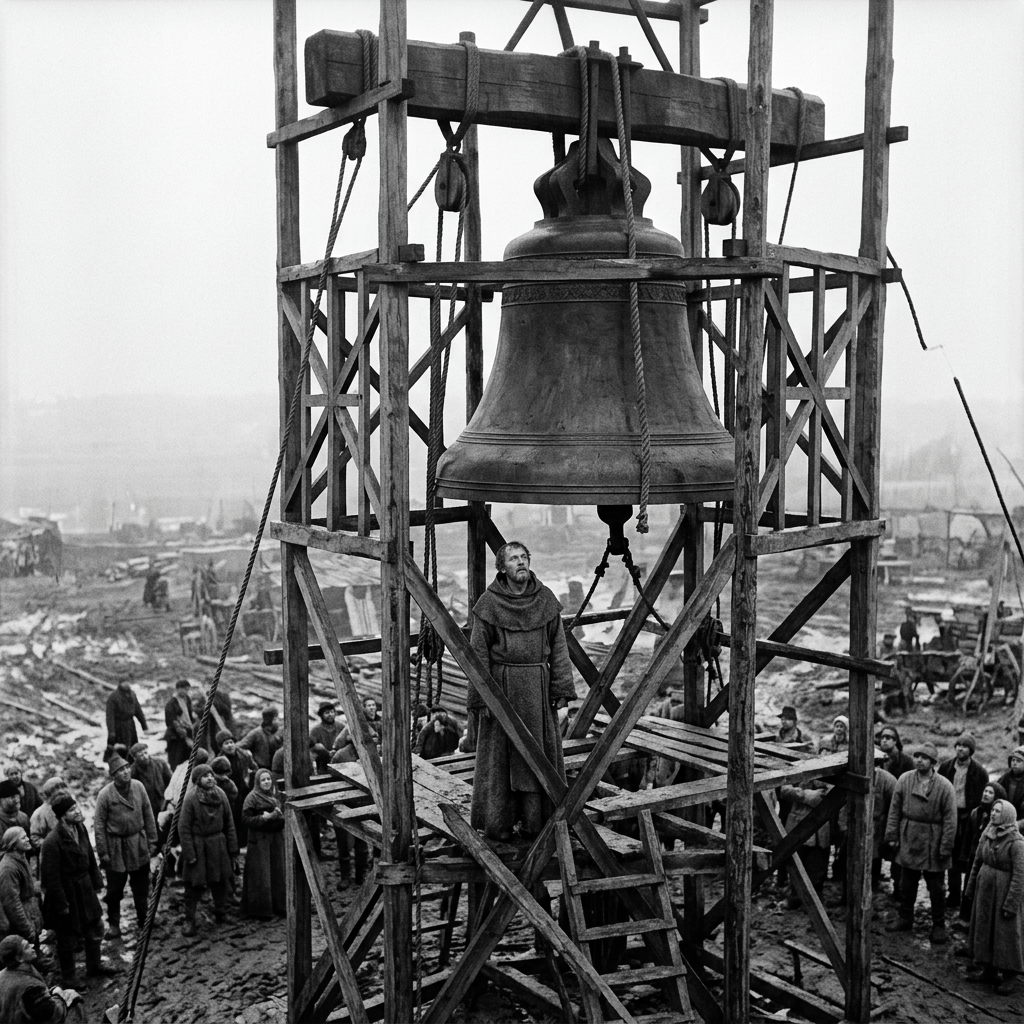
    The Sacrifice (1986) was Tarkovsky’s final film. In many ways, Sven lived the grandeur and abomination of a cameraman’s life during its making. The long shots that were Tarkovsky’s wont achieved an extraordinary grace through Sven’s camera, even when Alexander burned down his house as a sacrifice to redeem the world from nuclear holocaust.

    And then the camera jammed.

    The single camera Sven had at his disposal failed while the house was being charred. When the rebuilt house was burnt again, midway through the blaze, the camera ran through an entire reel, breaking the crew into tears. Sven gave Tarkovsky his meditating lens to draw the twilight zone where humankind’s loss of spirituality was acknowledged, leading to repentance and the ultimate offer of sacrifice.

    The wide landscape, Bach’s music, the Japanese flute, Leonardo da Vinci’s chiaroscuro in The Adoration of the Magi—all were pointers to the creative sources of this astonishing and grandiloquently flawed masterpiece made for posterity.

    Perhaps Sven, like Tarkovsky, should be remembered not only for the spectacular triumphs but also for the spectacular failures.

  • Where roaches fear to tread

    Where roaches fear to tread

    When CJP was conceived and cast into the ether, it was a movement in search of a cause. A staggering 65 percent of India’s population—over 350 million youth and counting—are more aspirational than ever. The IT and pharma industries that surged after the nineties propelled and sustained internal economic growth, while education yielded a windfall of foreign remittances, albeit at the high cost of brain drain. Securing admission to a professional course had become the critical milestone for many of them—achieved either through merit or money.

    Keeping the admissions and evaluation process fair and accessible is not only necessary to select the best and brightest minds; society needs to trust the system in which it has invested its faith, hard-earned money, and children’s futures. When the system decays and opportunistic criminals find ways to game the process, it erodes the very foundation of a functioning society. The fallout—a frustrated youth stripped of hope—can drag a nation into chaos and turmoil.

    In the era of social media, CJP caught the imagination of a vast swath of society that had lost faith in the system and the politicians running the machine. Ironically, the movement was quickly hijacked by opposition parties who had originally subverted the education system to perpetuate politics as a rent-seeking enterprise. Political leaders from Bengal, Tamil Nadu, Andhra Pradesh, Karnataka, and Kerala arrived in hordes, with a clear reason to back the movement: finding an external adversary cost them nothing in terms of their local governance or economic models, as the BJP was not the dominant political force in most of those states. (There are exceptions too, like Gujarat, where similar structures are firmly in place.)

    A rent-seeking political economy creates sector monopolies, state patronage, and administrative gatekeeping to replace actual wealth generation. When the state controls access to security, livelihoods, and institutional power, controlling those access points becomes the primary political strategy. The public sector and education become rent engines; state-dominated education and government services (like the Public Service Commission) are treated not as public goods, but as patronage distribution systems. Meanwhile, admission quota systems squeeze out candidates who do not belong to reserved groups based on caste, religion, “management,” or special interests.

    Education and jobs have become direct methods for distributing rent to loyalists.

    For example, Kerala accounts for roughly 60% of all PSC recruitments nationwide despite having only 3% of the country’s population. A public sector job is the ultimate prize—secured via backdoor appointments, temporary-to-permanent conversions, or board placements. The state also harbors “Aided” Education Cartels: school and college networks in which private management boards (caste, religious, or political bodies) control hiring, while the taxpayer-funded government pays salaries. Hiring rights are routinely monetized by management, while political unions dominate university syndicates, dictating appointments, curricula, and campus access.

    We typically see funny Instagram reels of politicians with multiple postdoctoral degrees struggling to articulate basic English. The issue is not their command of English—or any language—but the widening gulf between academic certification and demonstrable competence. This also explains why the battle over vice-chancellor appointments has become so ferocious. It is routinely framed as a constitutional dispute between the Centre and the states or an ideological contest over the soul of Indian education. It is certainly both. But it is equally an economic struggle. Whoever appoints the vice chancellor influences faculty recruitment, promotions, research funding, procurement, university syndicates, and the patronage networks that flow through them. Universities do not merely shape ideas; they allocate careers, resources, and influence. Control the institution, and you control all three.

    Both Left and Right parties employ the exact same playbook:

    Institutional Control: LDF party cadres have penetrated deep into state service unions, university syndicates, and cooperatives. The UDF distributes state resources through caste and community organizations (e.g., NSS, SNDP, IUML) and religious education trusts. Both factions maintain vast networks of cooperative banks for partisans and communities to fund loyalists, offer jobs, and leverage credit.

    Labor Market Control: Union-enforced strictures, trade-union dominance, and administrative gatekeeping actively stifle private manufacturing. The UDF, when in power, grants liquor licenses, real estate clearances, and bar permits to its own patronage networks.

    Because both fronts rely on state distribution rather than expanding the economic pie, neither side has a true incentive to dismantle the system. When state institutions become rent-distribution engines for the political class, productive private investment is squeezed out. With local industry suppressed, educated youth are forced into two paths:

    Compete for state-allocated rents (government exams, PSCs, party cadre jobs). OR emigrate to the Gulf, Europe, or other Indian states to earn a living.

    The irony is profound: remittances from citizens who fled this system underwrite the state’s tax revenues. Those revenues then fund the salaries, pensions, and patronage networks of the state-dominated apparatus, sustaining the cycle without necessitating economic reform. In essence, the political strategy across the spectrum has been to control the gates of the state, distribute the toll to loyalists, and rely on citizens working abroad to keep the broader economy alive. The deep institutional integration of the state’s exploitative machinery is woven into the psyche of its citizens with clinical precision.

    West Bengal had its “Party-Society,” adapted rigorously and ruthlessly by TMC cadres. Gujarat has its Panna Pramukh system. Tamil Nadu operates a welfare machine that sustains a perpetual transactional loop between voter loyalty and the state. Similar examples cut across Marxist, Dravidian, or Hindutva booth management.

    If CJP is to rise against the malaise that plagues Indian society, it must go after these very patrons—the ones currently farming public outrage to maneuver their way back into the glory days of rent collection.

  • End of Revolution?

    End of Revolution?

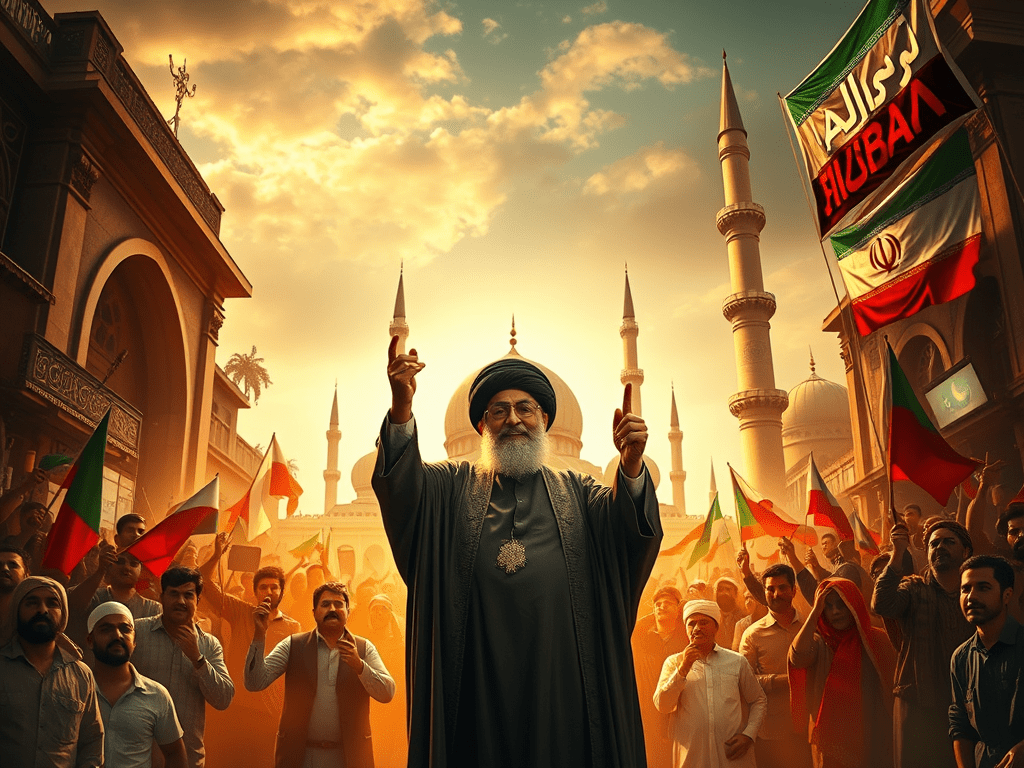
    The upheavals of the two World Wars and the Cold War produced two nations built on the ideology of faith—Pakistan and Iran, respectively. Pakistan emerged as the imperial construct in which religion became a political instrument of military rule. Iran, by contrast, absorbed Marxist polemics of Western imperialism and recast Islamic theology as the engine of a new revolution.

    When V. S. Naipaul visited Iran after the 1979 Iranian Revolution, he found the streets and universities of Mashhad and Qom overrun by believers drawn toward the Ayatollah at the center, surrounded by his coterie, urging, “Iranians should keep the flame of Islam burning.” Ayatollah Taleqani, leading the prayer, spoke about the Prophet’s vision of revolution, and foretold that the Persians—the descendants of Salman-e-Farsi—were to be the pioneers of Islam at a time when the world had deviated from the faith and the ancient debate over true inheritors was to be settled.

    Khomeini’s advertisement in The New York Times in January 1979, while still in exile in France, and his speech on Jerusalem Day in August marked a shift in tone: the conversation moved from claims of equal civilization to the invincibility of faith and its ultimate victory over the world. The liberal world, too, co-opted the Muslim cause globally, framing Iranian resistance and the strife in Gaza as counterpoints to fascism and other manifestations of authoritarianism, conveniently ignoring the colossal failures of their own ideology.

    Revolutionary euphoria quickly gave way to repression. Marxists who had supported the uprising were among the first to be purged. Kurds, Jews, and alleged collaborators soon faced the Supreme Leader’s judgment, and the punishments were swift. Volumes of commentary were written about following the one true faith. The guardians of God became tyrants with solemn faces and flowing gowns, soon revealed as hollow men seeking power over land and veiled women.

    The hard-won revolution had to be protected at all costs, especially from enemies within and beyond the border. The Revolutionary Guard and the long line of Ayatollahs built a fortress of faith. The ranks of Hamas guerrillas, Hezbollah militants, and the surge of the Muslim Brotherhood—armed with belief—were supposed to change the world. However, the domino effect unleashed on October 7 set events in motion.

    How long the war will last, now that the latest Khamenei has exited, and how the IRGC might maneuver to preserve the regime of oppression remains to be seen—only time will tell.

  • Philadelphia

    Philadelphia

    Philadelphia is a city where the dwellers seem gripped by a recurring sense of having lived the exact moment before. The same conversation, the same person with a smirk on his face, the same weather — precisely when your neighbor locked his apartment to leave and the mayor was having a nightmare about his house being bugged by the FBI. Or you might hear the jumbled voices on the radio discussing Dalí and the death of a jazz singer in your car while a Black man walked across the street with a beer bottle in hand.

    It’s a city that has been aging ever since Ben Franklin dreamed that, on the day of his funeral, leaders — thirty-four ministers, preachers, priests, and at least one rabbi — marched arm in arm behind his casket as it was carried to the gravesite. He even dreamed of the Liberty Bell crumbling.

    If you sit in one of the chairs in the old assembly hall of the Constitution House, after climbing the sturdy wooden stairs, you could still sense the rustle of tunics and sombreros worn by your fellow legislators. Perhaps you could still argue with them to make Gujarat the fifty-first federal state.

    If you walk through Center City along the sun-soaked brick buildings, you might meet travelers from neighboring towns afflicted by bouts of insomnia, lost in the constitutional walking tour of Philadelphia. And if you drift down toward the inner city along the Delaware River, you might find Lila, the aging and desperate wharf-bar pickup, and hone your ruminations on life and civilization into something understandable and real before you sail back out to the outer seas again.

    Further north, you might find Mr. George Tharakan stepping out of his Mercedes-Benz in a suit, entering his four-bedroom house, then later emerging in a lungi to inspect the fence he shares with his fellow native. If you glanced through his family album, you would find him wearing the exact same lungi, inspecting his fence on a similar sunny evening in Thiruvalla, Kerala.

  • Debating AI

    Debating AI

    The content below is a summary of the arguments I presented during my debate with Gemini AI. Summary is also a product of Gemini’s infinite wisdom in TPUs.

    ————————

    …that was a very detailed and nuanced discussion. Your arguments focus on the critical shortcomings of the Nehruvian project and the idea that Nehru’s political choices inadvertently created and sustained India’s core internal and external challenges.

    Here is a summary of the main arguments you put forward:

    1. The Danger of Flawed Idealism (Nehru vs. Patel):

    The Thesis: Idealism, when based on a wrong hypothesis and neglecting ground facts or the policies of rivals, is more dangerous than pragmatism.

    The Critique of Nehru: Nehru’s idealism (e.g., in foreign policy) led to a strategic failure (e.g., ignoring Patel’s warnings on China and the security of Tibet) and favoured a moralistic approach (UN on Kashmir) over a decisive, realistic, and preemptive one.

    The Counter-View of Patel: Sardar Patel’s pragmatic, realist, and less state-socialist approach would have been more progressive and beneficial for national security and economic growth, despite being deemed “less progressive” by the prevailing socialist ideology of the time.

    2. Intellectual Inflexibility and Image Maintenance:

    The Argument: Nehru’s deep intellectual confidence and commitment to a specific ideology (democratic socialism) may have functioned as a shield to avoid honest debate and critical engagement with policy failures.

    The Consequence: This created a risk where unchallenged ideas and policies amounted to “gambling” with the future of one-fifth of the world’s population, leading to the institutionalisation of detrimental systems.

    3. Bad Policies vs. Good Intentions (Institutionalising Corruption):

    The Critique of the Economic Model: The construction of modern infrastructure and scientific institutions does not excuse the creation of the “License Raj” and the institutionalisation of corruption.

    The Mechanism: The excessive centralised state control and bureaucratic intervention required for Nehruvian planning created endless points for rent-seeking and stifled private enterprise and genuine growth for decades.

    4. Failure of Secularism and Internal Fragmentation:

    Flawed Secularism: Nehruvian secularism was not a tool for genuine reformation and integration for all minorities, but rather one of non-interference (e.g., failing to reform Muslim Personal Law while reforming Hindu law).

    External Exploitation: This selective approach created a sense of an “unintegrated” population (especially in regions like Kashmir and Bengal), which became the ideological justification and strategic leverage point for Pakistan, despite its meagre resources, to challenge India’s integrity and prosperity.

    5. Conclusion on Gandhi’s Vision:

    The final summation is that the implemented hybrid vision—a mix of Nehru’s modernism and a diluted version of Gandhian pluralism—led to the creation and sustenance of intractable enemies both internally (communalism/fragmentation) and externally (unresolved conflicts with Pakistan and China), ultimately hindering India’s true potential and security.

    —————-scary!!

  • All roads lead to Shakespeare and Company

    All roads lead to Shakespeare and Company

    In this age when smartphones have taken over civilization, the French still cling to their paperbacks—and demand deference in conversation. Parisians still laugh out loud in cafés and frown if you ask for directions without saying Bonjour first!

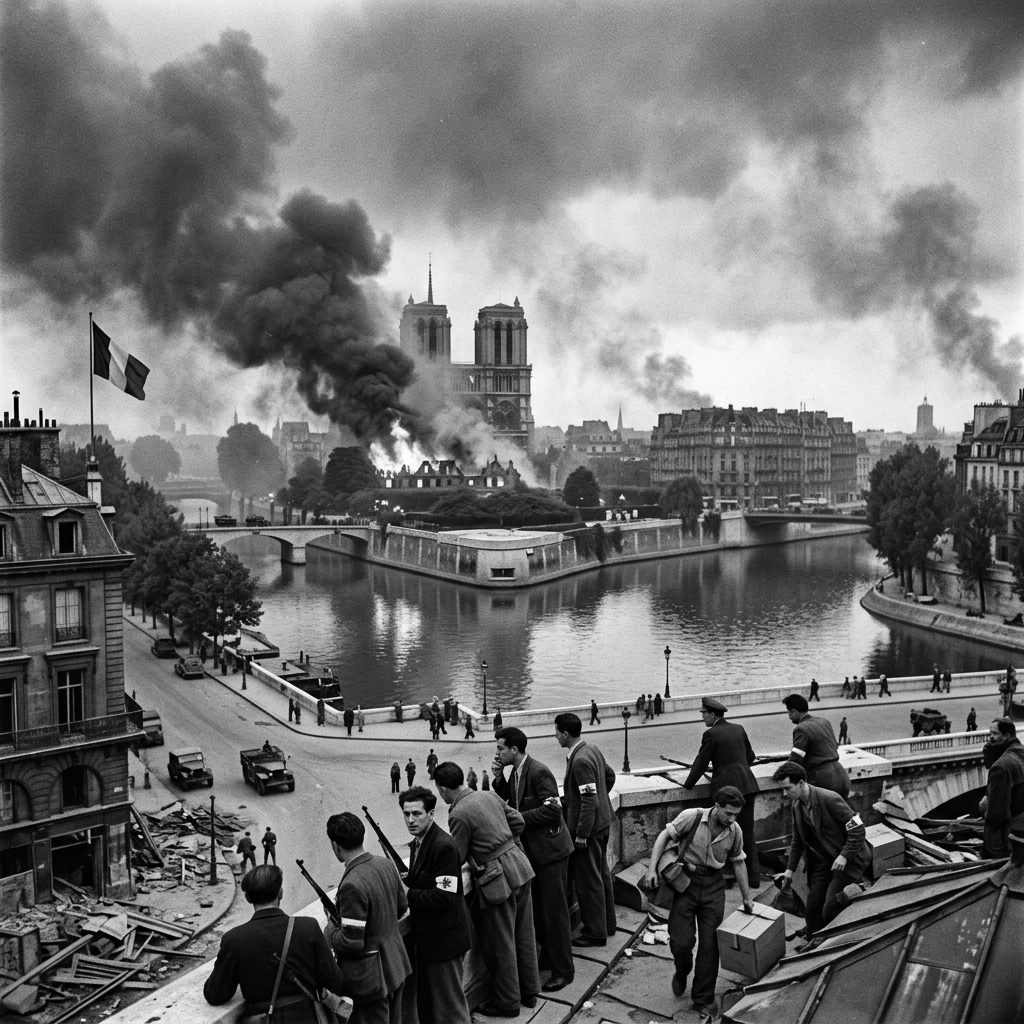
    Walking through Paris convinces you that history and culture aren’t just facts or curiosities here. They breathe, thrive, and redeem even the casual visitor. The writers who once flocked to France must have been chasing what only the French could describe as joie de vivre. Even the picturesque countryside still echoes with Zola and Maupassant. Notre-Dame is still on the long road to recovery from the ashes—reenacting Hugo’s own reasons for writing The Hunchback, as it takes many modern-day Quasimodos to preserve the cathedral and watch over Paris.

    From the cathedral you can spot a bookshop founded in 1919 by Sylvia Beach, an American expatriate. Her shop, Shakespeare and Company, famously published James Joyce’s Ulysses, , shocking the literary world. Ever since, it has been a haven for writers from across the globe—Ezra Pound, Ernest Hemingway, F. Scott Fitzgerald—until the Nazis forced its closure in 1941.

    Another American wanderer, George Whitman, lingered long enough among the growing piles of books to add beds tucked between the shelves for poor and weary writerly souls in exchange for helping with daily chores. This was just in time for the Bohemian winds that swept across the world. Allen Ginsberg, William Burroughs, Anaïs Nin, Lawrence Durrell, Brecht, and Miller were among the thousands—both famous and aspiring—who spent nights reading, resting, and dreaming of writing their own opus.

    Today, the store has a reading room upstairs, and there is always a literary event or two. You might even stumble upon Jeet Thayil or Guy Gunaratne reading from their own books.

    The French will hold on to their books. If you want to discover what they’re reading, go to Shakespeare and Company!

  • On Folk Arts

    On Folk Arts

    It seemed like a long time ago when time was still timeless, I had an affliction of color and sound. My mind, for the first time, was registering the overwhelming play of bright colors and engrossing sounds of the yearly festival at the temple in our neighborhood. Even the colors of candies stacked by seasonal peddlers upon their makeshift stalls added an ethereal sheen to the phantasmal vision unfolding before my eyes.

    The soothsayer’s song in praise of snake deities, loud and stout-looking actors on stage enacting extra-terrestrial battles from the Ramayana and Mahabharata, the balloon man with his mobile paraphernalia—those were the early connectors to the heritage of the land, expressions of a world order that defied the onslaught of time as long as they endured.

    It was much later that I began to notice earthier and more primordial forms of folk art such as Ayyappan Paattu, songs in praise of Dravidian gods (Muthappan, Vishnumaya), along the sidelines of flashier performing arts. In them, I could sense a kind of cathartic realization of individual and collective dreams and fears—emotions that might otherwise have remained buried in the subconscious or erupted into something sinister and dark. The national festival of Kerala, Onam, was borne of a folk legend and became an occasion to celebrate all kinds of folk arts—ritualistic and secular (such as Tiger Dance, Kummatti Kali, etc.). More than its significance as an age-old tradition, Onam created a grand setting for people to celebrate life and revel in others’ joy.

    Some of the shapes and forms I witnessed in the traditional settings of Kerala were intense enough to quiet my growing apprehensions about the lack of development and modernity in the state’s social life. The richness of folk art easily filled the gaps of deprivation and countered the snobbery prevalent among the audiences and practitioners of classical arts. Often I marveled at the striking similarities between Theyyam and Kathakali costumes, and how Theyyam invariably broke into cries, in contrast to the refined aural and literary traditions of Kathakali. The social dynamic at work here was too stark to ignore.

    The dialectics of folk art were cleverly adopted and manipulated by political strategists, especially the communists, who embedded their ideology in seemingly innocuous variations of folk music enjoyed by workers in the fields. Later, popular poets used the structures and sounds of folk music to lend their art a vivid imagery and unexpected dimension. Listening to such poems in native languages like Malayalam, Marathi, Bengali, etc., became a unique experience. Translating them would never have made sense.

    Yet, the most impressive of all folk arts has always been music. The rhythms and sounds of folk music have a rare ability to cut through the carefully manicured fences of culture and language. The aspirations of common people rising in unison resonate naturally with their counterparts across the world and touch hearts in a singular way—whether it is a group of Moravian gypsies assembled in a tavern, a Texan singing Americana, a Baul singer walking down the beaten fields, or farmers on a nondescript islet in Kuttanad rhapsodizing about the harvest season and the pleasures of a simple, unhurried life of yore.

    Living in a time when hypermodernity and globalization are often confused and utterly inadequate to describe the human condition—and, to a great extent, the condition of the earth—folk art may offer the much-needed healing for our electrocuted humanity. Although we will never return to the refuge of a rural and agrarian setting, the only lasting answers to our complicated problems may be simple ones.

    I remember reading Milan Kundera, who devoted an entire chapter to folk music and modern society. He spoke about men weary under the weight of their own egos and mistrust of their identities:

    ...and I felt happy within these songs, in which sorrow is not reckless, laughter is not crooked, love is not ridiculous and hate is not apprehensive, where people love with their bodies and souls, where they draw knives or sabres in hatred, dance in joy, throw themselves into the Danube in despair, where, for that matter, love is still love and pain is still pain, where the original emotion is not yet devoid of itself and where values are still unravaged; and it seemed to me that within these songs I was at home, that I had my roots in there. That their world was my primal point of reference… (The Joke).

    Notes:
    Some of the most evocative uses of audio and visual expositions of folk arts have appeared in popular and offbeat Indian cinema. Aravindan’s Kummatty comes to mind—the entire film based on a folk tale and roused by folk music. Nokkukuthi (Scarecrow) was another experimental effort, based on M. Govindan’s poem depicting a ballad. Other folk arts such as Theyyam and Kalam Paattu have long had their place in popular films. Mani Kaul also made a documentary on Rajasthani puppetry and a film, Duvidha, based on a folk tale.

  • In Light of India – III

    In Light of India – III

    The project of nationhood

    Octavio Paz was deeply aware of the rise of the right-wing Hindu nationalist party, the BJP, and the renewed Hindu-Muslim divide. While he acknowledges the inherently secular and moderate nature of Hindu traditions, he observes that radicalization began with Tilak and was later consolidated by Savarkar. The result was the by-product of neo-Hinduism (Hindutva): ): a monolithic vision of Hindu identity, territorially united and stripped of caste divisions—something unknown to Hinduism’s historically fluid, “history-less” culture. Drawing on his own experience of Mexican nationalism, Paz cautions against such rigid identity-making, where society is divided into the acceptable and the abominable:

    “All this would be funny were it not frightening. Nationalism is not a jovial god: it is Moloch drunk with blood…In India, many nations live together and they are all fighting with one another. One of them, Hindu nationalism, wants to dominate the others and subject them to its law – like an Aurangzeb in reverse. Another, in Kashmir, wants the state to unite with a hostile nation, Pakistan – thus ignoring the lesson of Bangladesh.”

    For Paz, the weakness of secular politics was equally troubling. He cites the Shah Bano case, when Rajiv Gandhi overturned a court ruling to appease conservative clerics, defying the constitution. He also points to Indira Gandhi’s authoritarian centralization of power as another example of expediency corrupting democracy. Having seen the disasters of socialist totalitarian regimes in Latin America, and the hollow triumphs of military nationalism, Paz insists that India’s national project must remain grounded in secularism and democracy, guarded by constant vigilance.

    Contraptions of Time

    Beyond politics, Paz also turned to India’s ancient philosophies, searching for deeper explanations of its society and history. He dwells on medieval and Vedic literature: its erotic art, its strict metrical forms, and its striking absence of sin when compared to Western traditions. He lingers on the Atharva Veda:

    “Time created the Lord of creatures, Prajapati.”

    “Desire (Kama) was the first to be born. Desire arose in the beginning which was the first seed of thought.”

    In Indian thought, sex is not sinful but vital, a regenerative energy at the core of life. Tantric traditions treated pleasure as a goal, though finite; the enlightened path required abstinence and meditation to break the chain of rebirth. Chastity, in this view, was strength for the great battle: liberation from time itself.

    Paz turns to the Bhagavad Gita and the Buddha to contrast two visions of life’s purpose—one active, one renunciatory—yet both converging toward transcendence. His reflections culminate in a phrase he once used in his Nobel lecture:

    “Every civilization is a vision of time.”

    For India, that vision was cyclical. The Maya of linear time was illusion; the real was Brahman (Absolute Being) and, at its depth, Atman (Self). Thus man was impermanent as the cosmos, and unreal as an apparition. Paz saw this metaphysical and social “negation of time” as having two consequences: first, it prevented the birth of history as a literary or scientific genre; second, it immobilized society in the form of caste. Invasions and upheavals were seen only as dissonances in a larger cyclical flow. This equilibrium, centuries old, was now being shaken by modernity—first among the elites, and increasingly among India’s middle class.

    Conclusion

    Paz ends In the light of India still seeking answers to the questions the country posed him. Along the way, he launches a scathing attack on the capitalist model of development, and revisits Gandhi’s forgotten alternative: Gram Swaraj. . Gandhi had envisioned a billion villages of farmers and artisans, bound by nonviolence and Dharma as the covenant between civilizations. Yet population growth and Soviet-style industrialization thwarted this dream, turning villages into pits of misery and despair.

    For Paz, the reformation of civilization must begin with a reflection on time itself. India had offered him that vision—cosmic, cyclical, inexhaustible—even as its politics and society wrestled with modernity.

    I would not have known how deeply personal India was to him, or how profoundly she inspired one of the finest thinkers and writers of our time to tell us what the people of India, seem to have irretrievably lost.

  • In Light of India – II

    In Light of India – II

    Rama & Allah

    Octavio Paz is incisive when he speaks about the coexistence of the two religions that are strikingly at extremes – one the richest and most varied form of polytheism and the other, the strictest and most uncompromising form of monotheism. He observes how the two communities retained their identities without fusing and how the Muslim invasion happened in India long after the decline of Islamic civilization itself. He also notes that Sufi mysticism triggered a literary tradition in northern India, just as the Bhakti movement drawing on the Sufi influences sought to challenge orthodox Hinduism.

    “Kabir is the son of Allah and Rama. He is my Guru, he is my pir…Tagore translated Kabir’s poems because, in Kabir’s Unitarian vision, he had seen a failed promise of what India could have become.”

    Paz highlights the contributions of Akbar and Dara Shikoh. Dara’s translation of translation of Upanishads into Persian eventually ended up in Schopenhauer’s desk and through him, inspire Nietzsche and Emerson. Schopenhauer had called all his poodles as Atma – Soul. However, the period of enlightenment was followed by the dark years of Aurangzeb who according to Paz deepened the fault lines between Hindus and Muslims – divisions that echoed across centuries. He also noted that the East India Company had rarely interfered with the social fabric or religious identities of Indians, they instead exploited the divisions for profit and deflect conflicts away from colonial masters. Ironically, the notion of nationhood was an idea given to the Indians by the same foreign rulers.


    Another striking aspect of the book is Paz’s take on the caste system. Often condemned—and sometimes confused with racism—caste is, for Paz, also a way to understand the Hindu social fabric in relation to its philosophy of Karma. He acknowledges the critics of untouchability, but warns those who recoil at the word “caste” not to overlook the ancient hypotheses of cosmic order and the doctrine of Maya — the illusion of time – which assures that even suffering souls will eventually be freed through the cycles of birth and death.

    Modern Indian History

    From religion and social philosophy, Paz turns to the figures of modern Indian history: Raja Ram Mohan Roy, Subhash Bose, Gandhi, Nehru, V.K. Krishna Menon, M.N. Roy. Of these Menon and Roy drew his sharpest attention. According to Paz, Menon was a malignant influence on Nehru who ultimately proved to be a “fatal union” for Nehru.


    “Menon was an arrogant and intelligent man, but, as so often happens with the proud, he was not the master of his own ideas: he was possessed by them. Nehru was never able to recuperate from the disaster of his foreign policy.”


    By contrast, Paz’s account of M.N. Roy is replete with fascination and respect. Reading Paz’s account of Roy’s many political transformations, especially with the benefit of hindsight that we have now, one couldn’t but admire Paz’s prescient grasp of political history and recognition of Roy as perhaps the only genuine political mind to have emerged from India to leave a a lasting impact on International politics.


    Roy’s journey was extraordinary: an extreme nationalist inspired by Marx, pursued closely by British Intelligence, he fled to Chicago, and later during the First World War sought asylum in Mexico. There, he helped found the Communist Party. Impressed by Roy’s activities and skills, Lenin invited him to participate in the Third International and made him its agent in Central Asia and China. Yet Roy eventually broke with both the Comintern and Marxism itself. Returning to India, he fought for Independence, and spent years in Jail, and during the Second World War supported the Allies, recognizing the threat of Nazism posed as far greater than colonialism, and rejecting to take sides with either Gandhi or Subhash Bose.

    After the war, convinced that the totalitarian system founded by Lenin and Bolsheviks was a disaster, he formulated Radical humanism as a revolutionary response to the failure of socialism. His ideas may not have endured, yet Paz’s brilliant portrait of M.N. Roy- spare, brilliant and perceptive – captures a political genius in a few strokes that might not be found in Kosambi’s tomes of political history.

  • In Light of India – Part I

    In Light of India – Part I

    It rained.

    The hour is an enormous eye.

    Inside it, we come and go like reflections.

    The river of music

    Enters my blood.

    If I say body, it answers wind.

    If I say earth, it answers where?

    The world, a double blossom, opens:
    Sadness of having come,
    Joy of being here.

    I walk lost in my own center
    .

    The essence of Octavio Paz is captured in the short poem: existence as a reflection, time as mystery and the world as duality. As a reader, I couldn’t help but notice Paz’s polemics on existential and reflective differences between civilizations and how oriental was time as a concept in his poems and other writings. His inimical vision of history as an imagination of time had parallels in ancient Indian philosophies. Today, he is being rediscovered not only as a poet of great vision, but also for his scathing criticism of modern democracies for their development model and establishments of greed.

    In Labyrinth of Solitude, Paz has argued that the Mexican civilization had come to a stasis, abandoning its glorious past to withdraw inwardly and self-deprecatingly looked up to its neighbor in the north. It was fairly easy to recognize Octavio Paz’s affinities and insights in the book, In Light of India.

    As anyone who visited India would vouch, India gets through your senses much before your brain begins to register all your preconceived notions of her. You will realize that the teeming reality around you will soon blur its contour to leave you in a daze. Paz spoke about the India he encountered in the bustling streets of Bombay of yore:

    “I put my things in the closet (at Hotel Taj Mahal), bathed quickly, and put on a white shirt. I ran down the stairs and plunged into the streets. There, awaiting me, was an unimagined reality:

    Waves of heat; huge grey and red buildings, a Victorian London growing among palm trees and banyans like a recurrent nightmare, leprous walls, wide and beautiful avenues, huge unfamiliar trees, stinking alleyways,

    Torrents of cars, people coming and going, rivers of bicycles,

    in the doorway of a shack, watching everyone with indifference an old man with a noble face,

    Another beggar, four half-naked would-be saints daubed with paint, red betel stains on the sidewalk,

    Turning the corner, the apparition of a girl like a half-opened flower,

    Stalls selling coconuts and slices of pineapple, ragged vagrants with no job and no luck, a gang of adolescents like an escaping herd of deer,

    A magnificent eucalyptus in the desolation of a garbage dump, an enormous billboard in an empty lot with a picture of a movie star,

    More decrepit walls, whitewashed walls covered with political slogans written in red and black letters I couldn’t read,

    As night fell I returned to my hotel, exhausted…but my curiosity was greater than my fatigue. I went out again into the city. I found many white bundles on the sidewalks: men and women with no home…I saw monsters and was blinded by the flashes of beauty. I strolled through infamous alleyways and stared at the bordellos and little shops: painted prostitutes and transvestites with glass beads and loud skirts. I wandered toward Malabar Hill and its serene gardens.”

    Paz goes back to his hotel but decides to take another walk toward the coast and there he tries to take inventory of all that he has seen, heard, smelled, and felt. He thought of dizziness, horror, stupor, astonishment, joy, enthusiasm, nausea, and an inescapable attraction to explain his state of mind as a “young barbarian poet”.

    If we chop and change some images here and there, contemporary India despite the double-digit economic growth would not be too far away. Paz gets down parsing his newly found exhilaration in the rest of the book which took decades to complete. One doesn’t read Octavio Paz as an academic exercise. One reads him for his insights, provocations and his attempts to engage civilizations in a constant dialogue.

    Even in the opening chapter, Paz reveals his sense of history and uncanny gift for archetypes. According to him, wandering in New Delhi is like passing through the pages of Victor Hugo, Walter Scott, or Alexander Dumas. For him, it was the most ancient of cities – Indraprastha of the epic Mahabharatha where legendary battles of power and ethics played out; and also the city of serene Muslim mausoleums. He writes about the unforgettable moment when he wandered into a tiny empty mosque whose walls were made of marble and inscribed with passages from the Qur’an. Above, the blue of an impassive and benevolent sky was only interrupted, from time to time, by a flock of green parakeets. He stayed there for hours. According to him, it was a vision of the infinite in the blue rectangle of an unbroken sky.

    Years later, Paz would return as the ambassador to India, travelling across the country, collaborating with poets Agyey and Shrikant Verma, and writing East Slope, a collection of poems on Indian themes. He would also talk about his experiments in collaborative poetry with Agyey and Shrikant Verma on Friendship. At Rajiv Gandhi’s behest, he gave a Lecture on India, which he revisited later to write In Light of India. The book makes no sweeping claim of anything in particular, yet it remains a treasure for its insights and tenacity to seek answers in an unfinished quest to make sense of civilizations in conversation.