Category: Current Affairs

  • Debating AI

    Debating AI

    The content below is a summary of the arguments I presented during my debate with Gemini AI. Summary is also a product of Gemini’s infinite wisdom in TPUs.

    ————————

    …that was a very detailed and nuanced discussion. Your arguments focus on the critical shortcomings of the Nehruvian project and the idea that Nehru’s political choices inadvertently created and sustained India’s core internal and external challenges.

    Here is a summary of the main arguments you put forward:

    1. The Danger of Flawed Idealism (Nehru vs. Patel):

    The Thesis: Idealism, when based on a wrong hypothesis and neglecting ground facts or the policies of rivals, is more dangerous than pragmatism.

    The Critique of Nehru: Nehru’s idealism (e.g., in foreign policy) led to a strategic failure (e.g., ignoring Patel’s warnings on China and the security of Tibet) and favoured a moralistic approach (UN on Kashmir) over a decisive, realistic, and preemptive one.

    The Counter-View of Patel: Sardar Patel’s pragmatic, realist, and less state-socialist approach would have been more progressive and beneficial for national security and economic growth, despite being deemed “less progressive” by the prevailing socialist ideology of the time.

    2. Intellectual Inflexibility and Image Maintenance:

    The Argument: Nehru’s deep intellectual confidence and commitment to a specific ideology (democratic socialism) may have functioned as a shield to avoid honest debate and critical engagement with policy failures.

    The Consequence: This created a risk where unchallenged ideas and policies amounted to “gambling” with the future of one-fifth of the world’s population, leading to the institutionalisation of detrimental systems.

    3. Bad Policies vs. Good Intentions (Institutionalising Corruption):

    The Critique of the Economic Model: The construction of modern infrastructure and scientific institutions does not excuse the creation of the “License Raj” and the institutionalisation of corruption.

    The Mechanism: The excessive centralised state control and bureaucratic intervention required for Nehruvian planning created endless points for rent-seeking and stifled private enterprise and genuine growth for decades.

    4. Failure of Secularism and Internal Fragmentation:

    Flawed Secularism: Nehruvian secularism was not a tool for genuine reformation and integration for all minorities, but rather one of non-interference (e.g., failing to reform Muslim Personal Law while reforming Hindu law).

    External Exploitation: This selective approach created a sense of an “unintegrated” population (especially in regions like Kashmir and Bengal), which became the ideological justification and strategic leverage point for Pakistan, despite its meagre resources, to challenge India’s integrity and prosperity.

    5. Conclusion on Gandhi’s Vision:

    The final summation is that the implemented hybrid vision—a mix of Nehru’s modernism and a diluted version of Gandhian pluralism—led to the creation and sustenance of intractable enemies both internally (communalism/fragmentation) and externally (unresolved conflicts with Pakistan and China), ultimately hindering India’s true potential and security.

    —————-scary!!

  • Up and Onward, Jemimah

    Up and Onward, Jemimah

    Jemimah hit a hundred chasing a mammoth score, with tough-as-nails women from Australia standing between her and victory. She did not raise her bat to soak in the glory. She knew the fight was far from over, and her team had folded a few times already in the tournament with the finish line in sight.

    She became the cheerleader for her tiring self, her team, and a nation that barely rallies behind its daughters. She had spent almost the entire game from the start in the hot and humid cauldron. The steely look in her eyes, the muttering to herself, and the chatter with her mates falling midway in the fight played out before thousands of compatriots. Yet she found an ounce of energy for a few more hits, as if she were riding the crescendo of a symphony.

    The symphony was made of human frailties. Losing to three of the SENA teams in the lead-up to this game had sullied expectations for this side. Their bowling barely inspired confidence. Fielding was in disarray—dropping simple catches, conceding overthrows, stumbling over balls hit straight to fielders. Jemimah herself had failed and been dropped from the team a few times already, and she didn’t even know she was one down until five minutes before she was sent out.

    Her captain and the oldest player in the team, Harmanpreet, was a complex soul trying to break the karmic cycles of those who walked ahead of her out of the park and toward an assured oblivion.. She carries a tortured look, as if fighting a demon that never lets her be. She, too, was cramping, but decided to lash out, believing Jemimah would anchor the ship still teetering in the tempest with a prayer. The match could very well have been her last had India lost. But the partnership with Jemimah became their ticket to redemption. Other batters brought much-needed wind to the sails, even as they faltered along the way.

    There is no video of Kapil Dev’s 175 against Zimbabwe, when the World Cup-winning team was on the brink of elimination. But that team of 1983 changed the destiny of Indian cricket and the spirit of a nation. Yet it was still a man’s victory.

    Women’s team coach Amol Muzumdar, too, has his tryst with destiny. He never got the chance to wear the blue, waiting in the shadows through a long career despite being one of domestic cricket’s greatest run machines. He started his career waiting for a chance to play for India, padded up and waited for an eternity and a day, while Tendulkar and Kambli batted to glory.This was his Chak De moment—seeking redemption alongside the girls who know what it means to be so near, yet so far.

    But this is Jemi’s time—to change the destiny of millions of girls and help them chart their own course to the future.

    It is already late.

    Photo Credit: Emmanual Yogini

  • Crowd, Power and Space

    Crowd, Power and Spaces

    Israel is up against a triple crowd surging in three-dimensional space doubling down on its maximalist demands to find some ways to vanish from the center of their universe —morally, militarily, and symbolically. It’s not merely a military conflict; it’s a struggle over legitimacy, truth, and the right to exist as a liberal democracy amid ideological absolutism.

    The First Crowd

    Having raided across the lines of enemy territory, the savage plunderers chosen by the tribal gods exacted untold trauma and brought enough prisoners. They formed the first crowd to do the job of baiting the armed foes coming in with survivors’ guilt and irrational haste to the arena. Physically they have surrounded themselves with concentric circles of prisoners and people from their own tribe.

    The Second crowd

    Both prisoners and unarmed civilians form the firewall even the cruelest dictator would dream about. They are the crowds of lament. The worse their plight becomes, the enemy’s will to fight worsens. The terrorists wish nothing but the worst inflicted upon them and suffer immeasurably from the fury of retribution. It is indeed heartbreaking to watch death and destruction in the wake of an apocalypse and a densely packed city laid asunder.

    The Third crowd

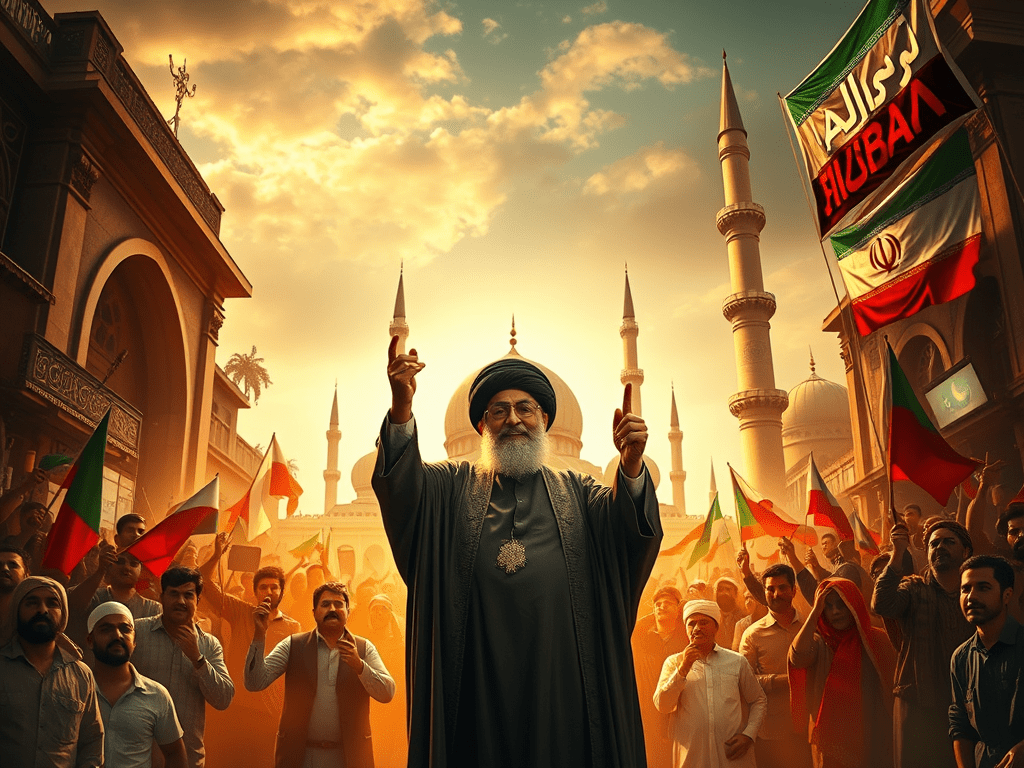
    The marching crowds in the world’s cities and schools demanding complete surrender to what they will ask next is possibly the most dangerous of the three. Champions of ideologies – both religious and liberal kind found an intersection in their disdain for democracy and lust for power to close down avenues for dialogue, coexistence, and peace. Their politics of grievance gives them the opportunity to destabilize the world order and hope for another Iran or a resurrection of Soviet Gulags out of the rubble. They believe the union outmaneuvers reason and logic with intentionally loud and prosaic phrases like apartheid, occupation, open prison, etc., while promising that the crowd will overrun the few million Jewish survivors shortly, notwithstanding their deadly weapons of mass destruction. They do not have the patience to listen to the stories from the holocaust.

    Three-dimensional space

    The terrorists spent their entire fortune building a metro of tunnels under their city of squalor and suffering. They crawl out of the holes to inflict pain on others or draw them into the dark traps of death.

    The population living above ground in the ghastly city is held hostage to the regime of terror while being the willing and fertile source to recruit their rank and file.

    The sympathizers all over the world occupy spaces in the multiverse of the internet, town squares, the labyrinth of universities, and ghettoes where immigrants import unsolvable animus from the dark ages.

  • Israel and the Baiting Crowd

    When mythology becomes ideology and ideology becomes execution, a darker logic takes hold.

    The blood-curdling acts of cruelty unleashed on civilians in their homes—targeted killings, hostage-taking, and indiscriminate violence—mark a terrifying regression into primal forms of conflict. These actions, as witnessed in recent Hamas attacks, go far beyond political grievance or tactical warfare. They reflect an ideological totality rooted in an unredeemable vision of the enemy. In such a vision, there is no room for coexistence—only elimination.

    Radical Islamic terrorism, such as that espoused by Hamas, draws its fervor from literalist interpretations of religious texts. These scriptures, while diverse and often poetic, are seized upon by extremists to construct closed, absolutist narratives—myths that sanctify violence and demonize the other.

    Yuval Harari, in Sapiens, argues that Homo sapiens rose to dominance not through brute strength but through the unique ability to share stories—fictional narratives that enabled mass cooperation. Religion, like law and nationalism, is among the most enduring of these inventions. These stories—what Harari calls “gossip”—bind individuals into communities. But when transformed into dogma and wrapped in divine authority, they can become weapons.

    This is the foundation of radical Islamist ideology: where myth becomes command, and faith becomes justification for violence. The enemy is no longer just a political adversary, but a moral and ontological threat whose very existence defiles the sacred narrative. The religious story becomes a call to arms.

    The execution of this call finds disturbing resonance in Elias Canetti’s Crowd and Power. Canetti describes the “baiting crowd” as the most ancient and primal form of collective action. It forms around a quickly attainable goal: a victim, clearly marked, defenseless, destined. The crowd moves with single-minded purpose. Each individual strikes a blow, not out of strategy, but out of ritual. The killing is both symbolic and literal—meant to rid the group of its own fear, its own death. Yet paradoxically, after the execution, the crowd disperses, more anxious and fractured than before.

    This, then, is the horrifying convergence: Harari’s myth-making meets Canetti’s crowd impulse. The ideology draws legitimacy from scripture, and the crowd, believing in that narrative, acts it out with blood-soaked devotion.

    In the ideology of Hamas, we see this pattern laid bare. A theology that lionizes martyrdom and promises divine reward collides with a political fantasy of erasing Israel. The result is a mobilized crowd willing to kill and be killed—not as soldiers, but as believers acting out a sacred script.

    What makes this moment more dangerous is the global amplification of this narrative. Despite Hamas’s use of civilians as human shields, its genocidal charter, and its rejection of compromise, there is a rush—in parts of the Islamic world and among segments of the global left—to frame its actions as resistance rather than terror. Israel’s right to self-defense is questioned more than Hamas’s right to exist.

    This signals a disturbing moral inversion. Those who slaughter in the name of God are humanized. Those who retaliate to protect civilians are pathologized. The baiting crowd is no longer confined to streets or battlefields. It has gone virtual, networked, and transnational—spurred on by ideology, grievance, and a prophetic sense of historical destiny.

    Harari ends Sapiens with a warning: that humanity, having acquired godlike technologies, remains dangerously guided by prehistoric instincts. Unless we interrogate the stories we believe in—how they form, how they justify violence, how they sanctify crowds—we risk returning to the oldest form of brutality: the hunting pack, now cloaked in scripture and broadcast to billions.

  • Backyard Brawls

    Backyard Brawls

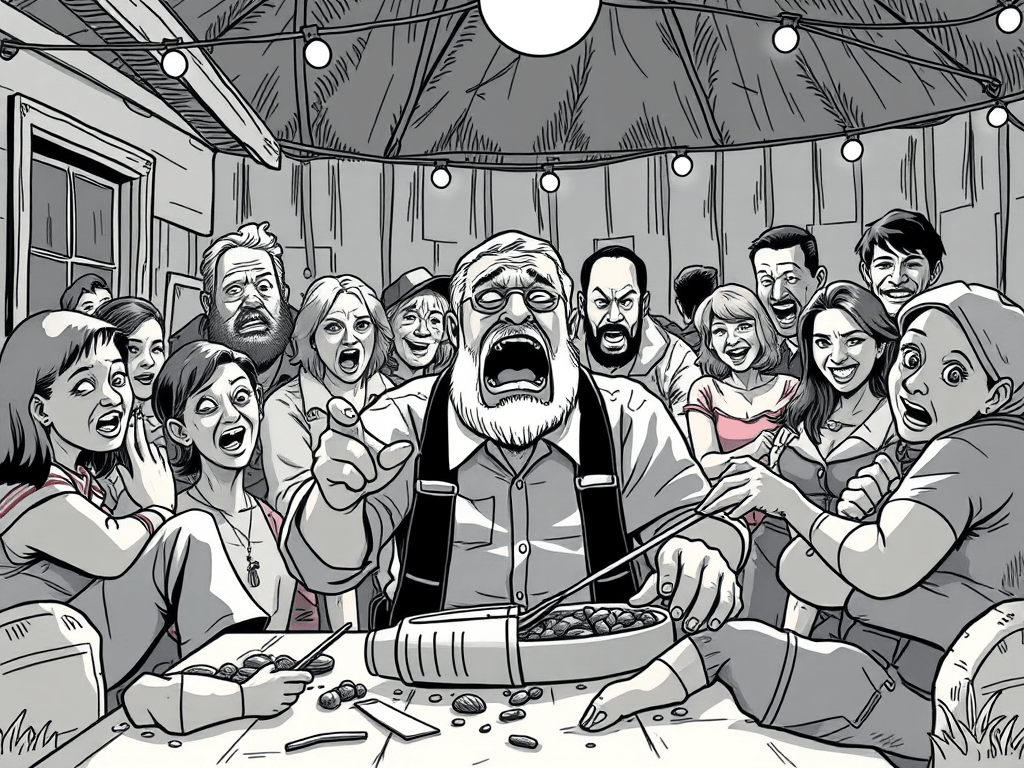
    Imagine a backyard in a small town lost in Appalachia, where uncles, cousins, and friends from the neighborhood gather for Thanksgiving—or some other inopportune occasion. One of them—an uncle, tipsy and loud—starts ranting about a long-forgotten feud. A certain family member, he insists, isn’t grateful enough for his life or the family. He must be taught a lesson—now, and how! Thus, the customary brawl breaks out, ending as always: with one or two shotguns fired in random directions, a volley of aimless verbal violence, and a mess of broken furniture.

    The ever-present mix of helplessness, poverty, and alcoholism—practically a permanent disability in town—seeps into people’s minds, corroding whatever remains of reason. Violence lurks in every corner, waiting for the slightest spark. Even those lucky enough to escape the gravitational pull of that world are never entirely free. J.D. Vance, against all odds, defied gravity—and found himself in the house of unlimited power.

    Zelensky had spent years fighting an existential battle against a hard, dour, and ruthless dictator with limitless resources. But none of that prepared him for dinner at the Oval House, hosted by JD. As soon as the guest in army uniform took his seat, JD saw the setting morph into the familiar gray backyard from Appalachia where Uncle Trump needed a nudge and a reminder of how things ought to be done. It shouldn’t matter that JD and Rubio voted against the help for which Zelensky wasn’t “thankful enough”. The ungrateful visitor must be verbally put in his place. He should thank his stars that the brawl ended with just the denial of dinner and a summary send-off, not a sentence or broken bones.

    Unfortunately, the Ukrainians could have done little to avoid invasion and outlast the medieval brute. Cowering before a dictator, ruing his misfortune ever since his tanks began exploding on the road to Kyiv—doesn’t inspire awe or respect. Enemies of democracy couldn’t believe their luck, while the rest stood paralyzed—too worried and confused to predict an uncertain future.

    In their misguided zeal to cling to power, Democrats, liberals, and traditional Republicans ignored the crumbling foundation of freedom and decency. By allowing illiberal and aberrant elements to take center stage, they paved the way for dysfunctional folks from the backyard to seize the house of power.

  • Pakistani States of Mind

    Pakistani States of Mind

    Picking up the pieces after the pause on Operation Sindoor is daunting, considering the high stakes Modi raised on Pakistan and India.

    The War

    For starters, a match-up or “notch up” of conventional warfare under the shadow of a nuclear disaster is an uneasy prospect, when the blowback will not stop at the border. The flight and downing of jets and exchange of projectiles were quality tests on leased Chinese weaponry and India’s assorted line-up of arms bought from the West, made-in-India variety, and some Russian, with an Indian recipe. The missiles targeted at India are named after the marauding medieval invaders from Central Asia and Turkey. India’s sudden acceptance of the call for ceasefire from Pakistan raises the question: Did they achieve their strategic goals, or is it a mere pause until the next attack by motivated terrorists? People living precarious lives along the border will tell us that war is no fun.

    The General in His Labyrinth

    The Pakistani General announced his firm belief in the two-nation theory just days before the brutal murder of innocent tourists from many states of mainland India by terrorists. He is undeterred by the sum of all failures thus far — the breaking away of Eastern Pakistan, the troubles in Baluchistan, a broken social fabric, and a failing economy, acknowledged safe haven for global terrorists. The only thing that stood between his army and the ultimate defeat of “infidels” was not having enough faith in the promise of their one God. He is a Hafiz who can recite the Quran to believe his messianic role in God’s call for Jihad upon infidels. Pakistani Generals are colorful Marquezian tin pot dictators with God as the alter ego with the smarts to find patrons for an endless supply of money and deadly weapons.

    Terrorist

    Terrorists are eternal opportunists. The plotters constantly observe, take notes, and plan the next raid. The poor, simple-minded expendables from the hinterlands of Punjab and tribal areas hide in plain sight in the company of motivated locals, clutching on to satellite phones until they receive the order to strike. They descend from the shadows after the holy month to perform their scripture-ordained duty to eliminate non-believers. The converted believers from the subcontinent owe it to their new faith to reconquer the land of Hind with a sword or bullet, for a place in paradise. They spared the lives of widows and daughters of the men they killed, as it was important for the killers to send a message of their merciful God and a warning to the leader of non-believers. The response was the retribution on behalf of the wronged women of a secular India. The Indian Army spokeswoman, Sophia Qureshi ironically wasn’t speaking on behalf of the lost tribe of Qureshi-s who lost the battle of Badr as written in the terrorists’ holy book.

    Chinese Quest

    China, in its bloody minded quest for silk routes, believes that its technology, often stolen from the West, and boundless production units can ride it’s fortune while the medieval wildlings are busy killing their brothers of old belief for now. The path to glory, a greater China, they believe, requires Islamic rage as fuel for human bombs to unleash on the inferior nations with minimum or no cost, while keeping the industrial-scale extermination and sometimes regeneration of deviants in Tibet and Xinjiang in a Han image. When finally the religious wars are over, the clashing armies will have annihilated each other to herald the greatest Chinese empire. This is not a dystopian dream if you consider the Chinese intent for granting nuclear technology to Pakistan. After all, some pieces of a disintegrated India with Chinese names are already in the official documents written in Mandarin, giving away hints of an impatient Chinese mind.

    The West

    Joseph Conrad’s sons in the West, in their infinite wisdom to civilize the dark continents, now want to prevent a holocaust among thoughtless, violent, and emotionally unbalanced brown people. Pakistan, as a gun for hire, is much cheaper than the Wagner brothers, with better training and the zeal of the faithful. If you doubt, just ask the Soviets. Why would they let it perish for the sake of the revival of Hindutva — pagans dreaming of hegemony. Empathizing and legitimizing their plight and grievances are the last things on their minds, whether liberal or conservative. The scatter-brained leader of the free world can only confuse the struggle as a thousand-year backyard brawl in which the prodigal son keeps returning with convictions of a new faith, who is convinced of the ultimate triumph, will always end up making the Dharmic elder look bad!!

    Colonial State

    Pakistan is the idea of renaissance men haunted by colonial nostalgia. It is the Muslim version of Old India, where you find the progeny of feudal Zamindars and merchants with old money from Central India, Punjabi bureaucrats and men in uniform from British India, and the poor but fanatically faithful migrants from the mainland like Uttar Pradesh and Bihar. The feudal lords became the political class, diplomats and bureaucrats, and servicemen turned into business conglomerates moonlighting as the military, and the peasants filled madrasas that became recruiting centers for the Lashkars. Everybody else migrated to the West with their bounty or hopped onto a dhow to the Middle East for menial jobs or even to beg.

    Indian State

    The Idea of India is mankind’s longest project. Kashmir, with a majority of citizens believing in Islam, is not an anomaly. There are a million Kashmirs — big and small — all across India, thriving in a democracy, however chaotic, that is growing economically and technologically while struggling with their identity to find a place in it, and some even moving past the debate to believe in the identity as Indian in a democracy trumping the rest. The Congress Party, which led the non-violent resistance for freedom, made a Faustian bargain with the medieval-minded section of minority for power. The right-wing BJP is living on the edge to retain it.

    The cacophony

    The world has become a babel! There is a no-holds-barred scrap in the corporate and social media pushing narratives. While in Pakistan, even the liberal commenters have gone nuclear, turning into Army spokesmen and competing with Jehadis for bluster. Neutral commentators, trapped in nostalgia, replay tired narratives like old VHS tapes. Truth dies when war begins.